ISLAMABAD: Anticipating the new fiscal year to begin with double-digit inflation, the government on Thursday expressed alarm that renewed geopolitical tensions in the Middle East posed downside risks to inflation and the external outlook.
However, the Ministry of Finance, in its Monthly Economic Update and Outlook for July, simultaneously assured that the external sector will remain resilient, supported by government measures to facilitate exports and sustain the strong momentum in remittance inflows.
“Overall, prudent macroeconomic management, fiscal discipline, ongoing structural reforms, stronger industrial activity, and improved external buffers are expected to sustain the recovery in economic activity while preserving macroeconomic stability,” the ministry said, adding that macroeconomic stabilisation had largely been achieved in FY26.
It said the economy was expected to maintain its growth momentum in 2026-27, supported by improving macroeconomic fundamentals, continued expansion in the manufacturing sector, fiscal consolidation, resilience in agriculture, and a stable financial environment.
Finance ministry projects 9-10pc inflation for July; sees external sector resilient on strong remittances
Manufacturing activity is likely to maintain its positive trajectory, underpinned by stable energy availability, easing financial conditions, improving domestic demand, and continued export-oriented production. “Inflation, however, is expected to remain elevated in the near term, with CPI inflation projected in the range of 9.0-10.0pc in July,” it said.
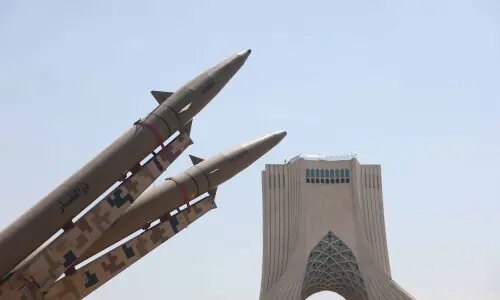
At the same time, it warned that the normalisation of global energy prices remained contingent on a durable peace agreement between the US and Iran. Among high-frequency indicators, the US Weekly Economic Index (WEI), which measured real-time economic activity, stood at 2.9pc for the week ended July 18, while its 13-week moving average was at 2.87pc.
Likewise, the Composite Leading Index suggests that Pakistan’s major export markets (OECD economies, the UK, and the US) remain broadly aligned with their long-term potential of 100, indicating continued support from external demand, although renewed geopolitical tensions could pose downside risks.
It said the government’s focus on poverty alleviation and social protection continued in the outgoing FY26. In June, the Bureau of Emigration & Overseas Employment registered 38,410 workers for overseas employment, reflecting continued opportunities for Pakistani workers in international labour markets.
The report noted that Pakistan’s economy entered FY27 with an improved macroeconomic environment, as the stabilisation gains of FY26 continued to support economic recovery and strengthen prospects for sustainable growth.
In FY26, average CPI inflation remained within the targeted range despite elevated global oil prices and supply chain disruptions.
Large-scale manufacturing rebounded, and agriculture maintained moderate growth despite weather-related challenges. Improved revenue mobilisation and prudent expenditure management further strengthened the fiscal position. The external sector remained broadly balanced, with the current account recording a marginal deficit of $140 million in FY26. Record-high workers’ remittances and higher foreign exchange reserves helped offset the import recovery, associated with the strengthening of domestic economic activity.
Meanwhile, IT exports reached a record $4.6bn, up 20.6pc from last year, underscoring Pakistan’s growing potential in technology and digital services. In light of these positive developments, S&P Global Ratings recently upgraded Pakistan’s long-term sovereign credit rating to B from B-, reflecting improved institutional capacity, sustained reform implementation, stronger fiscal performance, and a significant rebuilding of foreign exchange reserves.
With these gains continuing to strengthen the foundations for sustained economic growth, real GDP growth is targeted at 4pc in FY27, based on the government’s continued advancement of the reform agenda by deepening financial markets, broadening the domestic investor base, strengthening debt sustainability, and enhancing the country’s presence in the global capital markets.
Nevertheless, renewed US-Iran hostilities once again pose downside risks through global energy prices, trade and financial market volatility.
Published in Dawn, July 31st, 2026