Pakistan's diplomatic moment must not be squandered


 0
0

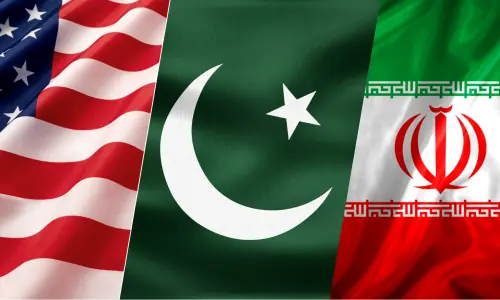
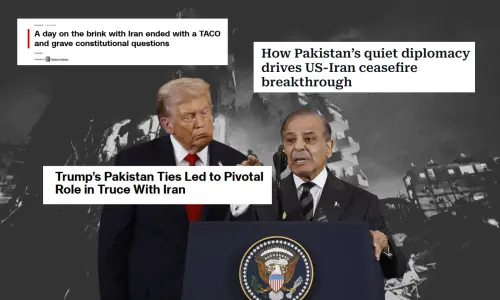
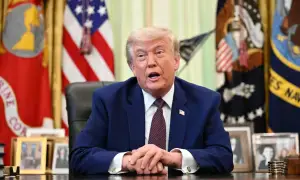
On April 7, 2026, US President Donald Trump threatened Iran with Armageddon: “A whole civilization will die tonight, never to be brought back again.” Less than 90 minutes before his deadline expired, Trump announced a two-week ceasefire, built around a proposal Pakistan had put on the table. Two days later, on April 9, the Economist reported that “Pakistan’s mediation between America and Iran helps Donald Trump agree to a two-week ceasefire.”
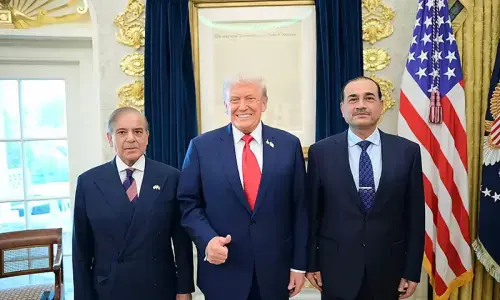
On April 11-12, Islamabad hosted direct talks between US Vice President JD Vance, Iran’s Parliament Speaker Mohammad Baqer Ghalibaf and Foreign Minister Abbas Araghchi, with Prime Minister Shehbaz Sharif and Field Marshal Asim Munir serving as mediators.
By June 2, Reuters was offering perhaps the strongest international recognition yet of Pakistan’s role, describing it as “a diplomatic outcast a year ago” that “has become a trusted regional partner and a mediator between the US and Iran,” a transformation the wire service attributed largely to Pakistan’s “powerful military chief, Field Marshal Asim Munir.” On June 14, Reuters reported that the resulting US-Iran deal had been “mediated by Pakistan and announced by the US President Donald Trump and Pakistani Prime Minister Shahbaz Sharif.”
The agreement itself, aptly named the Islamabad Memorandum of Understanding, was signed on June 17 by President Trump at the Château de Versailles and President Pezeshkian in Tehran, then endorsed by PM Sharif as mediator, and has since formally entered into force.
The war that this ceasefire ended was never sanctioned by the UN Security Council, which bears primary responsibility for maintaining international peace and security. It violated Article 2(4) of the UN Charter, which bars member states from the threat or use of force against another state’s territorial integrity or political independence. International law experts believe there is sufficient evidence of war crimes, crimes against peace, and violations of humanitarian law, and that the international legal order has been seriously undermined by the actions of the United States and Israel.
Washington and Tel Aviv claimed to have acted in self-defence against an imminent Iranian attack; this was, and remains, a false casus belli. The war was launched without just cause, and its execution — disproportionate and aimed at vital infrastructure and civilians, including children — compounded the injustice of its origin. The resulting closure of the Strait of Hormuz and disruption to oil and gas supplies drew warnings from the IMF and World Bank about the risk to the world economy, while Chatham House noted that rebuilding the Gulf’s damaged energy infrastructure could take years.
It was at this critical moment — with President Trump and Prime Minister Netanyahu still threatening to escalate the war and destruction further — that FM Munir, through sustained shuttle diplomacy, secured an interim ceasefire just ahead of Trump’s own deadline. The rest is history.
The recognition that followed was broad and, at times, effusive. International business and political commentary was largely unequivocal that brokering peace had given Pakistan a rare surge of positive global standing, and much of it linked that shift directly to a reset in the US-Pakistan relationship.
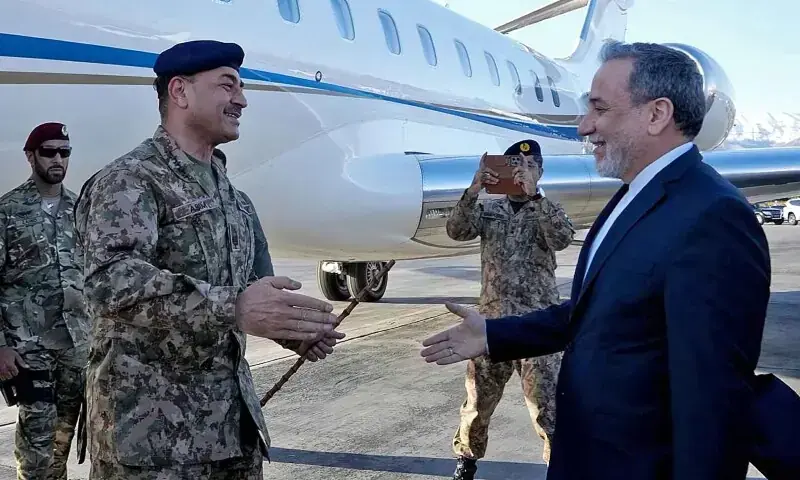
Coverage across major Western outlets highlighted the embrace between FM Munir and Iranian leadership as evidence of the behind-the-scenes military diplomacy needed to ease tensions, credited Islamabad’s direct line to both warring parties with preventing wider escalation around the Strait of Hormuz, and pointed to Pakistan’s agility in averting a larger regional war while raising its diplomatic standing.
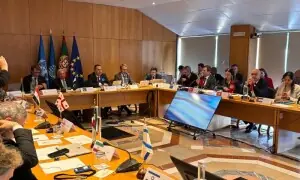
Commentary also examined how Pakistan had leveraged its historically delicate balancing act between Saudi Arabia and Iran to help forge the deal, with outlets across the wire services and policy world — from the Associated Press and Financial Times to Al Jazeera and Chatham House — acknowledging Pakistan as mediator, facilitator, and host of the US-Iran talks.
Washington, for its part, understood exactly where Pakistan’s leverage came from: its ability to maintain working relations with both Washington and Tehran, exercised through military, intelligence, and diplomatic channels at once. Islamabad was able to engage credibly with multiple rival camps — the US, Iran, and the Gulf states — simultaneously.
The gratitude extended well beyond Washington. UN Secretary-General António Guterres praised Pakistan for its pivotal role in the peace deal and extended his “deep appreciation.” Japan conveyed its own “deep appreciation and commendation.” Governments across the Gulf, Europe, and Asia weighed in in similar terms: Turkiye’s president spoke of Pakistan’s exceptional mediation efforts, Kuwait credited Islamabad’s unique ability to bridge divergent viewpoints, Britain’s prime minister offered congratulations on the breakthrough, and further messages of thanks and endorsement arrived from the Netherlands, China, Italy, and the president of the European Council. Iran’s gratitude toward Pakistan was, by this point, common knowledge.
A minority opinion applauds Pakistan as a vital facilitator but not necessarily the decisive broker. Pakistan, they concede, had initiated and set the stage for peace, but Qatar and other Gulf actors also played their part. A number of analysts in the West distinguish between facilitating and hosting diplomacy on one hand and actually determining the final agreement on the other, and they put Pakistan firmly in the first category — though in doing so, they tend to pass over the initial ceasefire of April 7.
Be that as it may, FM Munir is generally viewed, at home and abroad, as a central power in Pakistan’s foreign policy. Chatham House explicitly described his relationship with the United States as a key factor behind Pakistan’s mediation, and noted his substantial influence over national security and foreign policy more broadly. He is seen as an active diplomatic participant rather than merely a military commander, and the US-Iran mediation stands as evidence of the military chief’s continuing dominance in Pakistan’s decision-making, rather than as a purely civilian achievement. The prevalent view is that FM Munir is a major strategic actor, both behind the scenes and in public.
The point to ponder is this: whether Pakistan’s recent diplomatic visibility, if sustained, enhances its international leverage and translates into enduring influence with major powers, rather than simply generating favourable headlines and diplomatic ceremonies.
In my view, Pakistan belongs to the former category rather than the latter. The US-Iran conflict has transformed Pakistan. It is no longer the vilified and ignored country of yore: today, it projects both hard power and soft power. It is needed by the Gulf states and the West alike, and it is pivotal to every nation dependent on the Gulf and the Strait of Hormuz.