CM Murad warns against wheat hoarding, orders crackdown to stabilise rising flour prices


 0
0
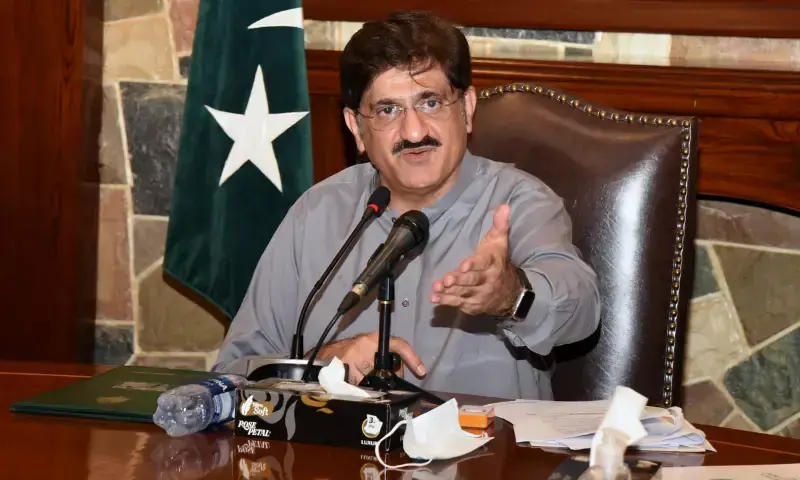

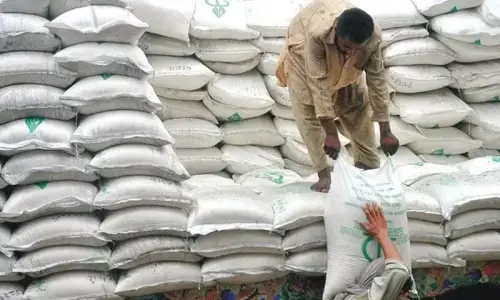
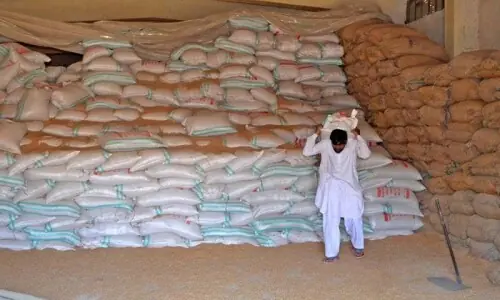
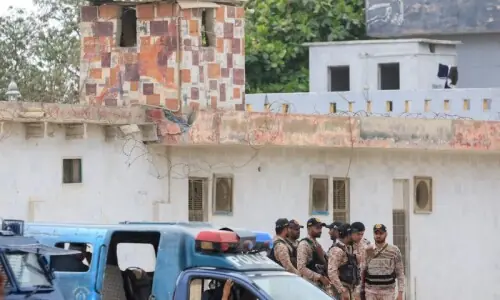
KARACHI: Sindh Chief Minister Syed Murad Ali Shah has directed the food department and district administration to launch a strict crackdown on wheat hoarding and profiteering, warning that artificial shortages and market manipulation would not be tolerated.
Chairing a high-level meeting held to review wheat availability, stock positions and market trends, the CM said the government would take all necessary measures to ensure uninterrupted availability of wheat and flour at reasonable prices across Sindh.
The meeting proposed that wheat stocks seized from illegal hoarders be treated as government-procured wheat and shifted to official warehouses. Under the proposal, the owners of seized stocks would be compensated at a rate of Rs3,500 per 40 kg.
The meeting reviewed wheat price trends across the country and was informed that wheat prices had risen sharply in recent months.
People in Karachi are paying highest price for per kilogram of flour, meeting told
Current wheat prices per 40 kilograms were reported at Rs4,350 in Punjab, Rs4,680 in Sindh and Khyber Pakhtunkhwa and Rs4,600 in Balochistan.
Officials noted that wheat prices in Punjab had climbed from around Rs3,200 per 40 kg in early April to between Rs4,200 and Rs4,600, representing an increase of more than 30 per cent to 40pc within a few months.
The meeting was informed that average flour prices per kilogram were Rs135 in Karachi, Rs131 in Hyderabad, Rs124 in Sukkur and Rs124 in Larkana.
“Any increase in wheat prices must not become an excuse for excessive profiteering. The administration must ensure that consumers receive flour at fair prices,” the CM said.
Food Minister Makhdoom Mahboob informed the CM that Sindh produced 4.8 million metric tons (MMT) of wheat during the 2025-26 crop season, while the province’s annual consumption requirement stood at 6.53 MMT, indicating a structural shortfall.
He said Sindh had a total wheat stock availability of 4.94 MMT, including carryover stocks. However, after accounting for consumption during April-June and wheat moved to other provinces, the province is projected to face a deficit of around 2.1 MMT by March 2027 if market supplies do not continue to flow.
Minister Food told the chief minister that the Food Department currently holds 0.2218 MMT of wheat stocks, including carryover reserves and fresh procurement.
The meeting was informed that the country had an estimated net wheat balance of 24.39 MMT, but “only a fraction of these stocks is currently visible in the market”.
Expressing concern, the CM said that hidden stocks could create unnecessary market of these stocks is currently visible in the market”.
Expressing concern, the CM said that hidden stocks could create unnecessary market pressure and encourage speculative trading.
“The government will not allow hoarders and profiteers to exploit consumers through artificial shortages. Wheat is a strategic commodity, and its availability must be ensured at all costs,” he said.
Reviewing proposals submitted by the Food Department, the chief minister directed authorities to immediately intensify enforcement under the Sindh Essential Commodities Price Control and Prevention of Profiteering and Hoarding Act, 2005.
He ordered district administrations to identify illegal stockpiles, inspect warehouses and take action against unlicensed wheat traders. The meeting was informed that border monitoring had already been initiated to prevent the unauthorised movement of wheat outside the province.
The chief minister was informed that a summary proposing stock limits for flour mills had already been submitted for consideration by the Sindh cabinet.
Concluding the meeting, Murad Shah directed all concerned departments to maintain close coordination and submit regular reports on wheat stocks, prices and market conditions.
“Our objective is simple: wheat and flour must remain available, affordable and accessible to every citizen of Sindh. No one will be allowed to manipulate the market at the expense of the public,” the chief minister said.
Published in Dawn, July 1st, 2026