0
0

ISLAMABAD: The United Nations Alliance of Civilisations has warned that the international system stands at a critical crossroads marked by growing geopolitical fragmentation, shrinking confidence in multilateral institutions and a dangerous rise in identity-based polarisation.
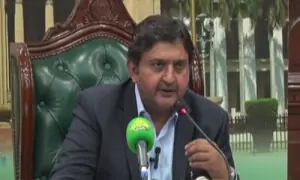
UN High Representative and Special Envoy to Combat Islamophobia (UNAOC) Miguel Angel Moratinos declared on Tuesday that restoring global dialogue and rebuilding trust were no longer just aspirational goals but strategic imperatives required to preserve global peace and security.
He expressed these views while speaking at a public talk organised by the Centre for Strategic Perspectives at the Institute of Strategic Studies Islamabad. Showing concern over growing polarisation, religious intolerance, cultural divisions and the spread of misinformation, Mr Moratinos warned that diversity is too often portrayed as a source of division rather than recognised as one of humanity’s greatest strengths.
He stressed that inclusive societies founded on pluralism, mutual respect and intercultural dialogue were inherently more resilient and better equipped to prevent conflict, counter extremism and promote peaceful coexistence. In this regard, he reaffirmed the central role of the United Nations Alliance of Civilisations in fostering dialogue and strengthening understanding across cultures and civilisations.
Referring to Pakistan’s role in the evolving international landscape, Mr Moratinos observed that the country was uniquely positioned to contribute to addressing global challenges through its strategic location, active diplomacy and role as a bridge between regions and civilisations.
He commended Pakistan’s longstanding support for the United Nations, its contributions to UN peacekeeping and its consistent commitment to multilateral cooperation. He also highlighted Pakistan’s rich civilisational heritage, noting that its history of cultural interaction offers valuable lessons for advancing dialogue and mutual understanding.
Mr Moratinos called for the renewal of multilateralism in response to contemporary geopolitical realities and the emerging multi-polar international order. He emphasised that countries such as Pakistan had an increasingly important role to play in advancing inclusive diplomacy, strengthening intercultural understanding and contributing to international peace and cooperative global governance.
Reaffirming the mission of the United Nations Alliance of Civilisations, he stressed that dialogue remained the most effective instrument for rebuilding trust, overcoming divisions and shaping a more peaceful and inclusive world.
Miguel Angel Moratinos observed that an increasingly complex array of transnational challenges required cooperation and peaceful coexistence. He argued that restoring dialogue, rebuilding trust in multilateralism, and strengthening intercultural understanding were no longer aspirational objectives but strategic imperatives for preserving international peace, security and sustainable development.
Stressing that the world is undergoing a profound transformation, he called for renewed political leadership and collective international action to address global challenges through cooperation rather than confrontation.
While recognising AI’s transformative potential, he underscored that it also presents profound ethical, social and governance challenges that require responsible regulation and strengthened international cooperation.
Earlier, in his welcome remarks, Khalid Mahmood of ISSI observed that the world is witnessing an alarming rise in identity-based polarisation, religious intolerance, hate speech, violent extremism and shrinking space for constructive dialogue, with Islamophobia emerging as one of the most serious manifestations of these trends.
He stressed that Islamophobia had evolved beyond isolated acts of discrimination into a global challenge that threatened the universal principles of equality, human dignity, religious freedom and peaceful coexistence.
Highlighting the growing prevalence of anti-Muslim rhetoric, attacks on places of worship and discriminatory narratives, he referred to the situation in India and the humanitarian crisis in Gaza as examples of developments that have drawn widespread international concern over religious discrimination and intolerance.
Published in Dawn, July 1st, 2026