0
0
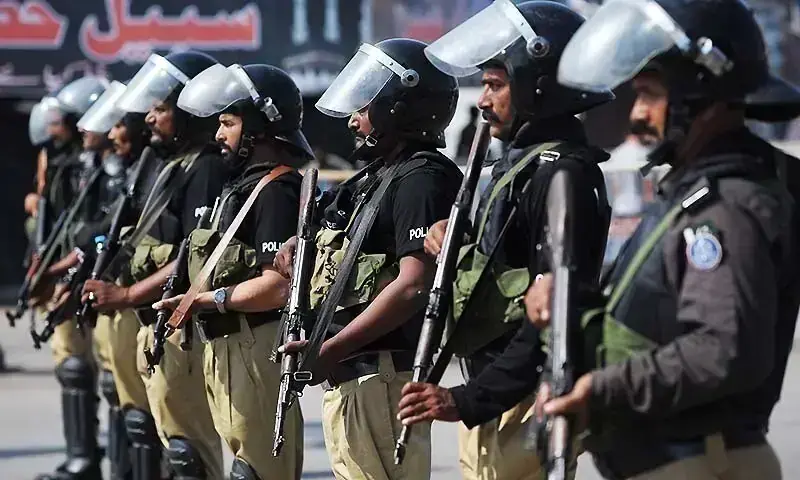

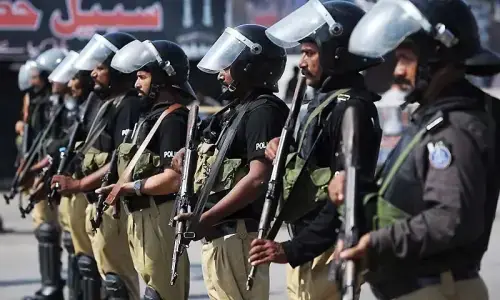
PESHAWAR: While militants may lack the strength to overwhelm the Khyber Pakhtunkhwa police, they to some extent have managed to push the force into defensive position in part of the province.
With changing war tactics and modern gadgets acquired by the militants, mostly left behind in Afghanistan by the US and its allied force following the fall of Kabul in 2021, the police also dumped the outdated weaponry, replacing it with modern equipment. This, too, however, was not enough to overpower the enemy.
Realising that the traditional tactics were no longer sufficient, the high command raised counter-terrorism department (CTD), a force trained for rapid assault and intelligence driven raids. In a series of coordinated offensives, the force managed to strike the militant hideouts and achieve its objectives.
With its headquarters, a modern fortress, right in the heart of the provincial capital, the newly-established department requisitions human resource from the police department. It, however, lacks dedicated facilities across the province.
With peace, policing and protection of the people at the top of its agenda, the provincial government in the budget document for the fiscal year 2026-27 seems to have finally realised the gravity of the situation as it enhanced allocation of funds for police from Rs67 billion in 2022-23 to Rs191.4 billion for the next financial year.
According to the budget documents, Rs14.5 billion has been allocated for police’s procurement plan including Rs7.77 billion for arms and ammunition, Rs1.81 billion for bulletproof vehicles, armored personnel vehicles, troop carriers, Rs3.56 billion for thermal cameras, drones, anti-drone systems and communication tools and Rs1.276 billion for bulletproof vests and helmets.
Officials say that although police were equipped, the militants, too, had managed to acquire modern weaponry, mostly the leftovers in Afghanistan.
“They come, strike, go back unhurt. They give a message to the handlers that they have done the job. Also, they give a message to the law enforcement agencies that they are here,” another senior police official told Dawn.
Senior police officials believe that with modern war gadgets, training and infrastructure, the situation will change within six months.
“When CTD stands complete, it will not be a department but a fully staffed, armed and trained force. It will become a hub of intelligence which will strike with such precision and force that militants will find no place to hide, not in the hills nor in the dark,” he said.
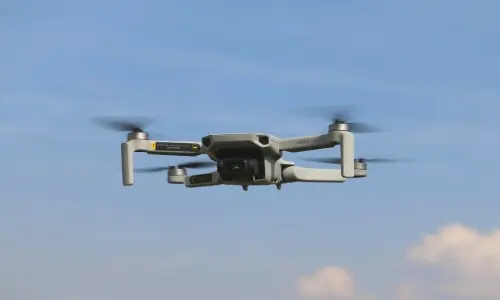
They also acknowledged that the militants had weaponised the skies as well and use quadcopters for surveillance and then they strike, with deadly precision and that too from a distance.
Officials, however, say they also have a plan as the CTD is not just buying weapons but it has been training cops for utilising the drone technology.
“Kamikaze drones that don’t just observe, but kill. FPV systems are being introduced which will change the entire course of war against militancy with the help of a joystick,” an official said.
When contacted and questions were sent to KP police chief Zulfiqar Hameed, he responded in writing, saying since its establishment, the CTD’s priority remained building operational capability but the gaps were addressed.
“Peshawar Regional Headquarters has been approved, land already acquired and construction will commence under the approved scheme. Besides that, district-level CTD setups have also been approved,” the reply read, adding that over the coming year, CTD infrastructure would gradually be established across all 36 KP districts.
The police chief said that Rs7.6 billion had been invested in CTD during the current financial year for procurement of armoured vehicles for district-level SHOs and DSPs, latest drones and aerial surveillance equipment as well as advanced software and other gadgets to further strengthen CTD’s operational architecture.
Mr Hameed disagreed with the perception that police were confined to their facilities and could not do movement in the dark. He stated that KP police and CTD operated round the clock and that the deployments were intelligence-led and not time-led, adding police and CTD conducted IBOs, surveillance, raids and targeted operations whenever intelligence required action, regardless of the time of day.
“It is also important to understand that the threat has evolved. Militants are now using commercial drones, thermal imaging devices and sophisticated weapons including M4/ M16 rifles. Naturally, we have adapted our operational tactics as well,” he said.
The police chief said that the CTD had 57 operational drones and 79 trained drone operators, which gave the department the capability to maintain surveillance and conduct precision operations in difficult terrain while reducing risk to the personnel.
“The threat is certainly serious but it would not be correct to say that militants control areas. CTD, KP police, army and other intelligence agencies are carrying out continuous coordinated operations against militant networks,” he said.
According to the statistics, in 2025 alone, CTD conducted 3,253 IBOs, arrested 1,388 terrorists, neutralised 458 terrorists and got 60 convicted from the courts. In 2026, up to mid-June, the CTD conducted 1,838 IBOs, arrested 474 terrorists and neutralised 185 terrorists.
Mr Hameed said several major militant networks had been dismantled, including the Paharpur Tashkeel in Dera Ismail Khan, and Bannu.
“We have also traced and arrested terrorist drone operators, facilitators and financiers significantly degrading their operational capability,” he said.
The police chief also said that the peaceful completion of Muharram across KP was itself evidence of the preparedness and professionalism of the province’s police.
“We recently foiled a suicide attack in Peshawar. I cannot share details at this stage because follow-up operations are still under way, but I can assure you that the investigation has made significant progress,” he said.
During the last one year alone, CTD procured 97 operational vehicles, 10 APCs, 505 motorcycles, 73 tactical drones, five advanced 5G locators, 36 jammers, anti-drone systems, CCTV surveillance systems, 36 sniper rifles, 350 assault rifles, 350 SMGs, 800 mortar rounds, 300 thermal sights, night vision devices, mine and explosive detectors, bulletproof jackets, ballistic helmets, ballistic shields and modern SWAT equipment.
“These procurements (delivery process has already started) have substantially enhanced our mobility, surveillance, firepower, force protection and overall operational effectiveness. The objective is not merely to match the evolving threat but to stay ahead of it through better technology, better training and intelligence-led IBOs,” he said.
Published in Dawn, June 30th, 2026