Humans and great apes show similar rhythmic pattern in laughter
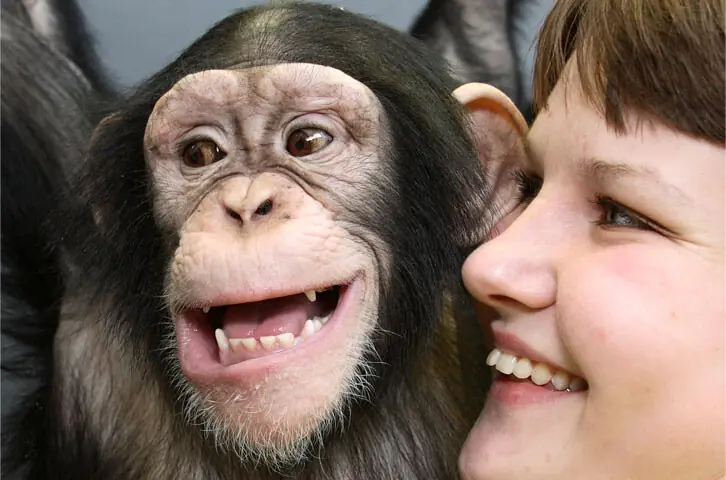
WASHINGTON: There are many kinds of laughter. People may guffaw at a joke. They may giggle nervously in an uncomfortable situation. They may chuckle with mild amusement. They may snicker to express contempt especially movie villains.
But while laughing seems uniquely human, it is not. Our closest evolutionary relatives do it too. Researchers now have compared laughter in humans to laughter in the various great apes chimpanzees, bonobos, gorillas and orangutans. They identified similarities among the species in this vocalisation as well as characteristics exclusive to people.
Laughter in each of the species studied adhered to a regular rhythmic pattern, with evenly spaced intervals between successive sounds. Because this laughter pattern was shared among people and the other species, the researchers said, it may have existed in their last common ancestor, thought to have lived about 15 million years ago in East or Central Africa.
“Human laughter shares the same basic evolutionary roots as great ape laughter, but it differs in important ways,” said Chiara De Gregorio, a primatologist and research fellow at the University of Warwick in England and lead author of the study published in the journal Communications Biology.
“Human laughter is faster, more variable and more sensitive to social context than the laughter of other great apes. Chimpanzees and bonobos are indeed our closest relatives, and their laughter is generally more similar to ours than that of gorillas or orangutans.
Published in Dawn, June 30th, 2026