Cotton research activities reviewed at Multan institute


 0
0
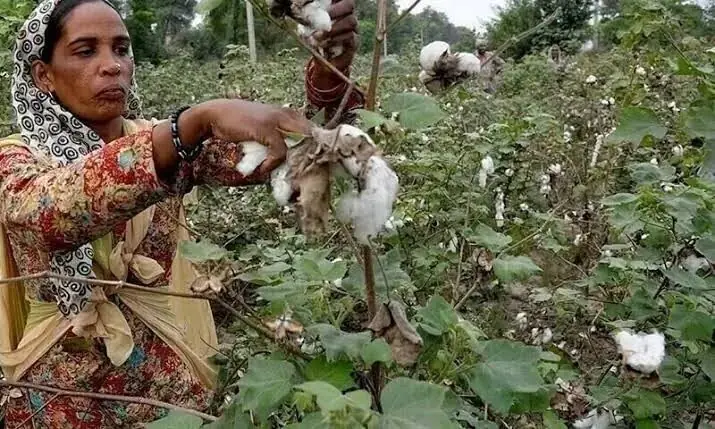

LAHORE: The Cotton Commissioner and Chief Executive Officer of the Pakistan Central Cotton Committee (PCCC), Dr Khadim Hussain, visited the Cotton Research Institute (CRI) Multan, where he conducted a detailed inspection of the National Coordinated Varietal Trials (NCVT) along with various cotton research activities and experimental fields.
He thoroughly reviewed the planning of the trials, associated experimental plots, and the current performance of sample crops. He described the preliminary observations and data generated through these trials as highly valuable for future varietal selection and cultivation strategies.
On this occasion, the NCVT committee also inspected the institute’s advanced cotton lines and appreciated the progress achieved on the basis of scientific evidence. Discussions particularly focused on the yield potential of new lines, their resistance to diseases and insect pests, and their performance under climatic stress conditions was held.
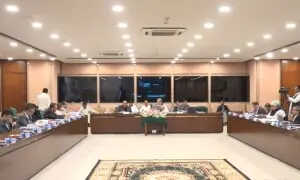
During the inspection, CRI Chief Scientist Muhammad Jameel briefed the participants on the technical aspects of field experiments and data collection methodologies. Committee members and other participants, including Federal Seed Certification and Registration Department (FSC&RD) Director General Dr Nazar Iqbal, PCCC Secretary Dr Muhammad Idrees Khan, CCRI Director Sabahat Hussain, Sajid Mahmood, Dr Aslam Yousaf, Dr Muhammad Tausif, Dr Khizar Hayat, Dr Muhammad Furqan, Yasir Jan Khan, Ms Nadia and Sadia Kanwal deliberated on the quality of the trials, representativeness of the experimental material, and future recommendations adaptable to local conditions.
The NCVT committee unanimously agreed that the results of the national coordinated varietal trials would be effectively utilised to formulate an integrated and efficient strategy aimed at improving the availability of superior seed, strengthening the seed registration process, and facilitating the transfer of modern agricultural technologies to farmers.
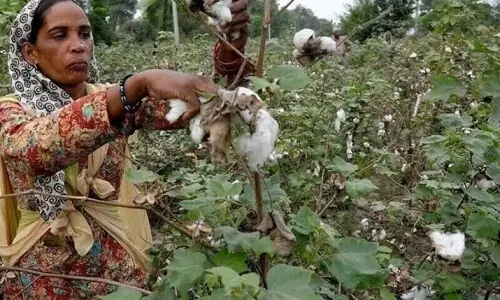
Subsequently, Dr Khadim Hussain, accompanied by agricultural scientists of the Central Cotton Research Institute (CCRI) Multan, inspected various advanced cotton lines including Cyto-547, CIM-990, Cyto-548, CIM-810, and CIM-801 in different experimental fields of the institute. He reviewed the planting schedules and morphological characteristics of the varieties and also observed high-density planting (HDP) and mulching trials established in the field.
Appreciating the research performance of the institute’s agricultural scientists, he stated that these experiments would contribute significantly to enhancing cotton productivity and sustainability under local agro-climatic conditions.
He directed the scientists to accelerate the screening and evaluation of the existing non-Bt germplasm and intensify research efforts in this area, emphasising that substantial opportunities exist for the cultivation of non-Bt cotton varieties in Balochistan.
Dr Hussain reaffirmed the commitment of the PCCC to utilise all available resources for the revival of cotton in Pakistan, the development of improved cotton varieties, the provision of quality seed, and the effective dissemination of modern research findings to cotton growers.
Published in Dawn, June 25th, 2026