ANP rejects KP budget, calls it statistical manipulation

PESHAWAR: Awami National Party (ANP) has rejected Khyber Pakhtunkhwa’s budget for fiscal year 2026–27, describing it as an exercise in “wordplay and statistical manipulation”, alleging that it would push the province towards economic and administrative decline.
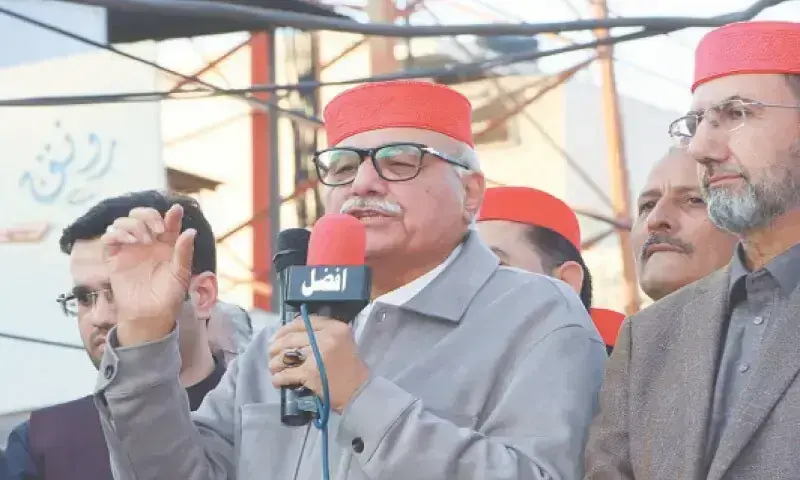
In a statement issued on Saturday, ANP Khyber Pakhtunkhwa president Mian Iftikhar Hussain criticised the provincial government’s budget priorities and questioned its financial management after more than a decade in power.
He said the Pakistan Tehreek-i-Insaf (PTI) government had presented its 13th provincial budget but continued to mislead public instead of presenting the actual economic situation.
Mr Hussain questioned what he called contradictions in the financial estimates, claiming while the government projected a budget deficit of Rs48 billion, it had also allocated Rs52.8 billion under the head of local governments despite district governments not being operational.
Says education, health, youth neglected
“This is not a budget but a complex exercise in figures aimed at misleading people of Khyber Pakhtunkhwa,” he said.
The ANP leader also criticised inclusion of 1,201 new development schemes in the budget, alleging that hundreds of them had received only token allocations, with some projects reportedly assigned only nominal amounts.
He also alleged that such schemes were intended to accommodate discontented lawmakers and secure political loyalties rather than promoting development.
Referring to the education sector, Mr Hussain claimed that around 4.5 million children remained out of school while only Rs5 billion had been allocated for them. He argued that road infrastructure had been given priority over education and accused the government of neglecting human development, youth and healthcare.
He further criticised the continued subsidy requirements of the Bus Rapid Transit (BRT) system and alleged rising expenditures in Medical Teaching Institutions (MTIs), while claiming that basic healthcare projects had not received adequate allocations.
He also expressed concern over the province’s dependence on federal transfers, claiming that despite 13 years in government, Khyber Pakhtunkhwa had failed to significantly improve its own revenue generation and remained financially dependent on the federal government.
Calling the budget a political rather than developmental document, Mr Hussain said the ANP completely rejected it and urged the government to focus provincial resources on education, healthcare, employment and sustainable development instead of what he termed politically motivated planning.
Published in Dawn, June 21st, 2026