
In Greek mythology, a fair maiden named Amaryllis falls in love with a handsome but cold-hearted shepherd named Alteo. Alteo, who cared only for wildflowers, declared that only a flower unlike any seen before could win his affection.
Amaryllis sought guidance from the Oracle of Delphi. The Oracle told Amaryllis that, to attain Alteo’s love, she would have to sacrifice her blood to win him over. For the next 30 days, Amaryllis stood outside Alteo’s cottage dressed in white, piercing her heart with a golden arrow each night as her blood dripped on the pathway.
The legend says that, on the 30th day, two miracles occurred. On the pathway grew a stunning, crimson flower from her blood. Seeing the beautiful flower, Alteo fell in love with her, and their story gave the plant its name.
The legend may be romantic, but the real amaryllis operates on a less dramatic timetable. A bulb takes at least six to eight weeks to bloom, though this timeline depends on the bulb’s size and the planting phase. As bulbs sprout and green shoots emerge, the gardener knows the hidden bloom is finally on its way.
From Greek mythology to modern gardens, the amaryllis combines a romantic origin story with surprisingly simple care requirements
Once the bulb sprouts, the amaryllis needs minimal care. The plant can remain in its original potting mix and, being relatively slow-growing, does not require frequent repotting. However, if the roots emerge from the drainage hole, the plant should be moved to a bigger container. The composition of the soil stays the same, but a light layer of compost can be added to the surface of the soil.
Even in watering, the amaryllis is less demanding than most plants. It should only be watered when the soil turns dry, and only enough for the soil to become moist. A solution of one part compost tea and four parts water can be given to the plant every fortnight to boost growth.
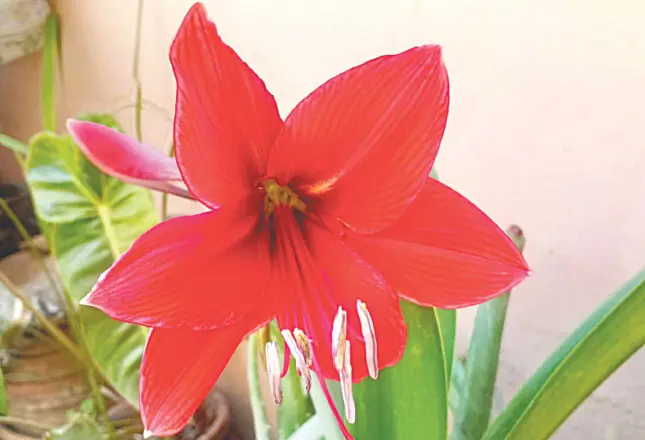
In climates similar to that of Karachi, it is critical to ensure that the plant gets bright, indirect sunlight throughout its life cycle. Direct sunlight exposure leads to brown, crispy patches on leaves, a condition known as sun scorch, and causes flowers to wilt and have a shorter lifespan.
Depending on planting time and local conditions, the amaryllis usually flowers in spring, producing large trumpet-shaped blooms that can last for several weeks. Whether it sprouts and blooms early or late, one of the best aspects of the amaryllis is that it continues to flower for many years during the right season.
With proper care, an amaryllis bulb can remain productive for more than a decade. Individual amaryllis flowers typically last from several days to two weeks, though extreme heat can shorten that period considerably.
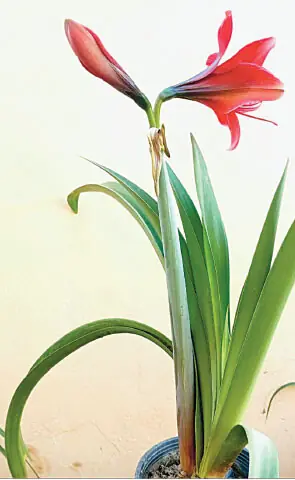
A healthy amaryllis plant may produce at least two to three stalks, with two to four flowers on a single stalk. Amaryllis flowers are prized in bouquets and floral arrangements because of their large size and striking colours. However, unlike some edible flowers used in salads and desserts, the amaryllis should never be consumed. The plant contains the toxic alkaloid lycorine, particularly in its bulbs.
The bulb of the original plant continues to grow in size throughout the plant’s life cycle. It produces baby bulbs, which can be harvested to grow more plants in the upcoming season.
For gardeners willing to wait, the reward is a plant that returns year after year, producing dramatic blooms and a growing collection of bulbs that can be shared, gifted or replanted. Unlike the legend that gave it its name, the amaryllis does not bloom overnight — but its beauty is worth the wait.
Please send your queries and emails to doctree101@hotmail.com. The writer is a physician and a host for the YouTube channel ‘DocTree Gardening’ promoting organic kitchen gardening
Published in Dawn, June 21st, 2026