Duty raised on EVs priced above Rs20m in FY27

• CKD incentives extended for another year
• Auto Policy 2026-31 awaits prime minister’s nod
KARACHI: The government did not seriously address the auto sector in the FY27 budget, as the new auto policy is set to take effect from July 1 after the expiry of the current one.
Finance Minister Muhammad Aurangzeb, in his budget speech on Friday, said that Auto Policy 2026-31 is being vetted by the PM’s committee, and its details will be presented to parliament after approval from the premier and the cabinet.
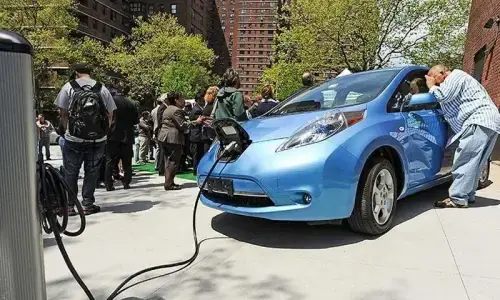
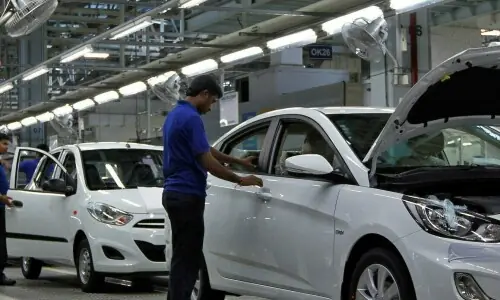
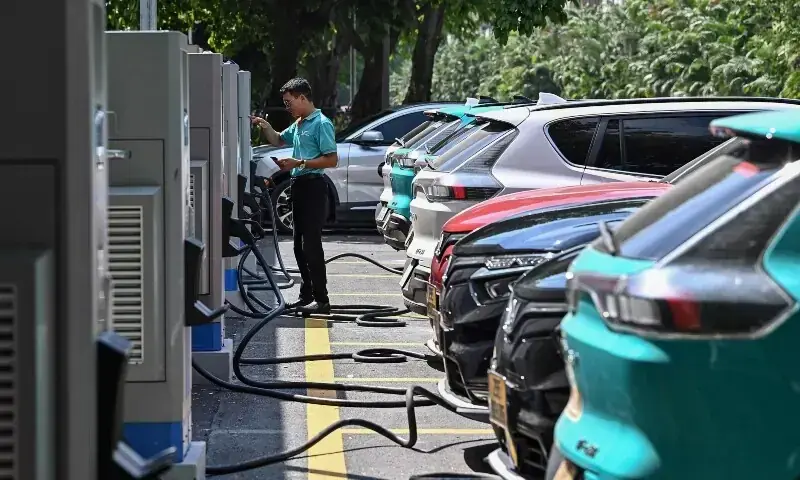
He said that the incentive on import of completely knocked down (CKD) kits for electric vehicles, including bikes, three-wheelers, cars and buses, has been extended till June 30, 2027.
Currently, import duty on completely knocked down (CKD) kits on electric vehicles is one per cent on specific parts, 10pc on non-localised parts and 25pc on localised parts.
Similarly, a 25pc import duty also exists on the import of completely built-up (CBU) electric vehicles.
An assembler, who asked not to be named, said that there is also no clarity on the general sales tax (GST), as many issues will be cleared after the issuance of the Finance Bill FY27 and the announcement of the new auto policy.
Before the new auto policy is finally revealed, sources said stakeholders have continued to push their own agenda to the government.
Moreover, imported electric trucks will also be subject to 1pc sales tax. An auto sector analyst said that the current GST rate is higher, and the government wants to encourage infrastructure development under CPEC and other private-sector-led development projects.
Mr Aurangzeb has announced that the Federal Excise Duty (FED) will be increased on imported vehicles with engine capacities between 2,000cc and 3,000cc. It will also apply to the imported EVs priced above Rs20 million. Moreover, duties on imported vehicles with engine capacity above 3,000cc will be increased.
An assembler commented that the volume in this category is limited, but some local assemblers are definitely importing these vehicles, as the elite class is more fascinated by these costly vehicles.
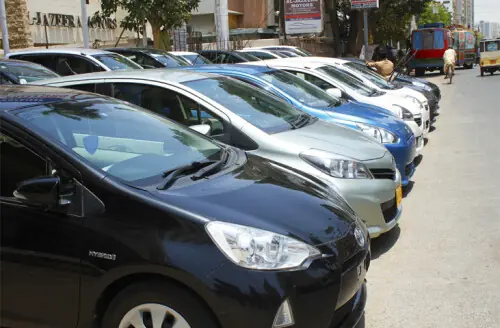
The auto sector has been on a fast track, supported by lower interest rates and rising consumer confidence. Both imports of new and used cars surged by 24pc to $282m in July-April FY26 year on year (YoY), while imports of semi- and completely knocked-down kits by local assemblers have peaked at $1.7bn in the same period, up by 107pc YoY, suggesting more promising sales in the coming months.
According to the finance minister, the total number of assemblers (two-, three-, and four-wheelers) is now 118 in the country.
A used car importer said that on the one hand, the government aims to reduce regulatory duty and customs duty in the next five years under the IMF pressure but increasing the FED on luxury vehicles means that it would recover the lost revenue from lower customs duty and regulatory duty.
As per Economic Survey FY26, the New Energy Vehicle Policy 2025-2030, formulated by the government, aims to transform Pakistan’s transport sector by promoting electric and other new energy vehicles (NEVs). The policy targets 30pc of new vehicle sales by 2030, approximately 2.2 million vehicles, to comprise NEVs, including ebikes, scooters, rickshaws, cars, light commercial vehicles, buses, and trucks.
To support adoption, the policy offers cost-sharing subsidies through Pakistan Accelerated Vehicle Electrification, viability gap funding, and infrastructure development support, laying the foundation for a sustainable, low-emission transport ecosystem in the country.
Published in Dawn, June 13th, 2026