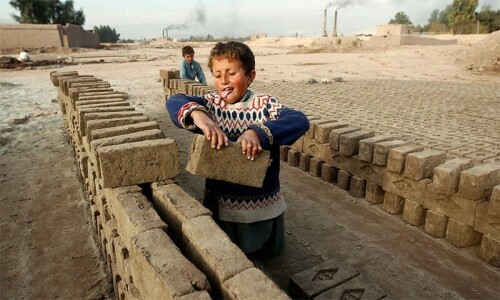
ISLAMABAD: Although the federal capital has legislation on child domestic labour dating back to 2020, its implementation remains far from satisfactory, and every fourth household employs a child domestic worker.
This was stated by Asiya Arif, Executive Director of the Society for the Protection of the Rights of the Child (Sparc).
She was speaking at an event organised by Sparc in collaboration with the National Commission on the Rights of the Child (NCRC) to commemorate World Day Against Child Labour 2026 under the global theme, “Red Card to Child Labour: Fair Play for Children, Decent Work for Adults,” here on Friday.
She stressed the need for a collective red card against child labour and called for addressing the issue in supply chains, hotels, automobile workshops, the brick kiln industry and other sectors.
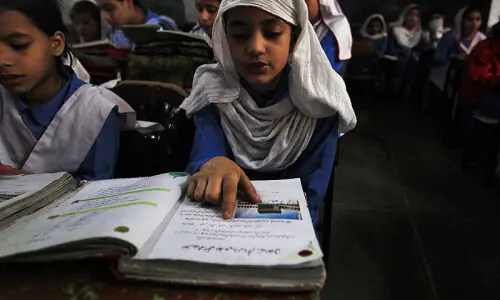
She emphasised the need for coordinated and sustained efforts through strong enforcement mechanisms, expanded social protection, and access to quality education in line with the Sustainable Development Goals (SDGs) and Article 16 of the Constitution. She noted that 26.2 million children are out of school, according to the Federal Ministry of Education.
Dr Nikhat Shakeel Khan, Convenor of the Parliamentary Caucus on Child Rights (PCCR), said that children represent Pakistan’s future and that their protection is fundamental to sustainable national development.
She emphasised that eliminating child labour requires coordinated action across all sectors, including government, civil society, the private sector, and communities, while also addressing root causes such as poverty, lack of access to quality education, and weak social protection systems.
MNA Dr Shazia Sobia Aslam Soomro called for stronger child protection mechanisms and rigorous enforcement of existing laws to end child labour.
She noted that children must be provided with safe environments and meaningful access to education rather than being compelled to work due to economic hardship. She underlined that sustained political commitment is essential to break the cycle of deprivation affecting millions of children.
MNA Riaz Fatyana emphasised the importance of prioritising child rights in national policymaking and ensuring that legislative commitments translate into practical implementation. He highlighted that child labour reflects deep-rooted socio-economic disparities and governance challenges.
He lamented that educated people employ child domestic workers. He further noted that eliminating child labour requires not only strong legal frameworks but also effective enforcement, improved monitoring systems, and greater investment in education and social protection.
Dr Khalil Ahmad Dogar, Program Manager at SPARC, said that this year’s theme underscores a fundamental reality: without decent work opportunities and adequate social protection for adults, many children remain vulnerable to exploitation and forced labour, depriving them of their childhood and future potential.
Nadia Bibi, a member of the NCRC, stressed the need for collective action by all stakeholders to curb child labour, while Sobia Ahmad of the Centre for Labour Research (CLR) called for the implementation of SDG Target 8.7 on forced labour.
Rabea Hadi, Director General of the Child Protection Institute at the Ministry of Human Rights, cautioned against issues surrounding child labour, including child trafficking, and called for zero tolerance towards child labour by all stakeholders, including the public.
Members of SPARC’s Children’s Clubs also participated in the event and highlighted the challenges faced by children engaged in labour. Most of them work to earn a living and attend school in the evening.
They urged all stakeholders to take immediate and collective action to protect children from exploitation and ensure their right to a safe and dignified childhood. The children further called on the state to provide equal opportunities, particularly in education and development, so they can fully realise their potential.
Published in Dawn, June 13th, 2026