India ‘actively working’ to deprive Pakistan of water


 0
0
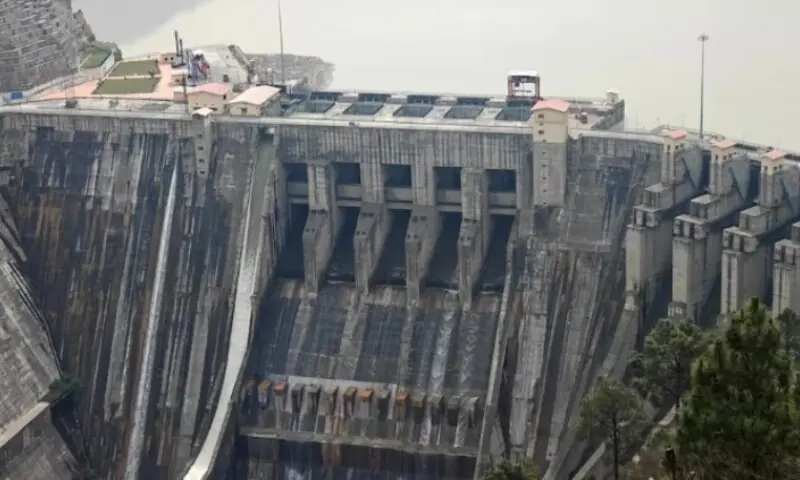

NEW DELHI: India is working to ensure “not a single drop of water” will flow into neighbouring Pakistan, the water minister has said, after New Delhi put the Indus Waters Treaty (IWT) into abeyance following the Pahalgam attack in April 2025.
“It is certain, not a single drop of water will go (to Pakistan) in the coming years,” Minister of Water CR Patil told India’s ANI news agency late Tuesday. Patil, speaking in Hindi, said that India is “actively working on it” after “directives” from Prime Minister Narendra Modi.
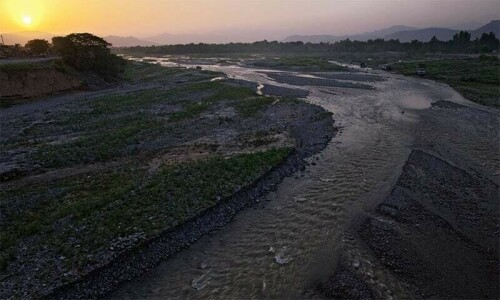
The treaty governs the use of water from six rivers, whose headwaters originate in India but flow into Pakistan as part of the Indus basin — a resource relied on by hundreds of millions. The Indus cuts through ultra-sensitive demarcation lines between India and Pakistan in contested, Muslim-majority Kashmir — a Himalayan territory both countries claim in full.
Indian water minister says working to ensure ‘not a single drop of water’ flows downstream
India in May 2025 suspended its IWT membership after accusing Islamabad of backing a deadly attack on tourists on the Indian side of Kashmir—charges Pakistan denied. The nuclear-armed neighbours fought a four-day conflict—with intense drone, missile and artillery exchanges, killing nearly 70 people on both sides.
The issue of water has remained a bitter point of contention since.
Experts say that India’s existing dams do not have the capacity to block or divert water, and can only regulate timings of when it releases flows.
Cutting flows would have serious implications for Pakistan’s agriculture and overall economy, but any project would take several years before it has an impact. An official in the Indian-held Kashmir said that any work would “not be possible to start before mid-2027”, and would take at least five years to complete.
Pakistan has previously said it would consider any attempt to change the flow of cross-border waterways as an “act of war”, saying the 1960 treaty remained in force as there was no mechanism to unilaterally withdraw from it. It had also urged the UN Security Council to take up the dispute over the IWT, warning that India’s continued unilateral suspension of the treaty carries “grave peace and security, and humanitarian consequences” for South Asia.
Published in Dawn, June 11th, 2026