Energy leaders warn against expanding fossil fuels amid Hormuz shock


 0
0
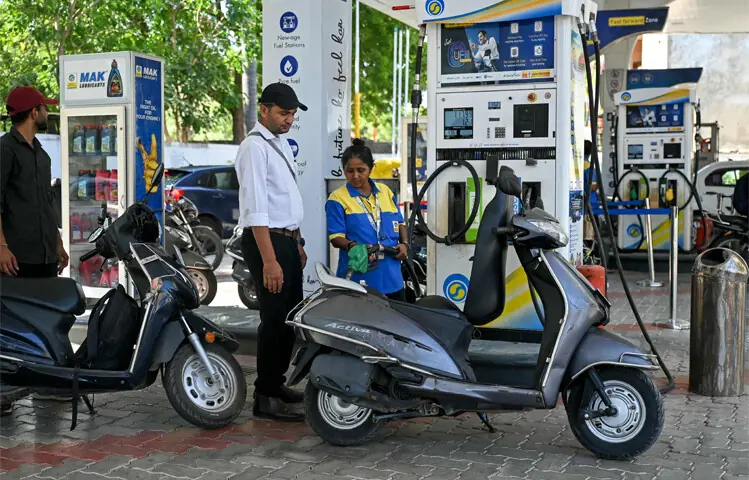

ISLAMABAD: As energy disruptions caused by the Strait of Hormuz’s closure create a worldwide crisis, a new study by the Energy Transitions Commission (ETC) warned against expanding fossil fuel infrastructure and called for accelerating renewable energy to build resilience against future shocks.
The study by the ETC, a coalition of energy leaders aiming to achieve net-zero by 2050, said fossil fuel systems transmit shocks while clean energy systems, which have an upfront capital cost, absorb them.
“Fossil systems rely on continuous commodity flows through concentrated chokepoints, meaning disruptions are rapidly transmitted through global prices. By contrast, 70-90 per cent clean energy costs are upfront capital costs,” it said.
The study also alluded to recent research, which claimed rooftop solarisation in Pakistan shielded the country from the Hormuz shock and saved $12 billion since 2020. This solar expansion translated directly into reduced gas demand.
Energy Transitions Commission report says accelerating clean energy deployment not only a ‘climate imperative’, but also strategic response to fuel price volatility
The ETC noted that expanding fossil fuel infrastructure risked locking in future shocks, while clean technologies, such as solar, electric vehicles, and heat pumps, could reduce oil demand by almost a quarter by 2035. “EV deployment alone could displace around five million barrels per day by 2030 and 9-10 million barrels a day by 2035 — roughly half of pre-crisis Hormuz oil flows,” it said.
However, elevated fossil fuel prices could cost $1-2 trillion in annual global oil and gas expenditure, not for more energy, but for the same energy at a higher cost. “That is comparable to the annual clean energy investment gap of roughly $1.5tr, the difference between today’s investment levels of around $2tr and the $3.5tr needed annually to build a net-zero, more resilient energy system through to 2050.”
Accelerating clean energy deployment is therefore not only a climate imperative, but also an economic and strategic response to fossil fuel volatility, it said, adding that renewables strengthened resilience to geopolitical disruption. Unlike the 2022 fuel crisis, Pakistan managed to shield itself from the worst impacts of the Hormuz disruption due to rooftop solar, it added.
The report urged governments to accelerate renewable electricity deployment, electrify road transport, heating and cooking, scale green fuels and fertilisers, and improve energy efficiency to reduce exposure to fossil fuel volatility while strengthening energy security and affordability.
“The current crisis shows fossil fuel dependence is not only a climate risk, but also an economic and strategic vulnerability. Clean energy systems are more distributed, more efficient, and less exposed to the price shocks created by continuous dependence on traded fuels,” said Adair Turner, co-chair of the ETC.
The report acknowledged the impact of rising fuel prices on vulnerable households, but said short-term trade-offs must still be managed. Any short-term support should be highly targeted at those most in need and avoid distorting price signals that favour fossil fuels over clean energy, it added. “…governments should avoid blanket fossil fuel subsidies, new coal capacity, large-scale upstream oil and gas expansion, long-lived LNG lock-in, and weakening carbon pricing signals.”
It also cited energy think tank EMBER’s analysis of the current crisis, which highlights that clean technologies are now sufficiently widespread and affordable, to form part of the strategic response to fossil fuel shocks.
The costs of renewables, particularly batteries, have been falling since 2022, which make them increasingly cost-competitive with fossil fuel generation. “Global renewable capacity is expected to expand by around 4,600GW by 2030, nearly doubling current levels, with solar PV accounting for roughly 80pc of this growth,” it noted.
Published in Dawn, May 16th, 2026