What does saffronisation of West Bengal mean for Dhaka?

FOR 75 years, West Bengal told itself a story: we are the land of Tagore and Vivekananda, of Bankim and Bose, of Amartya Sen and Abhijit Banerjee, of coffee house Marxists and high-minded bhadralok secularism. We are too refined for the politics of mandir and masjid. The Partition of 1947? A regrettable necessity inflicted upon us by lesser provinces.
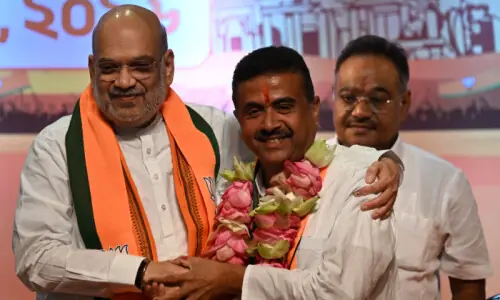
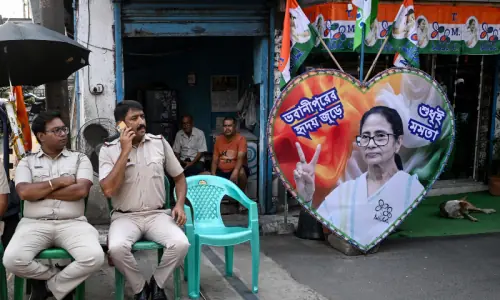
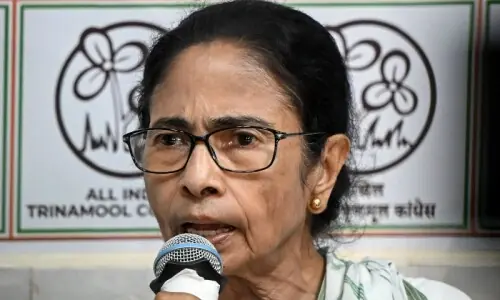
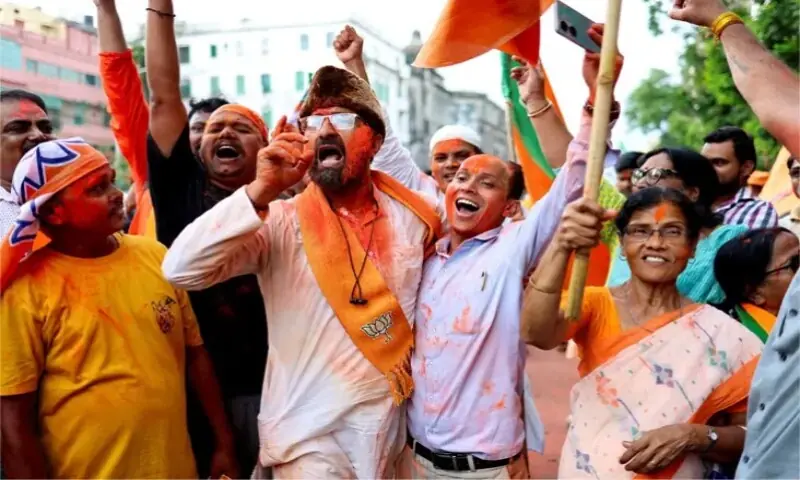
On May 4, 2026, that story died as Suvendu Adhikari beat Mamata Banerjee on her own turf, Bhabanipur, by at least 15,000 votes. The BJP walked away with over 200 of West Bengal’s 294 seats, and the Trinamool Congress (TMC) collapsed to roughly 80. The Left and the Indian National Congress remained where they have been parked since 2011: in near oblivion. The Kolkata bhadralok society has, at last, found its inner Sanatani. Partition, it turns out, was not a tragedy of misunderstanding; it was a verdict ahead of its time.
This matters for Bangladesh in ways our political elites have yet to absorb. The country is now, geographically, surrounded by the saffron flag. Tripura: BJP. Assam: Himanta Biswa Sarma, who campaigned in West Bengal for Adhikari and vividly spoke of pushing individuals across the border — a phrase that does not appear in any Vienna Convention I know of. Dhaka summoned the acting Indian high commissioner on April 30 to protest remarks by the Assam CM; four days later, the BJP won West Bengal on precisely that rhetoric. In retrospect, the summons seems only to have goaded the politics it sought to restrain.
So, how did the citadel fall? First, the Election Commission’s Special Intensive Revision (SIR) of the voters vaporised nearly nine million voters, roughly 12 percent of the electorate, with a disproportionate impact on Muslim communities. It reminds me of the Bollywood cult Gabbar Singh. Kitne aadmi the? Nine million, sardar. TMC’s most reliable bank was emptied before the first ballot was cast. Adhikari helpfully assured Indian Muslims that the SIR would target only Bangladeshi infiltrators, a category whose definition appears to expand with every rally. The Awami League was structurally deaf to all this; the BNP dispensation, judged by the foreign minister’s first outing (to India), appears to be auditioning for the role of selfie partner. But let’s not get ahead of ourselves.
Partition, it turns out, was not a tragedy of misunderstanding; it was a verdict ahead of its time.
Second, the central government deployed 2,400 companies of Central Armed Police Forces — probably the largest paramilitary footprint in any state election in Indian history — supplemented by the National Investigation Agency (NIA) debuting in a state poll. This obliterated TMC’s booth-level apparatus. Turnout hit 93pc. That was not suppression but redirection: voters who had operated under TMC’s organisational canopy found themselves, for once, voting freely. Freedom, it transpires, broke decisively for the BJP.
Third, years of anti-incumbency — stalled industrialisation, the SSC scandal in which teachers were hired by what one can only call tombola, and a welfare-dependent economy that printed lakhs of “Lakshmir Bhandar” coupons but very few private-sector jobs — left Mamata’s record indefensible. And before any of this, Mamata had spent 15 years weakening the Bengal Congress, the very ally that built her career, leaving herself, in 2026, with no secular flank to fall back on.
Fourth, the post-Hasina collapse of Bangladesh-India ties did the rest. Visa suspensions. Closures at Petrapole-Benapole, the corridor handling 70pc of bilateral land-based trade. Port restrictions are hitting $770 million in Bangladeshi exports, 42pc of what we send to India. And the securitisation of the entire 4,096km frontier, complete with an internal BSF communiqué leaked to The Hindu, exploring the “operational feasibility of deploying reptiles or crocodiles” in riverine gaps. Yes, crocodiles. Indian North Block apparently concluded that wildlife was the cheaper subcontractor.
The Dhaka-Kolkata corridor that quietly underwrote Kolkata New Market, the Park Street economy, and West Bengal’s wider SME sector, and the Bangladeshi shoppers, traders, students, and patients on whom Mamata’s economy quietly depended, simply collapsed. Mamata could neither lobby Delhi nor offer an alternative.
Weeks before West Bengal voted, Bangladesh’s foreign minister was in Delhi describing the trip as a “goodwill” mission to take ties in a “new direction.” The new direction, as it happened, was both towards Mauritius with Indian foreign minister as a travel partner to attend an Indian Ocean Conference hosted by India Foundation, and northwards on April 8, while he was still in Delhi, when Ali Hossain of Dhabalguri was shot dead by the BSF at Patgram. Goodwill, one supposes, has a body count. The Awami League looked away from such numbers as the price of patronage; I have yet to understand where our post-July 2024 politicians are heading.
Now consider what awaits the BNP that swept to parliament in Bangladesh’s 13th general election in February. Adhikari told reporters in December last year that Bangladesh should be “taught a lesson like Israel taught Gaza.”—The Daily Star (Bangladesh)/ANN
Published in Dawn, May 11th, 2026