After BBC exposé, ex-SAPM on health voices alarm at uptick in HIV cases in Pakistan
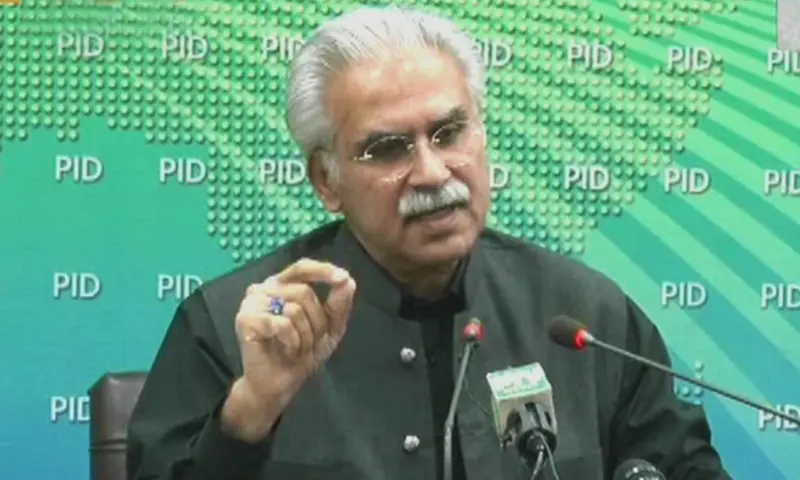

ISLAMABAD: Former special assistant to the prime minister (SAPM) on health Dr Zafar Mirza on Saturday voiced alarm at the rising number of HIV cases in Pakistan, warning that the situation was becoming increasingly alarming.
Addressing a press conference at the National Press Club, he referred to the emergence of HIV cases in Taunsa uncovered by the BBC, saying that the reuse of contaminated syringes and inadequate screening of blood before transfusions were major contributors to the spread of the disease.
He also demanded that the report prepared by the Punjab government’s commission on the matter be made public and demanded an audit of global health funding received by Pakistan.
Dr Rana Jawad, Dr Qaid Saeed, Asghar Satti, and an HIV-positive patient were also present alongside Zafar during the press conference.
Zafar said that Pakistan, along with countries like India and China, had one of the highest numbers of HIV cases in Asia. The ex-SAPM noted approximately 70 per cent of blood transfusions in the country were conducted without proper screening, stressing that diseases such as Hepatitis C, Hepatitis B, HIV, and malaria required strict and regular screening protocols to curb their spread.
He emphasised that proper screening of blood before transfusion was essential to prevent the spread of life-threatening illnesses. Dr Mirza added that the growing prevalence of HIV and other infectious diseases reflected the weaknesses in the country’s healthcare system.
He described the Taunsa incident as a clear example of systemic failure within Pakistan’s healthcare infrastructure.
He stated that the issue could not be blamed on a single government, but was a collective failure over time. However, he emphasised that it was imperative for both the public and the government to recognise the gravity of the situation, urging the federal and provincial governments to take their responsibility seriously and implement effective measures.
He highlighted that the country’s health sector was not yet fully privatised and stressed the urgent need for comprehensive reforms to strengthen the healthcare system.
‘Regularisation’ of informal settlements sought
Meanwhile, Dr Mirza, who is also the spokesperson of the Awaam Pakistan party, in a statement also expressed grave concern over the ongoing demolition of homes in Islamabad’s katchi abadis and condemned the operation.
“Despite a clear stay order (injunctive order) issued by the Federal Constitutional Court (FCC), the continued operations in Bari Imam, Allama Iqbal Colony G-7, and other areas constitute a blatant violation of court directives and a direct assault on the fundamental rights of vulnerable citizens,” he said.
“Awaam Pakistan welcomes the decision of the FCC to uphold the injunction against forced evictions and to direct the CDA to formulate a clear, comprehensive, and workable policy on katchi abadis within four weeks. However, we believe that this delay has left hundreds of thousands of citizens in a state of uncertainty and fear — an unacceptable situation in any civilised society.”
Dr Mirza said Awaam Pakistan maintained that the state’s primary responsibility was to protect its most vulnerable citizens, not to deprive them of shelter.
He further said, “At present, over 450,000 residents in Islamabad have either been rendered homeless or are living under the constant threat of displacement. Awaam Pakistan views this not merely as an administrative issue, but as a serious humanitarian and constitutional crisis. Standing in solidarity with the All Pakistan Alliance for Katchi Abadis, Awaam Pakistan remains committed to supporting all citizens striving for their fundamental rights to shelter, security, and dignity.”
He said the party demanded that the demolition of homes be halted immediately, full and immediate compliance with court orders be ensured, affected families be provided with immediate protection, alternative housing, and fair compensation, and a comprehensive and sustainable policy be developed with the active consultation of affected communities.
“We reiterate our commitment to being a strong and effective voice for the residents of katchi abadis at every forum and will continue our struggle for the protection of their constitutional and human rights,” Dr Mirza said.