Industry awaits drop in war-risk surcharges
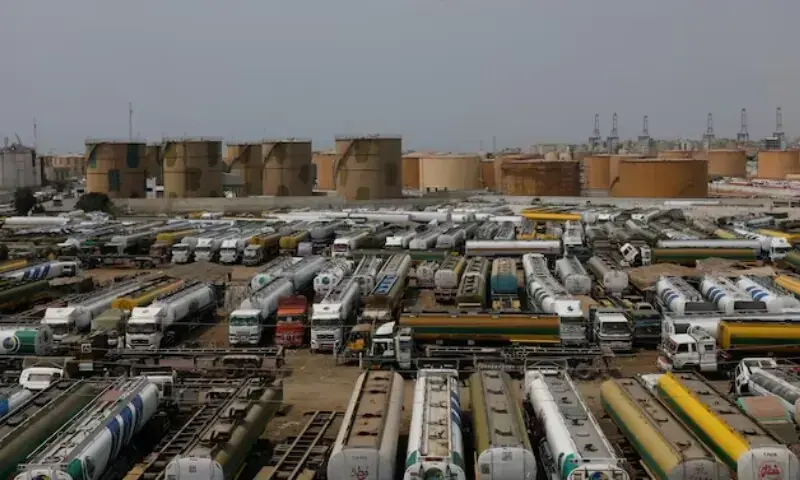

KARACHI: Extending a cautious welcome to the reopening of the Strait of Hormuz, trade and industry leaders said that much will depend on how quickly foreign shipping lines reduce the war risk surcharge, emergency bunker surcharge (EMS) and General Rate Increase (GRI), which have increased the landed cost of finished goods and raw materials.
Previously, the ongoing war had significantly disrupted operations across major transhipment hubs, particularly Jebel Ali Port and Port of Salalah. A substantial portion of cargo destined for Pakistan, which traditionally routes through these ports, had been adversely affected.
These disruptions have led to increased fuel costs, while shipping lines operating from origins such as Australia, Singapore, China, and Thailand have imposed an immediate GRI of $300-500 per container — equivalent to approximately $12-20 per tonne.
Foreign shipping lines had imposed a war risk surcharge (WRS) of $1,200-2,000 per 20ft containers and $2,300-3,000 per 40ft containers for cargo to/from/via the Upper Gulf, Arabian Gulf and Persian Gulf along with emergency bunker surcharge (EBS) for all areas ranging between $70-400 depending on the containers’ sizes.
Hormuz reopening seen easing supply chains
While seeing the development as very positive for the supply chain, fuel and international trade, Overseas Investors Chambers of Commerce and Industry (OICC) Secretary General M. Abdul Aleem hoped that gradually businesses will build the confidence to normalise trade and commerce.”
Karachi Wholesales Grocers Association Senior Vice-Chairman Faisal Anis Majeed said it may take two to three months to see the impact of Iran’s decision and hoped the shipping lines would remove all charges, as stakeholders have already paid them.
At present, the local pulses market remains oversupplied, resulting in competitive pricing that is, in many cases, lower than prevailing international rates. However, this situation may not sustain. New booking rates had increased due to rising input costs, including fertilisers, utilities, oil, and freight, Mr Anis said.
While the base commodity prices have not shown a significant upward trend, these additional cost pressures are automatically pushing overall prices higher — an impact that is likely to become visible in the near future, he said.
North Karachi Association of Trade and Industry President Faisal Moiz Khan this timely development, aligned with the Lebanon ceasefire, ensures safe and uninterrupted passage through one of the world’s most critical chokepoints, significantly boosting global trade by reducing transit risks, lowering insurance costs, and restoring supply chain predictability, he said.
Published in Dawn, April 18th, 2026