RECENT geopolitical developments in the Middle East have once again reminded us that maritime routes are not just lines on a map. They are the lifeblood of global trade, energy security and economic stability. For Singapore, a small nation highly dependent on trade, navigational rights and freedoms are not merely a preference, but an existential necessity.
Under the United Nations Convention on the Law of the Sea (UNCLOS), straits such as the Strait of Hormuz, as well as the straits of Malacca and Singapore, are considered “straits used for international navigation”. In these straits, international law provides for the right of transit passage for ships and aircraft as a continuing right, not subject to suspension, and not dependent on prior permission or payment of fees.
Article 44 of UNCLOS states that a state shall not hamper or suspend transit passage. Many of the principles in UNCLOS, particularly those relating to freedom of navigation and passage through international straits, are widely considered to be part of customary international law, which all countries are bound by, even those that have not ratified UNCLOS.
The importance of international routes such as the Strait of Hormuz and the straits of Malacca and Singapore can be seen from global data. The straits of Malacca and Singapore alone handle the transport of around 23.2 million barrels of oil per day, followed by the Strait of Hormuz at around 20.9 million barrels per day, out of a global flow of around 80 million barrels per day. This makes these straits among the most critical to the world economy.
Without this right, access to critical sea lanes risks becoming a matter of bargaining power — something Singapore can ill afford
However, recent developments in the Strait of Hormuz indicate a very worrying development not only from the geopolitical and economic perspectives, but also from an international legal perspective.
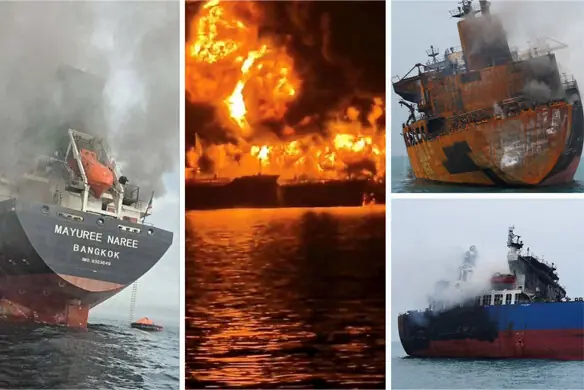
The Strait of Hormuz has long operated as an open international route, prior to this latest conflict in the Middle East, in line with the right of transit passage. However, after the United States and Israel launched military attacks on Iran in late February 2026, Iran responded by using drones and sea mines to threaten and attack ships, effectively imposing a functional blockade. Shipping traffic plummeted by 90 per cent, causing major disruptions to global supplies of energy and other essential materials.
Reports that legislation has been passed to impose fees or tolls on the route are deeply worrying. This development marks a fundamental shift from transit passage as a right to conditional and selective access.
The Strait of Hormuz has long operated as an open international route, prior to this latest conflict in the Middle East, in line with the right of transit passage. However, after the United States and Israel launched military attacks on Iran in late February 2026, Iran responded by using drones and sea mines to threaten and attack ships, effectively imposing a functional blockade. Shipping traffic plummeted by 90 per cent, causing major disruptions to global supplies of energy and other essential materials.
Reports that legislation has been passed to impose fees or tolls on the route are deeply worrying. This development marks a fundamental shift from transit passage as a right to conditional and selective access.
What is happening in the Strait of Hormuz today may foreshadow risks for Singapore. If such practices are normalised or tolerated, they could reshape expectations of state behaviour in other choke points. And if navigational rights and freedoms become something that has to be negotiated or paid for, then the entire global trading system, which a small country like Singapore depends on, will be in jeopardy.
The Malay proverb “where the earth is trodden, there the sky is upheld” reminds us of the importance of respecting the rules-based international system everywhere. But the system itself must remain firm and consistent. It cannot bend under geopolitical pressures.
Singapore cannot accept arrangements that set a precedent of paying for or negotiating what should be a right, without implicitly eroding this legal principle. To do so would be to transform a right into a privilege that can be withdrawn at any time.
The effects of this Middle East conflict are felt by the entire world. And ultimately, all countries, including those in our region, will have to reckon with its implications.
With the recent ceasefire agreed by the US and Iran, the Strait of Hormuz may be opened and global supplies may be able to resume in the meantime. However, the episode has already exposed the vulnerability of global trade flows, and the effects will continue long after the ceasefire ends.
In this turbulent world, international principles and laws are anchors for a small country like Singapore. Without them, access to critical sea lanes risks becoming a matter of bargaining power — something that Singapore can ill afford.
Published in Dawn, April 13th, 2026