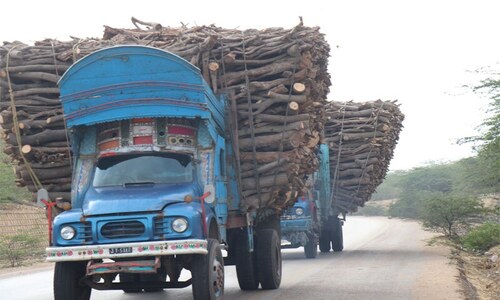
621,000 acres of forest area mapped thru satellite imagery in Punjab
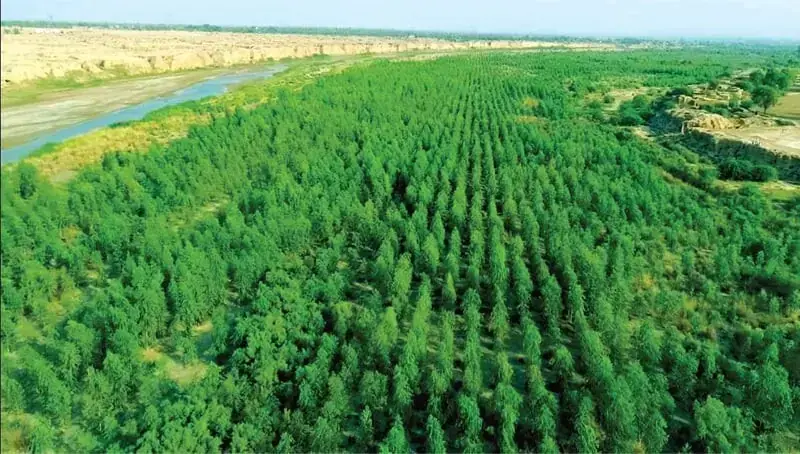
LAHORE: The Punjab forest, wildlife and fisheries department has digitally mapped 621,000 acres of forest area, using satellite imagery, to ensure more effective monitoring and planning in the province.
“The forest department has prepared a 100-year digital forest inventory, developed through Geographic Information System (GIS), remote sensing and satellite imagery,” a forest department senior officer told Dawn on Thursday.
The department observed International Day of Forests on March 21 under this year’s theme “Forests and Livelihoods/Economies,” emphasising the importance of forests in providing employment, environmental protection and sustainable development.
The officer says the department used advanced digital monitoring tools, artificial intelligence (AI) and satellite technology to enhance forest protection, prevent illegal logging and improve environment management.
He says the department has also introduced Pakistan’s first AI-based forest mobile application, integrating digital mapping, thermal surveillance, biomass estimation and tree inventory verification.
“Artificial intelligence is also being used to identify plant diseases and support decision-making for forest health management,” the officer explains.
The use of modern technologies, such as machine learning and deep learning, have enabled digital tree enumeration, achieving over 80 percent accuracy in forest data analysis, the officer adds.
The officer says the satellite-based monitoring systems are helping detect illegal encroachments, deforestation and land-use changes in real time.
He says a centralised ‘Forest Control Room’ has been established to monitor forest fires, timber theft and encroachments, using field staff reports and satellite data.
The department has also activated 24-hour emergency helplines to facilitate public reporting of illegal activities affecting the forests.
It says modern ranger mobility has been strengthened through installation of surveillance systems and monitoring equipment across forest areas.
New technologies, such as thermal cameras and remote sensing tools, are helping forest officers respond more effectively to threats, it adds.
LEGISLATIVE REFORMS: The Punjab government has amended the Forest Act 1927, introducing stricter penalties for forest damage and illegal tree cutting.
Under the revised legal framework, offenders may face up to seven-year imprisonment and fines up to Rs50 million, reflecting the government’s firm commitment to forest conservation.
In order to improve environmental conditions, Punjab has set a target to plant approximately over 42 million trees across 50,869 acres.
Additionally, under agro-forestry initiatives, about 1.375m trees will be planted over 3,790 acres of private and unused land.
During the Spring Plantation Campaign 2026, the government plans to plant more than 14m trees at over 100 locations across the province.
Authorities report that improved monitoring systems have contributed to a 62pc reduction in incidents of forest fires, demonstrating the effectiveness of technology-driven forest management.
Globally, forests provide livelihoods to approximately 1.6 billion people and play a key role in regulating climate, conserving biodiversity and maintaining ecological balance.
Experts emphasise that adoption of digital tools and sustainable forest policies is essential to address environmental challenges such as climate change, land degradation and biodiversity loss.
Officials state that Punjab’s initiatives represent a significant step towards modernising forest governance and ensuring long-term protection of natural resources in line with global commitments on climate and sustainability.
Published in Dawn, March 27th, 2026