0
0

ISLAMABAD: Ill-planned surplus generation capacity, low plant utilisation, high fixed costs and inefficient dispatch have become a persistent source of expensive consumer-end power tariffs and a financial drain on the power sector and the federal budget, as nearly two-thirds of tariffs stem from capacity charges and one-third from energy costs.
This assessment was outlined by the National Electric Power Regulatory Authority (Nepra) in its annual report on power plant performance for the fiscal year 2024-25. “Overall, the sector’s high fixed costs, low utilisation, and inefficient dispatch of generation resources collectively resulted in higher electricity tariffs and financial stress on the power system,” the report said.
“In summary, achieving an economically sustainable power sector requires thorough evaluation of the financial and economic consequences before adding new generation capacity. Simply expanding capacity without assessing its cost-effectiveness and expected utilisation can result in inefficiencies such as underused assets and increased electricity costs for consumers,” the regulator noted.
It added that a balanced strategy considering long-term financial factors — including capacity purchase price (CPP), energy purchase price (EPP) and overall grid stability — was crucial to ensure that generation capacity matched actual demand, optimised the use of available resources, and incorporated flexible solutions such as renewable energy alongside more cost-efficient technologies.
61pc of Rs2.943tr power purchase cost paid as capacity charges
By carefully analysing the economic impact of each new capacity addition, the power sector can minimise unnecessary financial strain, improve efficiency and help reduce electricity tariffs. During the year, overall utilisation of thermal power plants stood at 42.5 per cent of capacity, while renewable energy plants operated at an average utilisation of 36.6pc.
“This underutilisation, coupled with excess installed capacity, led to a significant rise in per-unit electricity costs, primarily due to higher capacity payments,” the report said. The total power purchase cost during FY25 — excluding electricity imported from Iran — was recorded at Rs2.943 trillion, of which 61pc comprised CPP and 39pc EPP.
The per-unit CPP averaged Rs14.3 per kWh and the EPP Rs9 per kWh. “The elevated CPP stemmed mainly from surplus capacity and low plant utilisation, whereas the EPP was driven higher by dependence on costly imported fuels such as RLNG, RFO and imported coal,” the report said.
Conversely, plants based on indigenous fuels — including nuclear, Thar coal and local gas — offered substantially lower generation costs but remained underutilised. Among these, the Uch and Uch-II power plants, both operating on dedicated gas fields, demonstrated low generation costs of around Rs13.4 per kWh during FY25. However, their utilisation factors remained modest at 80.9pc and 71.6pc, respectively, against availability factors of 92.4pc and 95.7pc.
These plants rank among the top in the Economic Merit Order and represent some of the most economical generation sources in the national fleet. Their limited utilisation, however, restricts potential cost savings for the system.
This underutilisation has led to greater reliance on expensive imported fuel power plants, raising consumer-end tariffs through higher monthly fuel price adjustments. Furthermore, depletion of the Uch gas field, a mature reservoir, poses risks to the future sustainability of these plants.
Ensuring optimal utilisation of these lower-cost indigenous gas plants and proactively managing their fuel supply is therefore critical to reducing overall system costs and maintaining energy security.
Similarly, Thar coal-based power plants — another category of indigenous and cost-effective generation sources — operated at an average utilisation factor of 72.9pc during FY25, despite their competitive energy cost.
These plants are also ranked among the top in the Economic Merit Order. However, their underutilisation led to the dispatch of more expensive imported-fuel power plants, thereby increasing consumer-end tariffs through monthly fuel price adjustments.
Transmission bottlenecks and grid constraints also restricted the dispatch of cheaper power from the southern region to demand centres in the north, resulting in greater reliance on expensive imported fuel-based plants.
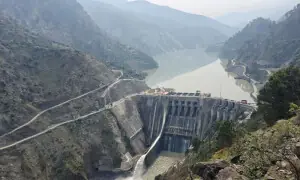
Prolonged outages at the Neelum-Jhelum Hydropower Plant and the Guddu 747MW unit further undermined cost efficiency. Renewable energy sources also faced curtailments due to intermittency and evacuation limitations, leading to Non-Project Missed Volume payments exceeding Rs13bn.
The report highlighted that varying load patterns and intermittent renewable generation increased part-load operations at thermal plants, adding Rs44.6bn in partial-load adjustment costs during FY25.
It confirmed the technical feasibility of drawing 2,000MW of power from the national grid under the existing configuration, but pointed out that KE’s operational and commercial arrangements, including the “Take-or-Pay” RLNG Gas Supply Agreement for BQPS-III and related part-load operation charges, continue to influence its generation mix and power drawl patterns.
For long-term sustainability, the regulator emphasised optimising generation capacity to match actual demand, prioritising low-cost indigenous fuels, expediting transmission upgrades to remove regional constraints, restoring non-operational low-cost plants, and carefully evaluating the economic implications of future capacity additions.
A balanced generation mix and improved system efficiency are essential to reducing electricity costs, enhancing reliability and ensuring a financially sustainable and resilient power sector, Nepra concluded.
Published in Dawn, March 4th, 2026