0
0

• Justice Jahangiri seeks time to engage counsel
• Raises objection to competence of CJ-led bench
• Chief Justice Dogar assures the judge justice will be served
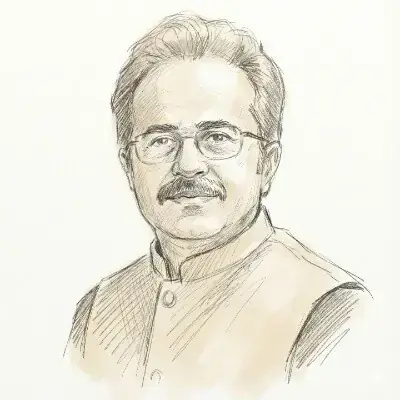
ISLAMABAD: The Islamabad High Court on Monday summoned the registrar of the University of Karachi (KU), along with the complete record relating to the law degree of Justice Tariq Mehmood Jahangiri, after the judge sought time to engage legal counsel in a petition challenging the legitimacy of his appointment.
An IHC division bench comprising Chief Justice Sardar Mohammad Sarfraz Dogar and Justice Mohammad Azam Khan resumed hearing on the petition filed by Advocate Mian Dawood, which questions the validity of Justice Jahangiri’s law degree and his subsequent elevation to the bench.
Justice Jahangiri appeared before the court in person and presented arguments in his defence against the allegations concerning his academic credentials and appointment, while also raising objections to the competence of the division bench hearing the matter.
Sources said that prior to appearing before the bench, Justice Jahangiri had discussed the issue with fellow judges in the chamber of a senior judge. He later arrived in the courtroom of the chief justice and took a seat among the litigants.
When proceedings began, he approached the rostrum accompanied by lawyers. However, Chief Justice Dogar advised the lawyers to return to their seats, observing that Justice Jahangiri was his colleague and that the court itself would address the matter.
Justice Jahangiri took exception to the remarks, responding that colleagues were not being treated appropriately in such circumstances.
The controversy surrounding the IHC judge’s law degree traces back to a letter that began circulating on social media last year, purportedly issued by the KU controller of examinations. Subsequently, a complaint alleging that Justice Jahangiri possessed a fake degree was filed before the Supreme Judicial Council (SJC) — the apex forum for judicial accountability — in July last year. Separately, a petition challenging his appointment was filed earlier this year by Advocate Dawood.
The matter was taken up on Monday by the same two-member bench in a packed courtroom.
At the outset, Justice Jahangiri raised a preliminary objection, contending that the division bench was “not competent” to hear the case as a separate petition concerning one of its members was pending before the court — an apparent reference to challenges to Chief Justice Dogar’s transfer to the IHC.
“We have filed a petition against you. You cannot hear this case,” Justice Jahangiri asserted.
Defending his academic credentials, he said the case was based on a 34-year-old educational record and maintained that the KU had never declared his degree fake.
“I am ready to take an oath on the Holy Quran that my degree is genuine,” he stated.
Justice Jahangiri also objected to the pace of the proceedings, criticising what he described as undue haste in issuing a three-day notice to respond to an issue dating back several decades.
At a previous hearing on Dec 9, the bench had granted the judge three days to respond to the facts brought on record. Due to time constraints, the notice was served at his chamber, where court staff received it and placed it before him.
Justice Jahangiri also criticised an earlier IHC directive restraining him from performing judicial functions, saying that such an order was unprecedented in the judicial history of Pakistan and India. “Not even a patwari or a peon was stopped from work in this manner,” he added.
Seeking an adjournment, Justice Jahangiri requested additional time to engage a lawyer and obtain the complete case record, saying insufficient time had been provided for preparation.
On the other hand, petitioner Dawood requested the court to conduct day-to-day hearings in the matter.
The bench adjourned proceedings until Dec 18, directing the KU registrar to appear in person with the complete record of Justice Jahangiri’s degree, while granting the judge time to engage legal counsel.
Chief Justice Dogar assured Justice Jahangiri that he would receive justice, repeatedly instructing the lawyers present in large numbers to return to their seats, and emphasising that the court wished to hear the judge in full.
Published in Dawn, December 16th, 2025