Karachiites warn of threat to remaining green spaces as KMC permits commercial activity


 1
1
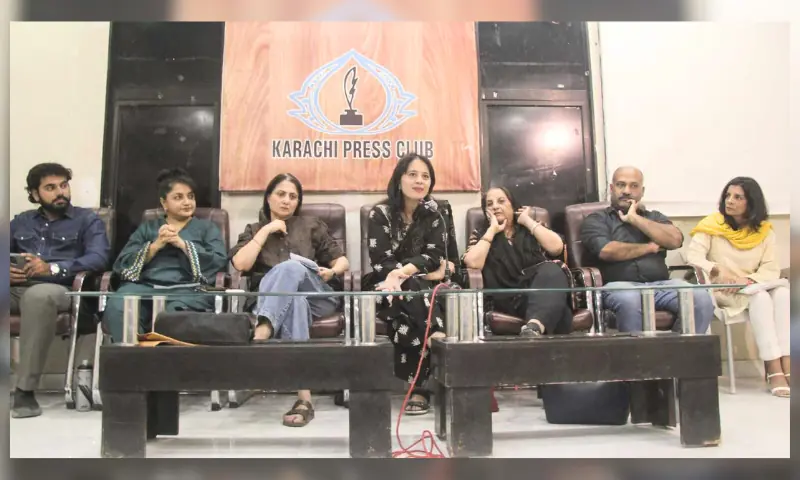

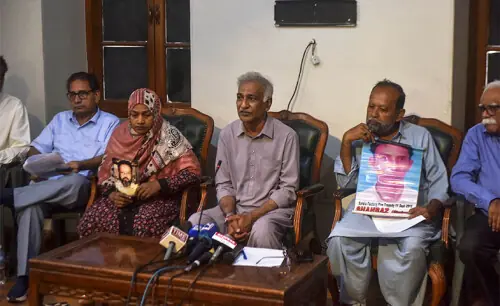
Residents, civil society activists, and others gathered at the Karachi Press Club on Tuesday to raise the alarm over an “urgent and alarming threat” to the city’s public and residential parks. The Karachi Metropolitan Corporation (KMC) has been permitting the construction of commercial structures, such as padel courts, inside otherwise quiet neighborhood parks.
The press conference was organised by the Residents’ Committee of Clifton, currently headed by Rasha Tarek. She opened the presser by stressing that the problem was not confined to any single locality but was widespread.
“They say that Clifton is considered a seemingly better area in terms of living, but the reality is that residents here are facing extreme problems,” she said.
“Parks, which serve as places meant for freshness and greenery, are becoming hubs of commercialisation in the name of ‘sports development’. People from DHA, where such commercial projects are restricted, come here and disturb the neighbourhood.
“Residents can’t sleep at night as activities continue till 3 or 4am with loud noise and hooting. The very purpose of parks, which is to give relief to people after long hours of work, is being completely destroyed,” she stated, further questioning how someone can afford an Rs8,000 padel court booking without hailing from an affluent background.
“We shouldn’t leave Karachi orphaned (lavaris),” Rasha said, urging citizens to speak up for their right to live with dignity.
Rashida Anjarwala, a resident and a petitioner in the Sindh High Court (SHC) on the issue, also addressed the gathering.
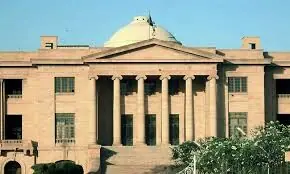
“Right in front of my house in Clifton is a park that has now been allotted for sports activities,” she said. “Before doing this, the KMC never took approval or even asked the primary residents. We were so affected that we filed a petition, but within two weeks, it was disposed of. I request that Mayor Murtaza Wahab look into this matter.”
Kamal Murtuza, another elderly resident of Clifton Block 2, added: “My wife and I walk in the parks, but now we just see big double-cabins with guards everywhere. We don’t feel like walking there anymore.”
He added that the new courts were limited to “people of a certain class”, whereas in the past, parks and playgrounds in Clifton and DHA catered to people from all sections of society, including those from nearby low-income areas.
“Now it is limited to just one per cent of society benefiting their health but not the 99 per cent, as one can’t afford these activities,” he said. “We need to stand up for our future generations, for people of all classes and genders.”
Speaking at the event, architect and urban planner Marvi Mazhar elaborated on why the trend is harmful for the city’s urban landscape.
“If you keep giving away parks for padel courts, how are you addressing the neighbourhood’s grievances?” she asked. “Local government should conduct proper surveys across Karachi’s neighbourhoods and act according to what benefits the community.
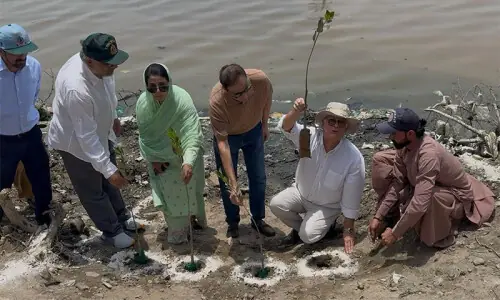
“For example, the Urban Forest project was actually in beneficial for the city, yet it was pushed to a corner with no funds for maintenance or security.”
Mazhar opined that creating padel courts on green spaces does not benefit the “development of the city”.
The speakers largely agreed that residents’ consent should be sought before any plans to develop such activities in their neighbourhood.
Other residents and experts also spoke at the presser, including documentary producer Madeeha Syed and environmental researcher and climate activist Ahmad Shabbar.