ISLAMABAD: The standing committees of both houses of parliament on law and justice in a joint session on Saturday cleared nearly 80 per cent of the proposed 27th Constitutional Amendment Bill, including most clauses of the judicial reforms package.
But deliberations on field marshal’s status under Article 243 of the Constitution were deferred to Sunday (today).
The joint session of the National Assembly and Senate committees was convened under the chairmanship of Senator Farooq H. Naek.
Despite a boycott by two members of the Jamiat Ulema-i-Islam-Fazl (JUI-F), Senator Kamran Murtaza and MNA Aliya Kamran, the committee continued its proceedings and examined several key constitutional amendments, particularly those pertaining to the superior judiciary.
JUI-F members boycott proceedings; deliberations on field marshal’s status today
The JUI-F legislators staged a walkout, alleging that provisions previously discarded during the 26th Amendment process were being reintroduced through 27th Amendment, terming the move a “breach of trust”.
Presidential order
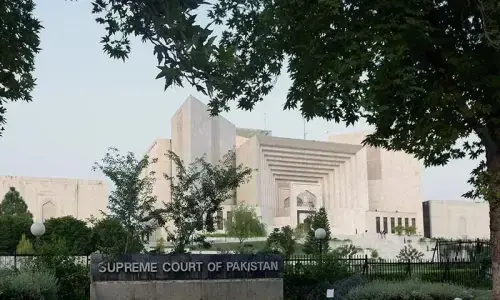
The committees discussed the composition and functioning of the proposed federal constitutional court.
According to informed sources, it was decided during the deliberations that the initial strength of the federal court would be determined through a presidential order.
However, they said, any subsequent increase in the number of judges would be made through an act of parliament.
Judges’ transfer
The standing committees in a joint sitting are also likely to finalise the mechanism for the transfer of high court judges through the Judicial Commission of Pakistan (JCP) — a process which may not require the consent of the judges being transferred.
Speaking to the media after the session, Senator Naek said that the JUI-F members had boycotted the meeting on the directives of their party leadership.
“After their departure, the meeting continued. Around 80 per cent of the proposed amendments have been examined.
The committee addressed the reservations raised by some members, developed consensus on most points, and resolved ambiguities on several issues,” he said.
Field marshal’s status
Responding to a question, he said the committee had not yet discussed Article 243, which would determine the constitutional status of a field marshal, but clarified that the matter would be examined in detail during the clause-by-clause review of the bill.
Law Minister Azam Nazeer Tarar told reporters after the meeting that all parliamentary parties were participating in the process and that the government had also “requested the opposition to contribute constructively”. He described the proposed constitutional package as a “long-awaited and comprehensive reform,” noting that it has been under discussion for more than a decade.
“At the time of the 18th Amendment, this issue was part of the broader constitutional agenda. It resurfaced during the 26th Amendment, but could not materialise due to certain political and procedural considerations,” he recalled.
Published in Dawn, November 9th, 2025