• CM Murad inaugurates second edition of mega show, which will continue till Dec 7
• Says Karachi remains the city where the world feels at home
• Artists from Nepal, Belgium, Syria, Congo, the US and Pakistan enthral audience at Arts Council on day one
KARACHI: Melodious songs, foot-tapping dances and an intriguing performance art piece were the highlights of the opening day of the second edition of the World Culture Festival (WCF) organised by the Arts Council of Pakistan on Friday.
As guests arrived to take part in the inaugural ceremony, they saw eminent sculptor Amin Gulgee and his team engaged in performance art in the open-air area outside the main auditorium. Their piece was called The Game. Then the invitees stepped into the main hall for formal proceedings.
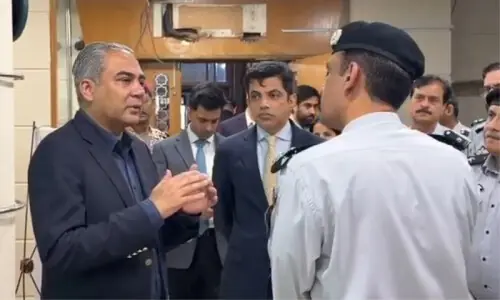
Sindh Chief Minister Syed Murad Ali Shah, who was the chief guest on the occasion, said the Arts Council has become the cultural heart not only of the city but of the entire nation.
“What began with the participation of 44 countries [last year] has now remarkably evolved into a festival representing 142 nations and more than 1,000 artists. Karachi, unpredictable, vibrant, alive… has always embodied the soul of Pakistan. Today it welcomes the world. This festival celebrates art not only for its beauty, but for its power, the power to heal, connect and resist. In an age of ongoing conflicts and deepening polarisation, we gather here as dancers, poets, painters, musicians and filmmakers from every corner of the world, speaking one shared language: humanity,” he said.
The chief minister said in the province of Sindh, culture is not merely a policy; it is a legacy. The poetry of Shah Abdul Latif Bhittai echoes in shrines and streets. “The rhythms of Sufi dhol and kafi continue to beat in the hearts of our people. We do not simply support culture, we live it.”
He thanked all guests who have travelled from their countries to participate in the event. “Karachi remains the city where the world feels at home.”
Earlier in his welcome address, Arts Council President Ahmed Shah profusely thanked all those who have helped him put up the event. Pointing out the importance of the artist community, he said artists raise their voice against genocide.
“In the last two years, the biggest genocide of the 21st century took place in Gaza. All over the world, even those countries who support Israel, their people raised their voice against genocide. It was the artists whose voice was the loudest. I was worried, how can I arrange the largest festival when there’s a genocide happening in Gaza. Thank God, with the support of the international community, there’s a temporary ceasefire. We can celebrate that ceasefire,” he said.
“The other thing is global connectivity and diplomacy through culture. Culture unites people. There’s a travel advisory from the US, but American artists are sitting here in the auditorium,” he added.
The speeches were followed by some brilliant performances. Shah Ja Faqir warmed everyone’s hearts by presenting sur Marvi in their soul-stirring style.
Madan Gopal from Nepal sang a lovely song about his country in which he included the word Karachi.
Lucy Tasker from Belgium displayed her skills as an instrumentalist. She masterfully played the bass clarinet. It was an improvisational piece.
Ammar Ashkar from Syria appeared on stage with the dholak player Irfan Ali. He mixed his Arabic folk tune with a touch of Sindhi folk. It was a delightful combination.
Arguably, the highlight of the show was Akbar Khamisu Khan’s performance on the alghoza. He played a composition that made the audience, which had packed the hall in the blink of an eye, clap to his track joyously.
France’s Zakaria Haffar added a different colour to the stage with his delicate playing of the santoor. He, too, was very good.
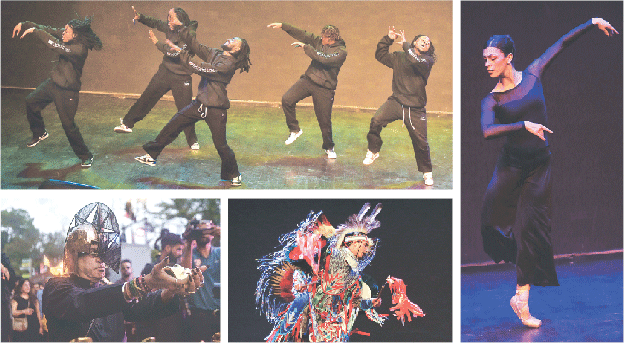
The shift from purely musical to the purely rhythmic changed when Congo’s street dancers entertained the guests with their youthful and energetic act. The younger lot in the audience especially liked their dance.
Another dance act followed with the American group, Ballet Beyond Borders. They presented two solo pieces: fancy war dance and contradiction. Both were expertly done.
Bangladesh’s Shireen Jawad also did a commendable job with her singing.
The festival will continue till Dec 7.
Published in Dawn, November 1st, 2025