Lahore having world’s worst air quality day in, day out
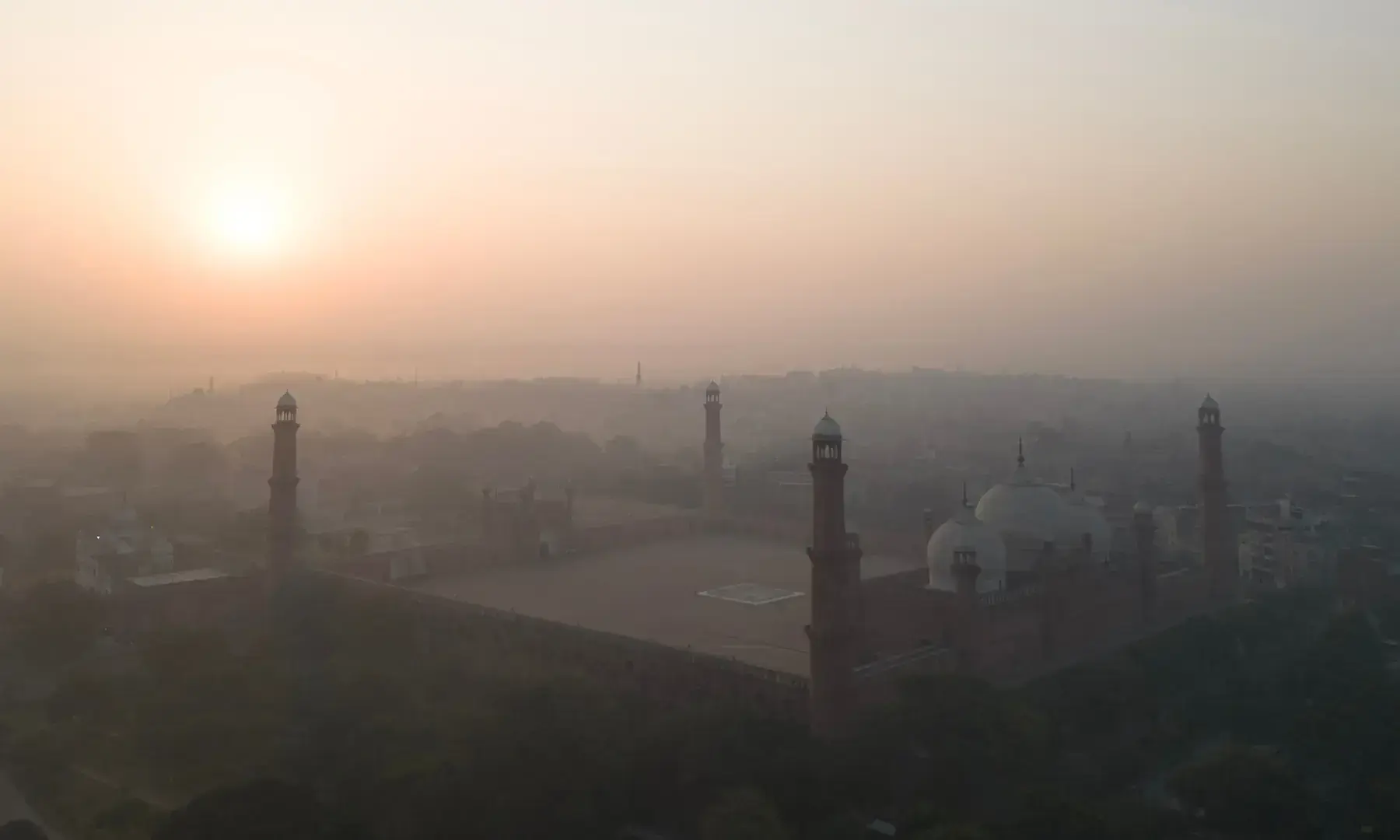


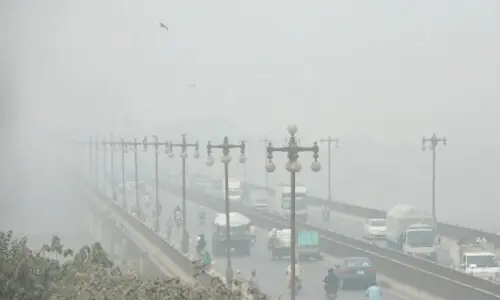
LAHORE: For yet another day, Lahore has been ranked the most polluted city in the world, with its air quality reaching hazardous levels, prompting urgent health warnings across the city.
The morning air quality index (AQI) in the provincial capital was recorded at a severe 422 maximum, categorising the air as hazardous and posing a serious risk to the health of population. Smog has not only reduced visibility but also cast a pall over daily life in the city.
The pollution crisis extends across Punjab, with other major cities also suffering. Faisalabad recorded an alarming particulate matter count of 622, Multan 485, and Bahawalpur 255.
According to the global air quality monitor IQAir, Lahore leads a list of South Asian cities, with New Delhi, Dhaka, and Kolkata following as the second, third, and fourth most polluted cities globally. Karachi ranked fifth with an AQI of 165.
Police register 14 cases, fine 115 individuals for causing smog; civic agencies taking steps to mitigate pollution
When this report was filed at about 10pm, Lahore was still the most polluted city of the world with AQI at 258 followed by New Delhi at 230 and Beijing at 194.
Meteorological conditions are expected to exacerbate the situation. Winds blowing in from the east, specifically from Indian Punjab, are predicted to further increase pollution levels in Lahore. Compounding the problem, low wind speeds and cold temperatures are trapping harmful particulate matter close to the ground.
Authorities are scrambling to mitigate the effects. The Lahore Waste Management Company (LWMC) has launched a large-scale anti-smog operation, deploying 16 mechanical washers, 50 regular washers, and 400 workers for road washing and water sprinkling. This operation is ongoing day and night across more than 300km of major highways, including Jail Road, Main Boulevard Gulberg, GT Road, and other high-AQI areas.
Echoing the concerns of medical experts, Senior Provincial Minister Marriyum Aurangzeb issued a directive, instructing citizens to “ensure they wear masks at all times”. Health professionals have specifically advised children, the elderly, and individuals with pre-existing respiratory or heart conditions to take extreme precautions and limit outdoor exposure.
Simultaneously, Punjab Police are conducting a widespread crackdown on activities contributing to smog. Over the last 24 hours, operations across Lahore and other districts resulted in 14 cases registered, 115 individuals fined a total of Rs10m and 53 others issued warnings. The violations included 13 incidents of crop residue burning, 86 cases of vehicles emitting excessive smoke, five industrial violations and 10 related to brick kilns.
Providing an annual perspective, the Punjab Police spokesperson revealed that since the beginning of the current year, 1,642 cases had been registered, 1,571 individuals had been arrested and fines exceeding Rs150m imposed on 60,275 people for smog-related violations.
Punjab Inspector General of Police (IGP) Dr Usman Anwar ordered a further acceleration of the anti-smog campaign. He directed the officials to take strict, immediate action under a zero-tolerance policy against anyone violating smog standard operating procedures on highways, in industrial and agricultural areas.
With weather conditions unfavourable and pollution levels critically high, the smog crisis in Lahore is projected to persist, with officials warning of increased intensity during morning and evening hours.
Civic agencies: Various civic agencies have launched activities to mitigate the effects of smog and protect citizens from its harmful effects.
In this regard, the Parks & Horticulture Authority (PHA) launched an awareness campaign, besides sprinkling water to wash trees on major roads. In parallel, a plantation drive had also been initiated.
According to PHA Lahore Director General Raja Mansoor Ahmad, PHA teams were using water bowsers to spray water on trees and plants on the Mall Road, Jail Road, Canal Road, Khayaban-e-Firdausi, Jain Mandir, Data Darbar, Ravi Road and Gulberg Road.
“Under the Lungs of Lahore project, millions of trees have been planted along the Ring Road, which is a significant step towards environmental conservation. The drive is part of the chief minister’s vision to create a clean and green Lahore. Millions of trees will also be planted around the Ring Road,” the DG said in a statement on Tuesday.
Various teams of the Ravi Urban Development Authority (Ruda) also intensified the authority’s anti-smog operations to augment the efforts of the Punjab Environmental Protection Agency (EPA). A Ruda spokesperson in a statement said that Ruda had been undertaking all mitigation and corrective measures to fight the menace of smog through both active and passive measures. All vehicles carrying sand, mud, or construction material must cover their loads before travelling on roads as the move was part of a broader plan to address sources contributing to the city’s recurring smog crisis. Moreover, heavy fines were being imposed on vehicle owners found breaching environmental laws, the spokesperson added.
The Water and Sanitation Agency (Wasa) and the Lahore Development Authority (LDA) had also started sprinkling water on roads, especially where various development schemes and projects were underway. The action had been initiated after media reports showed dust pollution caused by the excavation, dismantling and other civil works being carried out by Wasa and LDA on the Khayaban-e-Firdausi and other areas of the city.
On the other hand, the Lahore Waste Management Company (LWMC) had mobilised its washer vehicles, rickshaws, and sanitation teams throughout the city to reduce the harmful effects of smog. “LWMC’s washing teams have been deployed in Bhogiwal Road, Gujjarpura, and China Scheme areas, while road washing and water sprinkling activities are ongoing at Shahdara, Ravi Bridge, Azadi Chowk, and Circular Road,” said a spokesperson for the company.
He said that regular water sprinkling operations were also being conducted around the Railway Station, Badami Bagh Bus Stand, and Greater Iqbal Park.
Additionally, sprinkling was underway on key arteries, including the Mall Road, Jail Road, Gulberg Main Boulevard, and Canal Road. LWMC CEO Babar Sahib Din had directed to conduct water sprinkling operations at the city’s entry and exit points uninterruptedly to help reduce dust and air pollution.
Published in Dawn, October 29th, 2025