Murad approves expansion of safe city project to Karachi’s DHA, other areas


 1
1


KARACHI: Sindh Chief Minister Syed Murad Ali Shah on Monday approved the expansion of Karachi Safe City Project to broaden surveillance to additional areas of the city, including Defence Housing Authority (DHA), and high-risk commercial and residential zones.
Presiding over a review meeting of PhaseI, he was told that PhaseII would involve the installation of 4,750 cameras across the city, upgrade of 1,750 existing cameras, and installation of 3,000 new cameras, including Intelligent Traffic System (ITS) cameras that would support the echallan (TRACS) system.
The meeting was informed that Phase-II of the project would expand the surveillance system to more high-risk commercial and residential areas of the city, including the DHA and districts of South, East and Malir.
According to a press statement issued from the CM House, the chief minister approved the proposed scope of Phase II and directed the police department and the Safe City Authority (SCA) to significantly speed up implementation to ensure timely completion of that flagship public safety initiative.
Over 4,700 surveillance cameras to be installed in second phase, meeting told
The CM also reviewed budget requirements, staffing, transportation and operational needs for Phase II, directing the finance and home departments to finalise the financial model and ensure a smooth rollout without administrative delays.
The meeting, held at the CM House, was attended among others by Home Minister Ziaul Hasan Lanjar, Chief Secretary Asif Hyder Shah, Home Secretary Iqbal Memon, IG Police Ghulam Nabi Memon, Planning and Development Chairman Najam Shah, Secretary to CM Raheem Shaikh and SCA Director General Asif Aijaz Shaikh.
The SCA DG provided an update, saying that 891 surveillance cameras had been deployed across Karachi as part of the first phase of the project.
The meeting was informed that Phase-I of the video surveillance system, launched on May 31, 2024, was progressing on schedule for completion by Nov 30, 2025. This phase involves installing a modern, AI-enabled camera network, establishing command and control centres, and integrating law enforcement databases to bolster crime prevention, traffic management and emergency response.
The progress achieved includes the installation of CCTV cameras, poles, Point of Presence (POP) sites, servers and data storage infrastructure. Command and control rooms have been established while integration of analytical tools for facial recognition, vehicle tracking and real-time monitoring is ongoing.
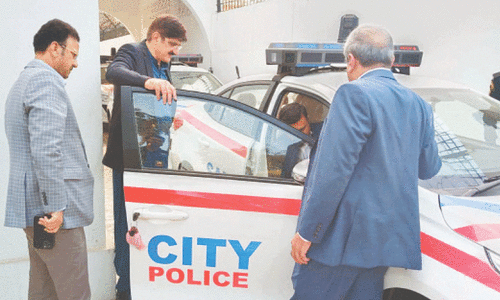
The home minister informed the meeting that 12 emergency response vehicles (ERVs) were deployed in the field, connected to the command centres to facilitate quicker ground responses.
The CM specifically directed the Safe City Authority to develop network connectivity to ensure seamless data transmission and to integrate various law enforcement databases, such as criminal records, vehicle registrations, and Nadra data, to enable smart policing.
Published in Dawn, October 21st, 2025