Nasa rover finds potential sign of ancient life in Martian rocks
Published September 11, 2025
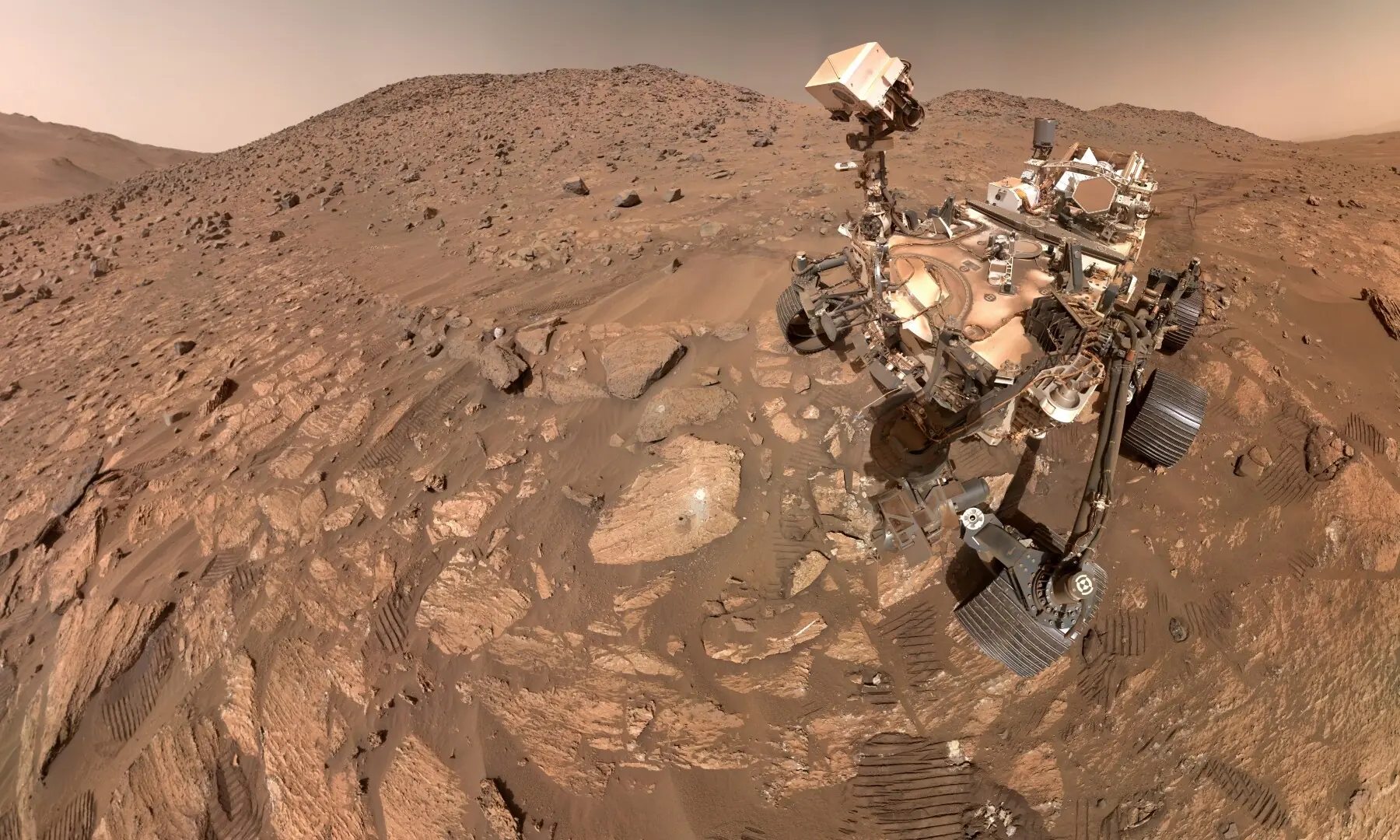
A “selfie” taken by NASA’s Perseverance Mars rover, made up of 62 individual images, on July 23, in this image released on Sept 10, 2025. — NASA/Handout via Reuters

WASHINGTON: A sample obtained by Nasa’s Perseverance rover of rock formed billions of years ago from sediment on the bottom of a lake contains potential signs of ancient microbial life on Mars, according to scientists, though the minerals spotted in the sample also can form through nonbiological processes.

The discovery, detailed in research published on Wednesday, represents one of the best pieces of evidence to date about the possibility that Earth’s planetary neighbour once harboured life.

Since landing on the Martian surface in 2021, the six-wheeled rover has been exploring Jezero Crater, an area in the planet’s northern hemisphere that once was flooded with water and home to an ancient lake basin, as it seeks signs of ancient life.

Perseverance has been collecting samples of rock and loose material called regolith and analysing them with its various onboard instruments.

The rover obtained the newly described sample, called the Sapphire Canyon sample, in a place called the Bright Angel rock formation.
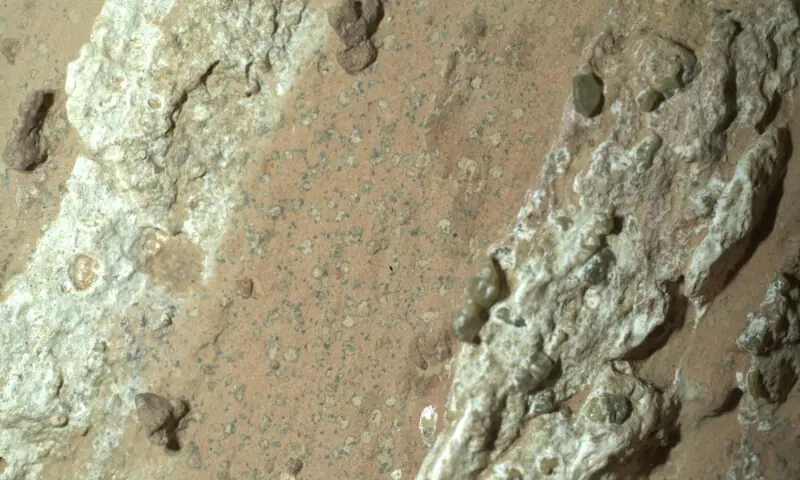
 A reddish rock nicknamed “Cheyava Falls”, with features resembling leopard spots was discovered by NASA’s Perseverance rover in Marsa’s Jezero Crater in July 2024, in this handout photograph released on Sept 10, 2025. — Reuters
A reddish rock nicknamed “Cheyava Falls”, with features resembling leopard spots was discovered by NASA’s Perseverance rover in Marsa’s Jezero Crater in July 2024, in this handout photograph released on Sept 10, 2025. — Reuters

This formation consists of fine-grained mudstones and coarse-grained conglomerates, a kind of sedimentary rock composed of gravel-sized particles cemented together by finer-grained sediments.

Stony Brook University planetary scientist Joel Hurowitz, who led the study published in the journal Nature, said that a “potential biosignature” was det­ected in multi-billion-year-old sedimentary rocks.

Published in Dawn, September 11th, 2025

Opinion

Editorial

Unsustainable growth
Updated 23 Jun, 2026

Unsustainable growth

CLICHÉS are an essential part of political rhetoric. But when repeated often, they lose their impact. So when...
Banned speeches
23 Jun, 2026

Banned speeches

NATIONAL Assembly Speaker Ayaz Sadiq on Sunday formally lifted long-standing restrictions on the airing of ...
New GB government
23 Jun, 2026

New GB government

WITH the newly elected lawmakers of the Gilgit-Baltistan Assembly taking oath on Monday, the PPP looks set to head...
A costly cut
Updated 22 Jun, 2026

A costly cut

Climate risks are increasing and public investment should reflect that reality.
Guarded access
22 Jun, 2026

Guarded access

ONE of the government’s ‘novel’ proposals to snag tax evaders has collided with some harsh realities. On...
Lyari’s passion
22 Jun, 2026

Lyari’s passion

THE love for football in Lyari knows no bounds. The World Cup might be underway thousands of miles away in North...