0
0

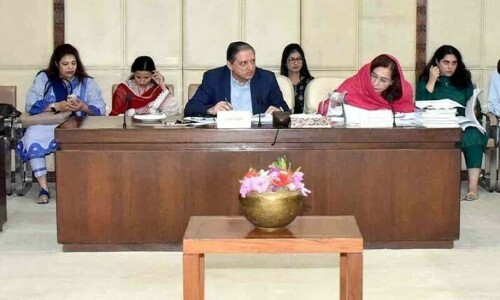
ISLAMABAD: The head of Benazir Income Support Programme (BISP) has said the organisation was not investigating alleged irregularities involving the company of former finance minister Miftah Ismail.
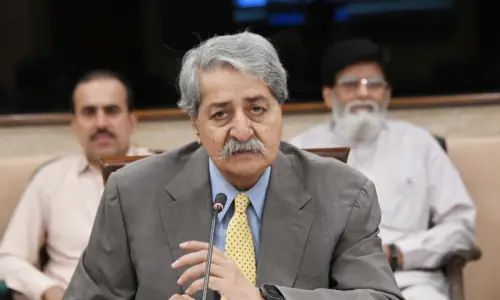
“BISP is not investigating the case but those involved in any wrongdoing must be punished,” BISP Chairperson Rubina Khalid said in a press briefing on Tuesday.
She was referring to allegations that Mr Ismail’s family company unfairly benefited from World Food Programme (WFP) contracts linked to the Benazir Nashonuma Programme (BNP), a BISP initiative to address stunting among pregnant and lactating women and their children.
Last week, Minister for Parliamentary Affairs Dr Tariq Fazal Chaudhry said in the Senate that a former finance minister had increased the budget of BNP at a time when his company was the sole supplier of specialised nutritional food under the programme.
Rubina hails nutrition programme’s impact on mothers and children
The minister didn’t name Mr Ismail, who is a critic of the current government. The former finance minister has rejected the allegations and called them politically motivated.
Ms Khalid said the controversy about the allocation would not affect the while programme, which according to official data so far has benefitted 645,800 pregnant women and 630,000 children.
“It is a wonderful programme to take care of mothers and children by providing healthy nutrition for two years since birth,” she added.
She credited the programme for cutting the rate of stunting in children by more than six per cent.
Exit strategy
While talking about BISP’s effectiveness and it’s impact, Ms Khalid rejected the impression that the programme was “turning people into beggars.”
She said BISP was a support programme and did not bar anyone from doing job or business.
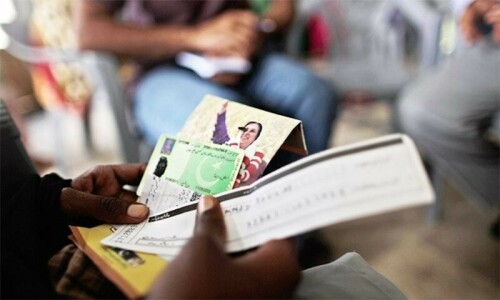
“We give a quarterly stipend of Rs13,500 to the beneficiaries, which means Rs4,500 per month. No one can run their house with this meagre amount, but it somehow reduces the gap between income and expenditure of the poor class,” Ms Khalid added.
She said BISP’s Hunarmand Programme was aimed at providing financial and technical assistance to the deserving students.
“Recently, two students who have benefited from the programme have clinched top positions in Class X in Multan,” she added.
When asked about steps taken to protect women beneficiaries from fraud, Ms Khalid said a new project was being launched on Aug 14 under which bank accounts of the beneficiaries will be opened in cities like Karachi, Lahore, Rawalpindi, Quetta, Gilgit and Muzzaffarabad, etc.
She said the programme has chalked out an “exit strategy” to see if the programme is having a tangible impact on people’s social status.
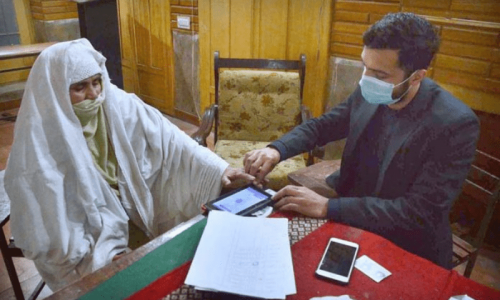
Under the strategy, more than 10 million beneficiaries of BISP will have to verify their status every three years.
The strategy has been implemented from June to determine whether the beneficiary’s monetary status has improved.
If any improvement in their financial status is confirmed, the said beneficiary will be removed from BISP’s beneficiaries’ data, Ms Khalid added.
Published in Dawn, July 30th, 2025