Israel bombs Syria army HQ after warning Damascus to leave Druze alone


Israel bombed the Syrian army’s headquarters in Damascus on Wednesday after warning the government to leave the country’s Druze minority alone, as authorities announced a ceasefire in the community’s southern heartland after deadly sectarian clashes.
Syrian government forces entered the majority-Druze city of Sweida on Tuesday with the stated aim of overseeing a ceasefire agreed with Druze community leaders following days of fighting with local Bedouin tribes.
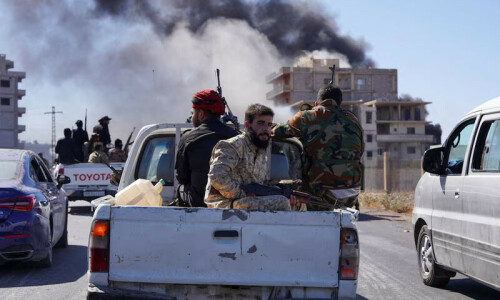
However, witnesses reported that the government forces joined with the Bedouin in attacking Druze fighters and civilians in a bloody rampage through the city.
The Syrian Observatory for Human Rights war monitor said that the violence in Sweida province since Sunday had left more than 300 people dead, including government forces, local fighters and 27 Druze civilians killed in “summary executions … by members of the defence and interior ministries”.
The Syrian presidency vowed to investigate the “heinous acts” in Sweida and to punish “all those proven to be involved”.
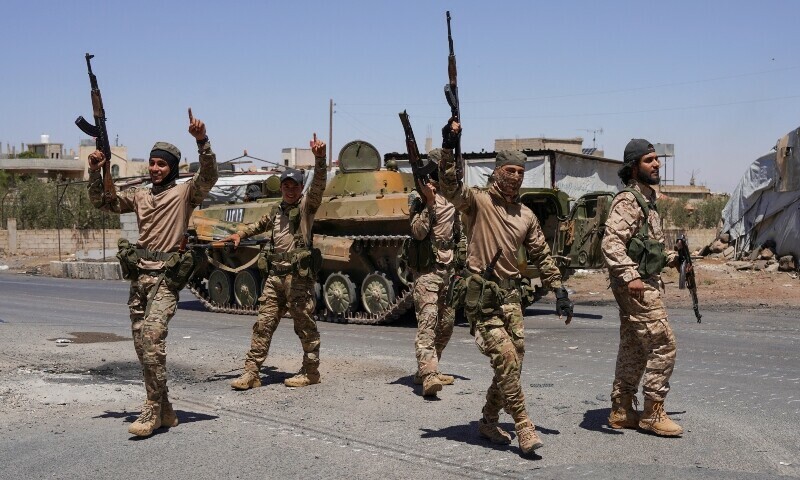
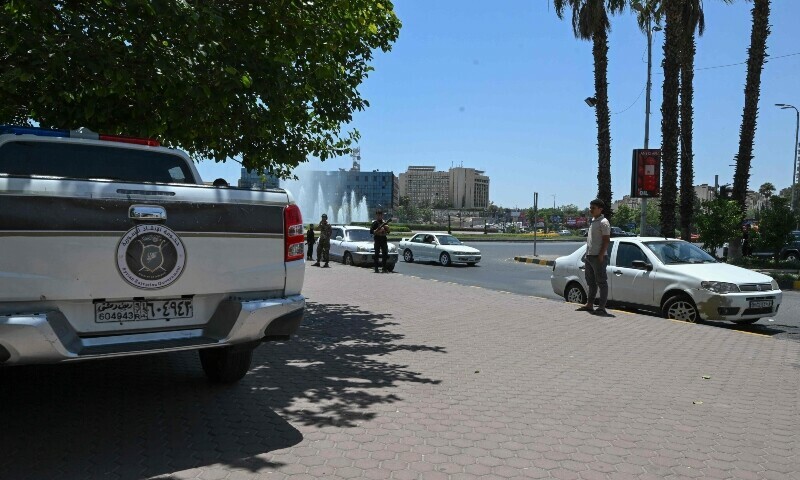
State media said a fresh ceasefire had been agreed, announcing “the deployment of security checkpoints” in Sweida city. A previous truce declared on Tuesday appeared to have had little effect on the ground.
The fighting was the most serious outbreak of violence in Syria since government forces battled Druze fighters in Sweida province and near Damascus in April and May, leaving more than 100 people dead.
The authorities have had strained relations with Syria’s patchwork of religious and ethnic minorities since they toppled longtime leader Bashar al-Assad in December.
Israel, which has its own Druze community, has presented itself as a defender of the group, although some analysts say that is a pretext for pursuing its own military goal of keeping Syrian government forces as far from their shared frontier as possible.
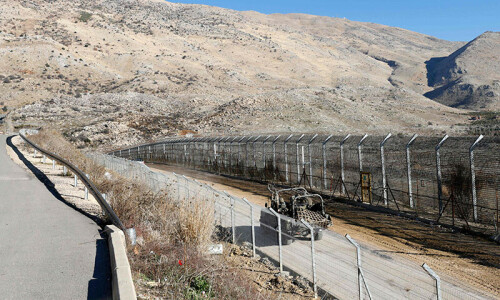
Following Assad’s fall, the Israeli military took control of the UN-monitored demilitarised zone in the Golan Heights and conducted hundreds of strikes on military targets in Syria.
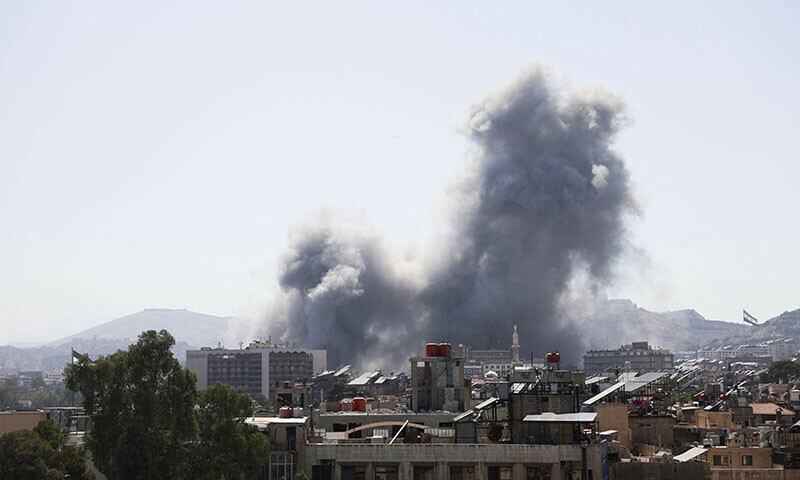
Syrian state TV reported several Israeli strikes today near the army and defence ministry headquarters in central Damascus, with Israel’s army saying it had “struck the entrance of the Syrian regime’s military headquarters”.
AFP images showed the side of a building in the defence complex in ruins after the strike, as smoke billowed over the area.
Israel said it had also struck a “military target” in the area of the presidential palace in Damascus.
The Syrian health ministry said that at least one person was killed and 18 others wounded in the strikes on Damascus.
‘Existential battle’
Turkey, which has backed Syrian interim President Ahmed al-Sharaa’s administration, said “Israel’s attacks on Damascus … constitute an act of sabotage against Syria’s efforts to secure peace, stability and security.”
Israeli Defence Minister Israel Katz called on Damascus to “leave the Druze in Sweida alone”, later threatening to unleash “painful blows” to “eliminate the forces that attacked the Druze until their full withdrawal” from Syria’s south.
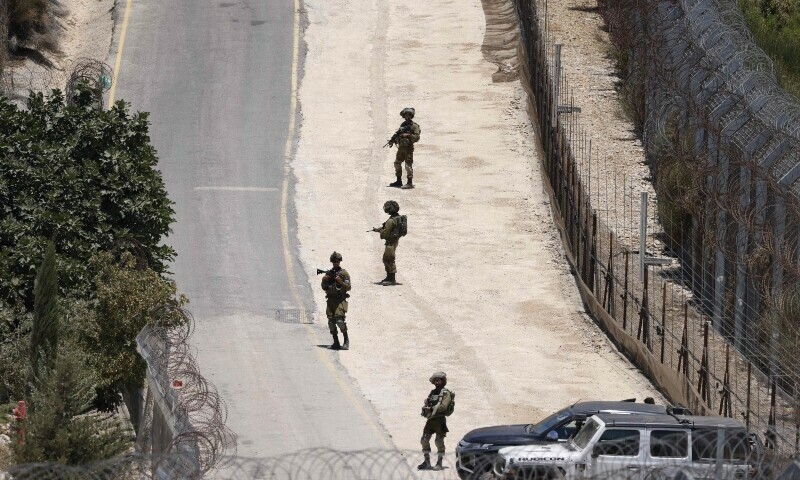
Israel said it was sending more troops to the armistice line between the occupied Golan Heights and Syrian-controlled territory.
A military official said some troops would be redeployed there from the Gaza Strip, where Israel’s conflict against Hamas was in its 22nd month.
Dozens of people were crossing the heavily fortified Golan frontier, according to an AFP correspondent in Majdal Shams, a mainly Druze town in the Israeli-annexed area.
A military statement said Israeli forces were “operating to prevent the infiltration” from Syrian territory and to “safely return the civilians who crossed the border” from the Israeli-controlled side.
Prime Minister Benjamin Netanyahu said in February that southern Syria must be completely demilitarised, warning that Israel would not accept the presence of forces of the government near territory it controls.
The head of the Druze community in Israel, Sheikh Mowafaq Tarif, called the situation “an existential battle for the Druze community”.
Abuses ‘must stop’
Sporadic gunfire continued to ring out in Sweida today, an AFP correspondent reported before the latest ceasefire was announced.
The correspondent counted the bodies of around 30 combatants, some in plain clothes and some in military uniform.
The Observatory, witnesses and Druze armed groups have said government forces took part in fighting alongside the Bedouin against the Druze.
The Syrian defence ministry accused “outlaw groups” of attacking its forces inside the city, saying they are now “continuing to respond to the sources of fire”.
The Bedouin and the Druze have been at loggerheads for decades, with the latest violence triggered by the kidnapping of a Druze vegetable merchant, the Observatory said.
Since they toppled Assad in December, Syria’s authorities and their allies have been repeatedly accused of not doing enough to protect the country’s religious and ethnic minorities.
The United States, a close ally of Israel, was “talking to both sides, all the relevant sides on this and hopefully we can bring it to a conclusion, but we’re very concerned”, according to Secretary of State Marco Rubio.
US President Donald Trump’s administration asked Israel again to halt strikes on Syria and engage in dialogue with the government in Damascus, Axios correspondent Barak Ravid reported, citing a senior US official.
Neither Axios nor Ravid said whether that request came before or after Israeli strikes on Syria’s military headquarters and near the presidential palace in Damascus.
France said that “the abuses targeting civilians, which we strongly condemn, must stop”, while the European Union urged “all external actors” to “fully respect Syria’s sovereignty”.
Germany criticised the airstrikes, urging Tel Aviv to refrain from actions that could destabilise the country, Anadolu reported.
The six-member Gulf Cooperation Council (GCC) also condemned the attacks on Damascus in the “strongest terms”, Al Jazeera reported.
In a statement, GCC Secretary-General Jasem Mohamed Albudaiwi said the air campaign represented a “flagrant violation” of Syria’s sovereignty, “a breach of international laws and norms, and a serious threat to regional security and stability”.
Albudaiwi reiterated the GCC’s support for Syria’s territorial integrity, adding that the continuation of the repeated Israeli attacks had constituted an “irresponsible escalation” and disregarded international efforts to achieve stability in Syria and the region.
He also called for international action to stop the “serious violations, hold the perpetrators accountable, and work diligently to protect the Syrian people and preserve its sovereignty in accordance with the principles of the United Nations Charter and international law”.