• Says commodity trade may offset tariff disparities • Opposes further increase in taxes on salaried, business classes • Efforts underway to simplify tax return forms
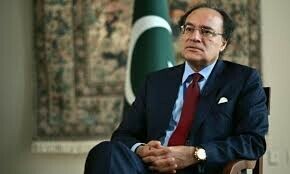
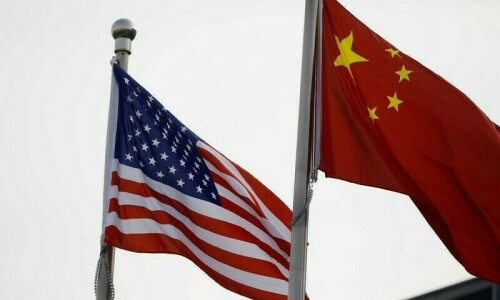
KARACHI: Minister for Finance Muhammad Aurangzeb on Wednesday expressed confidence that the global situation following the imposition of US tariffs is manageable for Pakistan.
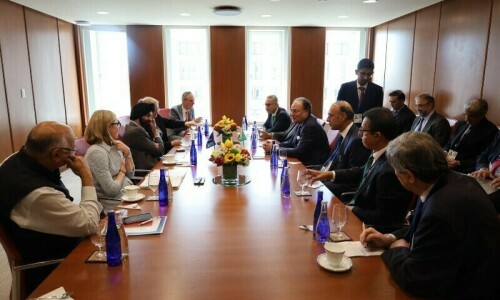
The minister, speaking at the leadership of the business community during his visit to the Federation of Pakistan Chambers of Commerce and Industry (FPCCI) in Karachi, said Pakistan already has constructive engagements with US authorities on the sidelines of World Bank and IMF summer meetings, while the premier has also announced the decision to send a delegation to the US to negotiate tariff issues.
Pakistan’s exports to the US are around $5 billion and the volume of imports from the US is nearly $2bn, while average tariff difference is three per cent, he said, adding that this difference could be balanced with trade of cotton, soybean and other such commodities.
Referring to the recent visit to the US, he said the Pakistani delegation had over 70 meetings with the executives of World Bank, IMF, Asian Development Bank and other multilateral and bilateral partners and think tanks and counterparts from friendly and supporting countries.
Highlighting the turnaround in economic conditions and significant improvements in inflation and current account, Mr Aurangzeb said the current account is expected to remain surplus this fiscal year, while expenditures are also under control owing to the efficient role played by all stakeholders, including the provincial governments.
• Says commodity trade may offset tariff disparities • Opposes further increase in taxes on salaried, business classes • Efforts underway to simplify tax return forms
The finance minister said that a steep decline in inflation is a major achievement which allowed a 1,000 basis points reduction in the policy rate, while the next meeting of the SBP Monetary Policy Committee is due in the next week.
He said that it is the 24th IMF programme for Pakistan and the prime minister and his entire cabinet had resolved that it would be the last one as “we are carrying forward economic and structural reforms agenda for the betterment of our country”.
The government is striving to transform the tax administration in consultation with all the stakeholders by simplifying the procedures, utilisation of data and minimising human intervention, Mr Aurangzeb said, adding that it is a very focused effort this time and there was no question of exemptions anymore.
Salaried and business classes were already under the heavy burden of taxes which could not be increased, he noted and stressed the need for easing the lives of salaried class.
The finance minister said that efforts were also underway to simplify the tax return forms so that the majority of taxpayers could file their returns conveniently without assistance of any lawyer or tax adviser. He said energy sector reforms is another important agenda of the government that focuses on improvement in all the phases from generation to transmission and distribution of electricity and those measures resulted in reduction of power tariff. He hinted some more good news in coming months.
Higher costs of financing, energy and taxation were major challenges for business and industry in Pakistan, he said, but added that now policy rate reductions brought the financing cost lower and some respite has also been observed in power tariffs, while rationalisation of tax rates in the upcoming budget was under consideration as well.
The minister said the government had started the consultation process for budget making early this year and proposals submitted by the chambers and trade associations were being reviewed in detail. He said the government is also working on segregating the tax policy office from the FBR and bringing it under the ambit of the finance ministry. From next year, all the stakeholders’ proposals will be considered by the tax policy office, while the FBR will be responsible for tax collection, he said.
Published in Dawn, May 1st, 2025