0
0

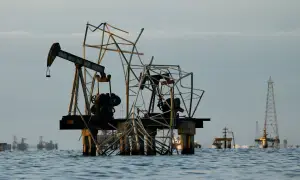
The federal government on Saturday announced it had kept the prices of petroleum products unchanged for the next fortnight.
“The government has decided to maintain the prices of all petroleum products at the current levels,” said a notification from the Finance Division.
The price of high-speed diesel (HSD) remains Rs258.64, Rs255.63 for petrol, Rs168.12 for kerosene oil and Rs153.34 for light-diesel oil (LDO).
The price notification came shortly after Prime Minister Shehbaz Sharif announced that fuel prices would remain unchanged while the government would work on a package to reduce the price of electricity.
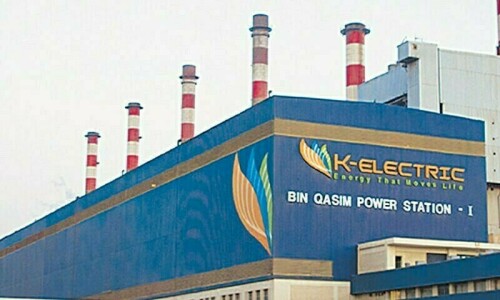
According to a statement from the Prime Minister Office, the government elected to keep fuel prices unchanged “and pass on the entire financial benefit to the public in electricity prices”.
“A package is ready to provide major relief to the public in electricity prices through the financial capacity created by the difference in oil prices in the global market and other measures,” the statement read, adding that it would be announced within the next few weeks.
The statement continued: “This relief will not only reduce electricity prices, but it will also have an impact on overall inflation, leading to a further reduction.”
Today’s no change in prices comes after the prices of all petroleum products were estimated to fall by up to Rs14 per litre for the next fortnight, ending March 31, owing to fluctuation in the international market and import premiums.
An official had said there were considerations on the part of the government to absorb a part of the price cushion to increase petroleum levy or impose carbon tax for securing cheaper additional $1 billion financing from the International Monetary Fund (IMF) for climate adaptation and mitigation.
Based on existing tax rates, the informed sources had said the ex-depot price of petrol was estimated to go down by about Rs14 depending on the final calculation on March 15, followed by Rs8 per litre cut in HSD, Rs10 per litre in kerosene and LDO by about Rs7 per litre.
The estimates for lower petrol prices stemmed from some decline in its international rates and import premiums. The benchmark Brent prices had decreased by about $3 per barrel during the last 10 days.
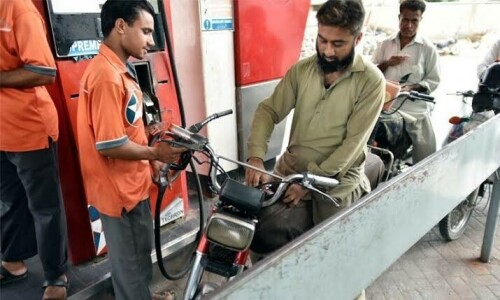
Petrol is mainly used in private transport, small vehicles, rickshaws, and two-wheelers, and it directly affects the budget of the middle and lower middle classes. Most of the transport sector runs on HSD. Its price is considered inflationary as it is primarily used in heavy transport vehicles, trains and agricultural engines like trucks, buses, tractors, tube wells and threshers and particularly adds to the prices of vegetables and other eatables.
The government charges about Rs76 per litre tax on petrol and HSD. Although the general sales tax (GST) is zero on all petroleum products, the government charges Rs60 per litre petroleum development levy (PDL) on both products, which normally impacts the masses. Under the law, the government has the cushion to increase PDL to a maximum of Rs70 per litre.
The government also charges about Rs16 per litre of customs duty on petrol and HSD, regardless of their local production or imports. In addition, about Rs17 per litre distribution and sale margins are charged by oil companies and their dealers on both products.