Govt launches operations for 7th digital agricultural census



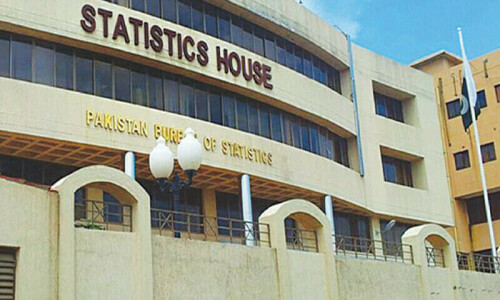
ISLAMABAD: The Pakistan Bureau of Statistics (PBS) on Wednesday initiated field operations for the country’s 7th Agricultural Census, employing digital tools to collect vital data for evidence-based policies aimed at sustainable farming and food security.
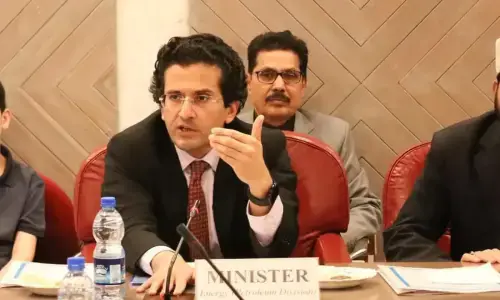
At a launch event in Islamabad, Planning Minister Ahsan Iqbal distributed tablets to trained enumerators, emphasising the role of technology in ensuring accurate and efficient data collection.
Ceremonies were also held in several other cities, including Lahore, Karachi and Peshawar.
The PBS has trained 7,686 enumerators and supervisors nationwide for this purpose. Data collection will take place over 40 days, from Jan 1 to Feb 10, 2025, which will be pivotal in shaping policies to address food insecurity and enhance agricultural resilience. The results are expected to be compiled by August.
This census, to be conducted in collaboration with federal and provincial governments, academia and related departments, aims to provide comprehensive insights into the country’s agrarian landscape.
Planning Minister Ahsan Iqbal described agriculture as the backbone of the economy, significantly contributing to GDP, exports and employment.
He noted that the data gathered from this census would play a vital role in shaping policies that tackle key challenges like resource management, crop patterns and food security. He further emphasised that the data would enable targeted support for the agricultural community, encouraging initiatives to increase productivity and enhance the welfare of farmers.
He reiterated the federal government’s commitment to ensuring that farmers across the country receive the resources and support they need for sustainable growth. He stressed that the 7th Agricultural Census was a historic step towards economic reforms and data-driven policymaking.
The minister also appreciated the modernised approach and centralised GIS technology for real-time monitoring. This will streamline data collection and analysis, enabling targeted interventions and effective resource allocation.
The initiative aligns Pakistan’s agricultural practices with global standards and seeks to enhance productivity and food security.
PBS’s focal person for the agriculture census, Sarwar Gondal, said that a decade overdue activity had been initiated by the bureau with its extensive network of 34 regional and 125 district offices.
Regional events
In Lahore, Punjab Finance Minister Mujtaba Shujaur Rehman inaugurated field operations for the 7th Agricultural Census during a formal ceremony held at the Chief Minister House on Wednesday.
The minister inaugurated the census under the Integrated Digital Count initiative. Highlighting Punjab’s role in national agriculture, he noted that the province contributes 24pc to the country’s GDP, with 29.4 million acres of cultivated land.
The data will guide policies to support farmers and optimise resource utilisation. “This initiative is a milestone in Punjab’s journey towards agricultural modernisation,” he added.
In Karachi, Sindh’s Planning Minister Syed Nasir Hussain Shah and Livestock Minister Muhammad Ali Malkani launched the operations at the Sindh Secretariat.
Sindh, with 8.2m acres of cultivated land, is a major contributor to crops like cotton, rice and sugarcane.
Chief Statistician Dr Naeemuz Zafar highlighted the extensive training of 1,695 enumerators and supervisors across 30 venues in Sindh to ensure the quality of data collection.
In Dadu, Deputy Commissioner Mukhtiar Ali Abro kicked off operations by marking structures as part of the census process.
Covering 111 of the district’s 351 villages, the census aims to document agricultural land, livestock, and machinery.
A total of 62 enumerators and nine supervisors would carry out the exercise, for which police officials had been deployed to ensure the security of census teams. Citizens were urged to cooperate with enumerators to ensure the initiative’s success.
In Peshawar, Khyber Pakhtunkhwa’s Agriculture Minister Sajjad Barakwal inaugurated the census. Speaking at the ceremony, Mr Barakwal, a retired army major, highlighted that 80pc of KP’s population is rural, relying heavily on agriculture for their livelihood.
With agriculture accounting for 22pc of the province’s GDP and employing 44pc of its workforce, the census aims to address challenges such as resource allocation and productivity enhancement. Tablets were distributed to crop reporting staff to support digital data collection.
In Bajaur, officials launched the district’s first-ever agricultural census at a ceremony in Khar. Additional Deputy Commissioner Ali Raza underscored the activity’s significance in determining land size, crop patterns and livestock numbers. Teams will visit households across all seven tehsils to collect data digitally.
Speaking on the occasion, Mr Raza said the activity would not only determine the accurate size of agriculture land, fruit and vegetable farms and cattle heads but would also help develop the agriculture sector in the district.
In Azad Jammu and Kashmir (AJK), Agriculture Minister Sardar Mir Akbar launched the census at the Agriculture Complex in Muzaffarabad.
In a detailed briefing, PBS Director Mohammad Sohaib highlighted the objectives of the census, the use of digital tools, GIS technology, and monitoring systems employed for field operations.
He informed attendees that 297 enumerators and supervisors had been trained to collect data digitally.
Addressing the gathering, Minister Sardar Mir Akbar highlighted the significance of precise agricultural and livestock data for effective government planning and expressed hope that the digital agricultural census would provide accurate and timely information to strengthen AJK’s agricultural sector and contribute to economic progress.
Mubarak Zeb Khan in Islamabad, Amjad Mahmood in Lahore, Tahir Siddiqui in Karachi, Qurban Ali Khushik in Dadu, Manzoor Ali in Peshawar, Anwarullah Khan in Bajaur and Tariq Naqash in Muzaffarabad contributed to this report
Published in Dawn, January 2nd, 2025