Indian SC blocks any suit against places of worship amid petitions for mosques, Ajmer Sharif shrine

The Indian Supreme Court has blocked trial courts from registering any new suits against places of worship until they get further orders from the top court.
The directions on Thursday came as the top court hears petitions challenging the Places of Worship Act, 1991, which prohibits conversion of any place of worship. It also provides “for the maintenance of the religious character of any place of worship as it existed on the 15th day of August, 1947”.
In pending cases, the courts would refrain from any “effective interim or final order” until further orders, according to a bench comprising Chief Justice Sanjiv Khanna and Justices Sanjay Kumar and K. V. Viswanathan.
“We are examining the vires, contours and the ambit of 1991 Act,” the bench said, according to the Press Trust of India news agency. The court asked the central government to file its reply to the pleas in four weeks.
The top court’s order has come amid Hindu groups filing back-to-back petitions in the courts claiming prominent mosques were built on the former site of temples in the recent past.
A local court recently accepted a petition to survey a famous 13th-century shrine of a Muslim saint in Ajmer in western Rajasthan state.
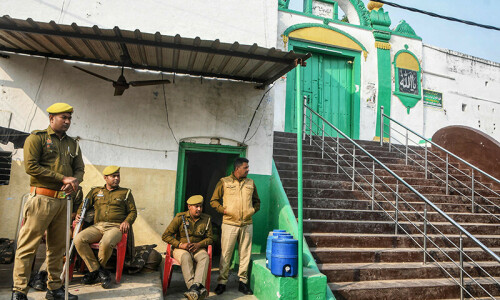
Last month, a court ordered a survey of the Shahi Jama Masjid in the town of Sambhal in northern Uttar Pradesh in response to a petition claiming that a temple stood on the mosque’s site. While the survey was underway, it triggered clashes in the area which killed at least five people and injured several police officers.
The top court, however, halted the court’s proceedings on the matter.
A Hindu group also recently demanded a survey of the iconic Jama Masjid, the main mosque in New Delhi, alleging that statues of Hindu deities were buried within the mosque.
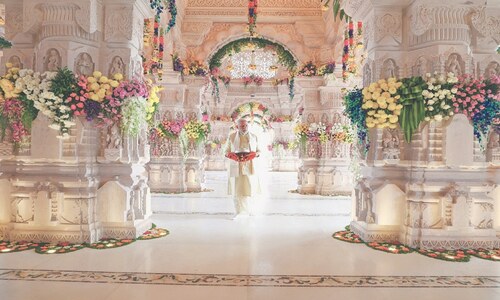
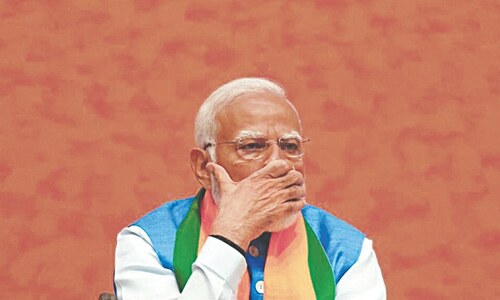
Hindu nationalist activists were emboldened earlier this year when Prime Minister Narendra Modi inaugurated a grand new Hindu temple in the northern city of Ayodhya, built on grounds once home to the centuries-old Babri mosque.
That mosque was torn down in 1992 in a campaign spearheaded by members of Modi’s party, sparking sectarian riots that killed 2,000 people nationwide, most of them Muslims.
Some Hindu campaigners see an ideological patron in Modi.
Calls for India to enshrine Hindu supremacy have rapidly grown louder since Modi was swept to office in 2014, making the country’s roughly 210-million-strong Muslim minority increasingly anxious about their future.