Watchdog calls for probing use of chemical weapons in Syria


AMSTERDAM: The head of the chemical weapons watchdog said on Thursday he would ask Syria’s new leaders to grant investigators access to the country to continue work identifying perpetrators of attacks that killed and injured thousands during the civil war.
Addressing a special session of the Organisation for the Prohibition of Chemical Weapons (OPCW), Fernando Arias said his office had seen positive signals from Syria about the need to rid the country of chemical weapons, but no formal request had been received.
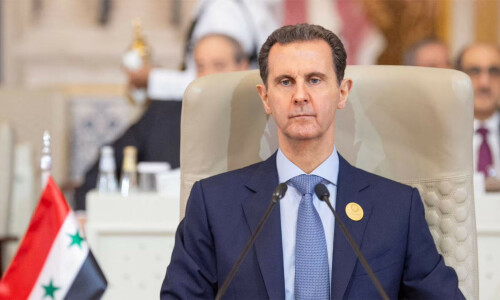
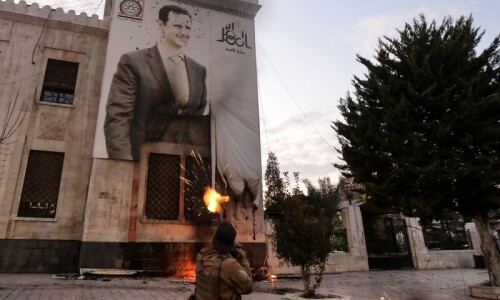
The 41-member executive council of the OPCW was meeting in The Hague to discuss next steps after Syrian President Bashar al-Assad’s sudden toppling.
Speaking ahead of the meeting, US ambassador to the OPCW, Nicole Shampaine, said Washington viewed Assad’s fall as an extraordinary chance to rid Syria of chemical weapons. “We want to finish the job and it’s really an opportunity for Syria’s new leadership to work with the international community, work with the OPCW to get the job done once and for all,” Shampaine said.
US sees Assad’s fall as chance to destroy chemical arsenal ‘once and for all’
Washington will strongly back efforts by the global chemical weapons watchdog to eliminate Syria’s chemical arsenal, Shampaine said.
The evolving political landscape in Syria offered an opportunity for the organisation to finally obtain clarifications on the full extent and scope of the Syrian chemical weapons programme after 11 years of inspections, Arias said.
Warning of proliferation risks, he said “victims deserve that perpetrators that we identified be brought to justice” after their multiple use during the 13-year civil war. He will seek access for the OPCW’s Investigation and Identification Team. That unit and a joint UN-OPCW mechanism have already identified Syria’s armed forces as having used chemical weapons nine times between 2015 and 2017.
Syria joined the OPCW in 2013 under a US-Russian deal and agreed to eliminate its chemical arsenal. But Syria still possesses banned munitions and investigators found such weapons were used repeatedly by President Assad’s forces during the 13-year civil war.
Published in Dawn, December 13th, 2024