EU lags US and China in AI investments, chipmaker Nvidia says



The European Union lags far behind the United States and China in investing in artificial intelligence (AI), the chief executive of AI chipmaker Nvidia, said on Wednesday.
While there are only a handful of artificial intelligence companies in Europe, such as France’s Mistral and Germany’s Aleph Alpha, the bloc passed the world’s first comprehensive rules to govern AI which came into force in August.
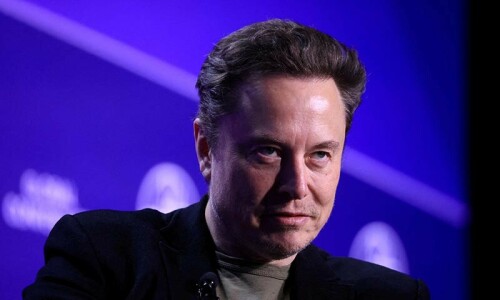
“The EU has to accelerate the progress in AI,” Nvidia’s Jensen Huang said during a visit to Copenhagen. “There’s an awakening in every country realising that the data is a national resource.”
Huang was in Denmark to launch a new supercomputer named Gefion, which boasts 1,528 graphic processing units (GPUs) and was built by Nvidia in partnership with the Novo Nordisk Foundation and Denmark’s Export and Investment Fund.
Nvidia is the world’s top maker of GPUs, which are in high demand because they can be used to speed up artificial intelligence work. OpenAI’s ChatGPT, for example, was created with thousands of Nvidia GPUs.
Denmark plans to use the supercomputer for drug discovery, disease diagnosis, treatment and complicated life science challenges.
“The era of computer aided drug discovery must be within this decade,” Huang said. “This will be the decade of digital biology.”
Nvidia is the second largest listed US company after Apple with a market value of $3.52 trillion.
EU antitrust chief nominee vows to intensify Big Tech crackdown
The woman tipped to become the European Union’s next antitrust chief has pledged to intensify the bloc’s crackdown on Big Tech and foreign companies receiving unfair state subsidies to buy EU peers or take part in EU tenders.
The EU passed the landmark Digital Markets Act in 2022, which compels tech companies to make it easier for consumers to choose services from different providers.
It designated Alphabet, Apple, Amazon, Meta, Microsoft and TikTok owner ByteDance as “gatekeepers” under the DMA, meaning they warrant extra regulation.
“I will push for a vigorous enforcement of the DMA, shaping the Commission policy concerning this important new instrument, in order to deliver concrete results for European business and end users,” Teresa Ribera, who has been nominated as the European Commission’s next antitrust chief, said in written responses to the European parliament.
The parliament will hold hearings for nominated commissioners in November.
“We cannot afford unduly long antitrust investigations during which companies continue to benefit from their anticompetitive practices,” Ribera added.
Earlier this year, the Commission launched probes into Alphabet, Apple and Meta for potential breaches of DMA rules.
In a bid to promote new EU market leaders, Ribera’s mission also includes protecting small and midcap businesses from “killer acquisitions” by foreign companies seeking to destroy competition.
The 27-member bloc has struggled to produce leading companies in the global clean tech race, with a fragmented capital market hindering expansion within and outside the EU.
In her responses, Ribera said she wanted to simplify rules for state aid and enforce foreign subsidies regulation.
The EU is trying to stem what it deems as unfair competition from subsidised Chinese firms in wind, solar, and in particular, electric vehicles. Earlier this month, the bloc decided to slap tariffs of up to 45 per cent on imported Chinese-made EVs.
However, Ribera said regulation would not solve the bloc’s problems and a new industrial strategy was needed. Working with her peers, including climate chief nominee Wopke Hoekstra, she is tasked with developing a clean industrial deal under the executive vice president for industry, Stephane Sejourne.
“The BEVs (battery electric vehicles) anti-subsidy investigation was grounded on solid facts and evidence and was carried out in line with WTO [World Trade Organization] rules,” Ribera said.
“This case is not a substitute for our automotive industrial strategy. Looking ahead, we need to conduct a broader strategic discussion about the future of the automotive industry in the EU.”