0
0

ISLAMABAD: Pakistan is among the countries with the highest exposure to conflict and is also among the 15 countries with the highest disaster risk, according to the World Risk Index 2024 report published on Monday.
Pakistan, which was pushed out of the top 10 by Russia last year, has now replaced China, while Mexico and Colombia have swapped ranks. The composition of the 10 countries with the highest vulnerability scores is similar, with Afghanistan returning this year to a group that consisted exclusively of African countries last year.
The ranking of conflict exposure countries is: Colombia, Brazil, Pakistan, Mexico, Myanmar, Nigeria, Lebanon, Iraq, Sudan and Israel at the top.
The 15 highest disaster risk countries put up by the index are: Philippines, Indonesia, India, Colombia, Mexico, Myanmar, Mozambique, Russia, Bangladesh, Pakistan, Peru, Papua New Guinea, Madagascar, Somalia and Yemen.
World Risk Index 2024 says crises, risks becoming increasingly complex and interconnected
This year’s World Risk report is dedicated to the topic of multiple crises and focuses on disaster risk management. The index has been published by the Germany’s Ruhr University Bochum — Institute for International Law of Peace and Armed Conflict (IFHV).
According to the index, crises and risks are becoming increasingly complex and interconnected. Extreme weather events, conflicts and pandemics overlap and amplify each other. Global trends such as climate change, population growth and political polarisation promote multiple crises and intensify their effects.
In 2024, the risk hotspots remain in the Americas and Asia, hosting eight of the 10 countries with the highest risk scores. Over the long term, however, these hotspots will shift to countries with climate-sensitive exposure and high vulnerability.
Countries with climate-sensitive exposure and high to very high vulnerability are particularly at risk. These countries can expect more frequent and more intense extreme natural events and damage in the future. A significant shift in global risk hotspots can, therefore, be expected in the long term.
Disasters resulting from extreme natural events can trigger or escalate armed conflicts, especially when poverty, ethnic exclusion, past political violence or weak state institutions, are already present, according to the index.
The global water crisis shows how climatic changes are harming people, agriculture and nature.
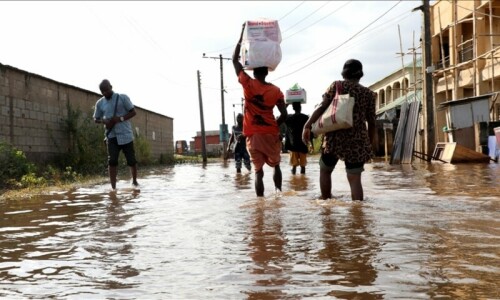
Heavy rainfall, storms, floods, droughts and crop failures are on the rise. As a result, food security is declining worldwide, which can lead to health problems, regional conflicts and displacement.
The hotspots remain in the Americas and Asia, as can be seen in the group of 10 countries with the highest risk scores: The Philippines, Indonesia, India, Colombia, Mexico, Myanmar, Mozambique, Russia, Bangladesh and Pakistan.
These countries have very complex risk profiles due to the combination of diverse exposures and high intensities, as well as higher vulnerabilities.
The country with the highest vulnerability is the Central African Republic, replacing Somalia. This year, Afghanistan has once again moved up into the group of the 10 most vulnerable countries, meaning this group no longer consists exclusively of African countries.
The World Risk index assesses disaster risks for 193 countries by evaluating their exposure to natural hazards, the susceptibility of the population as well as the coping and adaptive capacities of societies. This year’s results highlight that Asia and the Americas remain the primary global risk hotspots.
However, as climate change increases the frequency and intensity of extreme weather events, these global hotspots are anticipated to shift, affecting vulnerable societies in Africa in particular.
In recent years, the World Risk index has shown that global disaster risks are not only very heterogeneously distributed but are also closely linked to poverty and inequality.
This persistence often results from robust interactions between increasing vulnerability and damage caused by extreme events.
Published in Dawn, September 10th, 2024