0
0

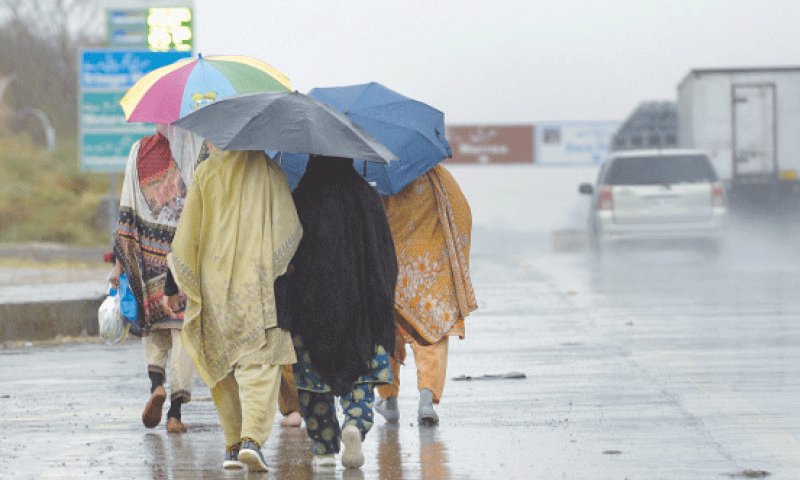
RAWALPINDI/ISLAMABAD: In the wake of the above-normal rainy season, the dengue cases in Rawalpindi continue to spike, with the district reporting 14 news cases on Tuesday taking the total number of cases to 104 during the ongoing season.
According to officials, 84 people out of the total patients have been discharged from hospitals after treatment whereas 29 people – including two already-tested patients – are still admitted to three public sector hospitals, namely Holy Family Hospital, Benazir Bhutto Hospital, and District Headquarters Hospital.
Out of these, 14 tested positive on Tuesday whereas the test reports of the remaining are awaited. This season, not a single death was reported.
Officials said most patients arrived from Chaudhry Bostan Khan Road, Chaklala Scheme-III, Dhoke Chaudhrian, Sadiqabad, Shakrial, Car Chowk, Adiala Road, Girja Road, and adjoining areas. On the other hand, the drive to contain the disease in the garrison city has so far resulted in almost 2,000 FIRs.
104 cases reported in garrison city during ongoing season; twin cities admins consider hiring more entomologists if cases spike
In a meeting on Tuesday, the Rawalpindi commissioner was informed that since January this year, 1820 FIRs had been registered in addition to 1770 challans and 830,100 in penalties. 549 buildings were also sealed.
Commissioner Aamir Khattak said the rainy season was favourable for the breeding of dengue larvae, and all departments should continue operations against dengue. He also directed the deputy commissioners of Rawalpindi, Murree, Attock, Chakwal, and Jhelum to form a three-strong team to check the premises of all government buildings and offices.
“Cleanliness of government offices…will help ensure that those engaged in anti-dengue activities have their offices free from dengue larvae,” he stated while reviewing the ongoing anti-dengue campaign in the Rawalpindi division.
He directed that deputy commissioners should chair dengue meetings daily to ensure the implementation of SOPs. In order to ensure the quality of operations carried out in the field, special attention should be given to third-party validation and strict action should be taken against those responsible for violation of anti-dengue SOPs.
Briefing the meeting, District Health Authority Chief Executive Officer Dr Asif Arbab Niazi said that 100 per cent coverage of all hotspots across the district was being ensured. During the ongoing campaign, 30,000 houses were checked during the last 24 hours, out of which 856 had the presence of larvae, while 11,000 spots were also inspected and 145 were found to have dengue larvae.
Border areas of twin cities
On the other hand, the focus of the Islamabad administration is on the border areas of the twin cities as it aimed to curb dengue cases. In Islamabad, no case was reported on Tuesday.
“A meeting on dengue prevention measures was held on Tuesday under the chairmanship of CDA Chairman and Islamabad Chief Commissioner Mohammad Ali Randhawa. The meeting reviewed dengue cases reported in the twin cities. The meeting was informed that the total number of reported cases this year was lower compared to…the last year,” said a press release issued by the CDA. The officials of the Rawalpindi administration also attended the meeting.
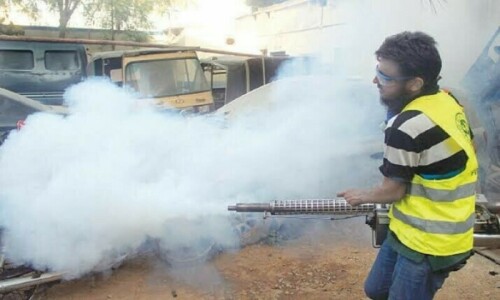
The CDA chief emphasised monitoring potential breeding spots and directed fumigation and spraying at the identified spots.
He also directed for enhanced surveillance through entomologists in the twin cities.
The meeting considered acquiring the services of additional entomologists to further strengthen surveillance if there was an increase in the number of dengue cases in the coming days.
He stressed the importance of coordination between the administrations of Rawalpindi and Islamabad in tackling dengue, especially in the boundary areas of the twin cities.
Mr Randhawa said all available resources should be utilised for dengue prevention besides a robust awareness campaign to educate the public on preventive measures.
He highlighted that along with preventive actions, it was essential to maintain effective communication between the administrations of Rawalpindi and Islamabad to ensure the success of dengue control efforts.
Published in Dawn, September 4th, 2024