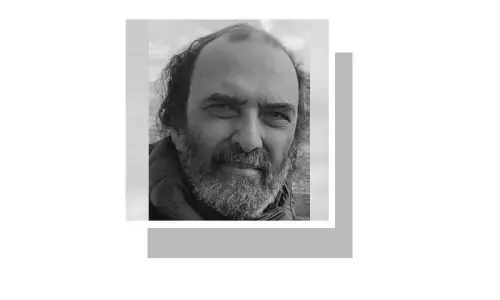
KARACHI: Prominent veteran social worker, trade unionist and founding member of the Pakistan Institute of Labour Education and Research (Piler) Karamat Ali, who passed away at a private hospital on Thursday morning after a protracted illness, was laid to rest at the Wadi-i-Hussain graveyard here in the evening. He was 78.
Karamat Ali spent almost his entire life as a rights activist. He gained his inspiration from Karl Marx, Vladimir Lenin, Leon Trotsky and the writings of Mao Zedong. An active member of a student union while doing his intermediate from the Government Emerson College in Multan in 1962, Karamat Sahab got his first big exposure to politics when Gen Ayub Khan’s government imposed a ban on student unions.
Back then a dozen agitating students from Karachi, including Mairaj Muhammed Khan and Syed Ali Mukhtar Rizvi, who were expelled from their city, sought refuge in Multan. The students from Karachi sought support from the students of Multan as they wanted to be allowed to stay in Multan. The young Karamat along with a few others led the students of their college in a huge procession to the commissioner of Multan’s office and organised a sit-in there.
Inspired by Marx, Lenin, Trotsky and Mao, he joined like-minded activists to raise his voice against injustices in society
The commissioner, after hearing them out, allowed the Karachi students to stay in Multan. The incident went a long way in building Karamat’s confidence, grooming him to face far bigger challenges later in life.
Piler was founded 20 years later. It was inspired by the Institute of Labour Education and Research (ILER) in New York. Karamat Sahab by then had travelled extensively and also lived in England and Holland for some years. He picked up many bright ideas through his interaction with union leaders, rights’ activists and educationists in Europe and the United States.
From the platform of Piler, Karamat Sahab joined forces with several like-minded activists and was able to help workers in garment factories and the Pakistan Steel Mills, home-based workers, the families of the Baldia factory fire victims, who were able to receive some compensation, little consolation though for losing their loved ones.
He raised his voice against child labour, bonded labour, migrant labour, peasants, against the third party contractual system, low minimum wages, the need for unionisation, and so many other relevant causes. In short, he devoted his entire life to fighting for the cause of marginalised people and those deprived of their lawful rights by leading many labour movements.
His absence was greatly felt at recent occasions such as Labour Day on May 1 and the launch of the Human Rights Commission of Pakistan’s (HRCP) annual report last week. It was said that he was suffering from Parkinson’s Disease. Karamat Sahab’s loss is being mourned widely. Messages poured in from all quarters, including the government and journalistic circles as news of his passing away became known.
The HRCP deeply mourned the passing away of an eminent labour rights activist “whose contribution to labour rights in Pakistan and in the wider South Asian region will not be easily matched.”
In a joint condolence statement, workers’ representatives including Nasir Mansoor, General Secretary of the National Trade Union Federation, Pakistan (NTUF); Comrade Zehra Khan, General Secretary of the Home-Based Women Workers Federation (HBWWF); Lal Bux Lalan, General Secretary of the Sindh Agriculture General Workers Union; Aqib Hussain, Convener of Alternate; Comrade Gul Rehman, President of Shahri Awami Mahaz; Riaz Abbasi, Secretary of the SITE Labour Forum and Muhammad Bachal Samitio, Chairperson of the All Pakistan Pharmaceutical Chemical and General Unions Federation, said that with his death, the labour movement of Pakistan had lost a great leader and thinker of the working class.
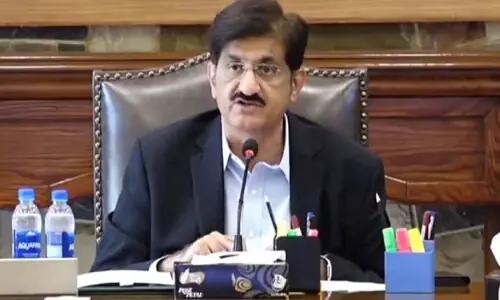
Sindh Chief Minister Murad Ali Shah also expressed his deep grief on the labour activist’s demise. Mourning the loss, former president Arif Alvi remembered him as a “very dear friend”. In a post on X, he wrote that “The labour movement has lost ground to naked exploitative capitalism. I wish there were more like him to ensure the rights of the struggling, hard-working workers of the world.”
PPP Senator Sherry Rehman also said she was “grieved to hear of the passing of her old friend. His loss will be felt deeply,” she wrote on X. Sindh Minister for Local Government, Housing, Town Planning and Public Health Engineering and Rural Development Saeed Ghani also expressed his sadness over Karamat Sahab’s demise and said that it was an irreparable loss of the workers’ movement in Pakistan.
Pakistan Federal Union of Journalists and the Karachi Press Club also sent in their messages of condolence.
Published in Dawn, June 21st, 2024