Global temperatures hit record highs last year, and the UN’s weather and climate agency said Asia was warming at a particularly rapid pace.
The World Meteorological Organisation said the impact of heatwaves in Asia was becoming more severe, with melting glaciers threatening the region’s future water security.
The WMO said Asia was warming faster than the global average, with temperatures last year nearly two degrees Celsius above the 1961 to 1990 average.
“The report’s conclusions are sobering,” WMO chief Celeste Saulo said in a statement.
“Many countries in the region experienced their hottest year on record in 2023, along with a barrage of extreme conditions, from droughts and heatwaves to floods and storms.
“Climate change exacerbated the frequency and severity of such events, profoundly impacting societies, economies, and, most importantly, human lives and the environment that we live in.”
The State of the Climate in Asia 2023 report highlighted the accelerating rate of key climate change indicators such as surface temperature, glacier retreat and sea level rise, saying they would have serious repercussions for societies, economies and ecosystems in the region.
“Asia remained the world’s most disaster-hit region from weather, climate and water-related hazards in 2023,” the WMO said.
Heat, melting and floods
The annual mean near-surface temperature over Asia in 2023 was the second highest on record, at 0.91°C above the 1991-2020 average, and 1.87°C above the 1961-1990 average.
Particularly high average temperatures were recorded from western Siberia to central Asia, and from eastern China to Japan, the report said, with Japan having its hottest summer on record.
As for precipitation, it was below normal in the Himalayas and in the Hindu Kush mountain range in Pakistan and Afghanistan.
Meanwhile, southwest China suffered from a drought, with below-normal precipitation levels in nearly every month of the year.
The High-Mountain Asia region, centred on the Tibetan Plateau, contains the largest volume of ice outside of the polar regions.
Over the last several decades, most of these glaciers have been retreating, and at an accelerating rate, the WMO said, with 20 out of 22 monitored glaciers in the region showing continued mass loss last year.
The report said 2023 sea-surface temperatures in the northwest Pacific Ocean were the highest on record.
‘Urgency’ for action
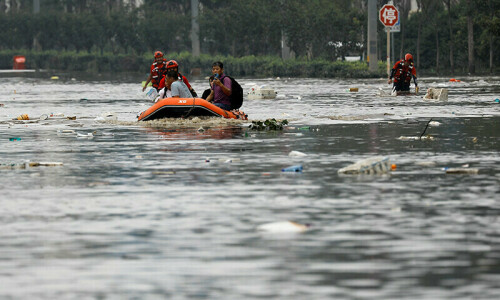
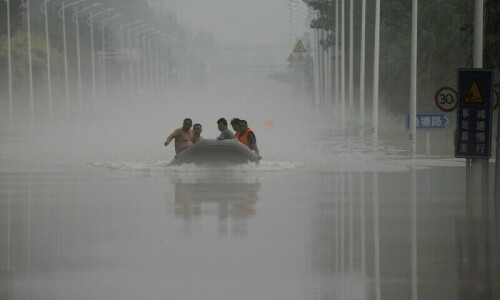
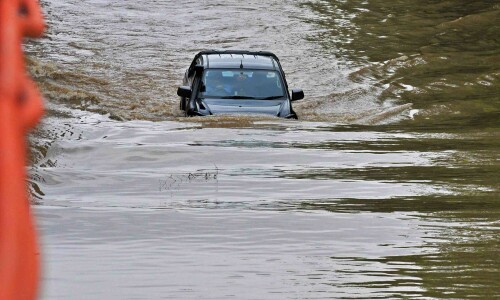
Last year, 79 disasters associated with water-related weather hazards were reported in Asia. Of those, more than 80 per cent were floods and storms, with more than 2,000 deaths and nine million people directly affected.
“Floods were the leading cause of death in reported events in 2023 by a substantial margin,” the WMO said, noting the continuing high level of vulnerability of Asia to natural hazard events.
Hong Kong recorded 158.1 millimetres of rainfall in one hour on September 7 — the highest since records began in 1884, as a result of a typhoon.
The WMO said there was an urgent need for national weather services across the region to improve tailored information to officials working on reducing disaster risks.
“It is imperative that our actions and strategies mirror the urgency of these times,” said Saulo.
“Reducing greenhouse gas emissions and adapting to the evolving climate is not merely an option, but a fundamental necessity.”