Australia rejects more rights for Indigenous in historic referendum


SYDNEY: Australians have roundly rejected greater rights for Indigenous citizens, scuppering plans to amend the country’s 122-year-old constitution after a divisive and racially tinged referendum campaign.
With 88 per cent of polling places reporting, around 59pc of people had voted against a proposal to acknowledge Aboriginal and Torres Strait Islanders within the 1901 constitution for the first time.
The reforms would also have created a consultative body — a “Voice” to Parliament — to weigh in on laws that affect Indigenous communities and help address profound social and economic inequality.
The often spiteful campaign exposed the deep racial fault lines still running through the so-called Lucky Country.
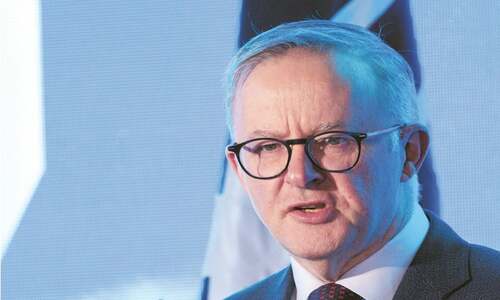
Prime Minister Anthony Albanese, who campaigned for a “yes” vote, urged a divided nation to now come together in a ‘spirit of unity and healing’.
He added that the defeat would be a ‘heavy weight to carry’ and ‘very hard to bear’ for the vast majority of Aboriginal Australians who supported the referendum.
Minister for Indigenous Australians Linda Burney, the first Aboriginal woman elected to sit in the House of Representatives, said “Today is a day of sadness”.
Indigenous Australians expressed anger and anguish that the white majority had rejected calls for a reckoning with the country’s bloody colonial past.
“This is a difficult result, this is a very hard result,” said Yes23 campaign director Dean Parkin.
“We did everything we could and we will come back from this.”
Fear and misinformation
Albanese had championed the reforms as a step towards racial reconciliation. But instead, it has sparked a deeply rancorous and racially tinged debate that exposed a gulf between First Nations people and the white majority.
The opposition campaign had deftly channelled fears about the role and effectiveness of the “Voice” assembly, encouraging people to vote “no” if they are uncertain.
The debate was accompanied by reams of online misinformation suggesting the “Voice” would lead to land seizures, that it would create a South African-style system of apartheid, or that it was part of a United Nations plot.
Conservative opposition leader Peter Dutton, who staunchly opposed the referendum, expressed his relief on Saturday that the binding vote had failed.
“It is clear obviously that the referendum has not been successful and I think that is good for our country.”
Indigenous leader Thomas Mayo expressed fury at the conduct of the “no” campaign, saying they should be held accountable for their divisive and dishonest rhetoric.
“They have lied to the Australian people. This dishonesty should not be forgotten in our democracy by the Australian people.”
Racism accusation
Dee Duchesne, 60, a volunteer for the ‘no’ campaign, said she was “fighting to keep an extra layer of bureaucracy out of our constitution”.
She said she had been called racist while handing out leaflets near a Sydney polling station during early voting. “I’m not,” she said.
The referendum could only pass with support from a majority of voters nationally and a majority of voters in at least four of the country’s six states.
It appeared to garner neither. The ballot paper asks: “A Proposed Law: to alter the Constitution to recognise the First Peoples of Australia by establishing an Aboriginal and Torres Strait Islander Voice. Do you approve this proposed alteration?”
Published in Dawn, October 15th, 2023