Torkham border reopens after eight days


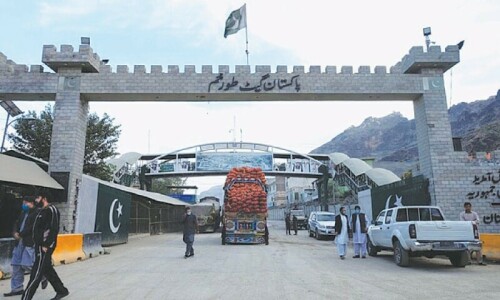
KHYBER: The Torkham border, a main crossing point between Afghanistan and Pakistan, reopened to pedestrians and vehicles on Friday, eight days after it was closed following clashes between border forces of the two countries.
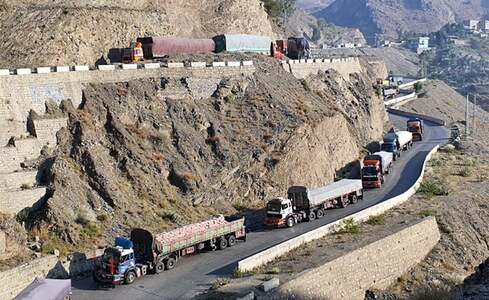
A large number of travellers and trucks laden with goods were stranded on both sides of the border after the shooting on Sept 6.
Immigration officials at Torkham said a three-day relaxation for going back to Afghanistan was also granted to those Afghans who had no proper travel documents but were in possession of Tazkira, the Afghan national identity card.
They said some stranded Pakistanis also returned on Friday after the reopening of the border, adding that over 10,000 Afghan nationals crossed the border from both sides till the evening.
According to Torkham customs officials, around 80 vehicles carrying export goods from Pakistan crossed into Afghanistan.
Jubilation and excitement were writ large on the faces of hundreds of stranded Afghans when they arrived at the immigration offices early on Friday morning, though in a disciplined manner.
Transporters too were overjoyed with the end of eight days of frustrated wait when they spent sleepless nights at the roadside while guarding their vehicles at night time and also impatiently waiting for the reopening of the border crossing.

Trucks and containers loaded with multiple trade goods also made a beeline towards the border crossing in anticipation of a prompt customs clearance. Traders claimed over 2,000 vehicles got stranded on the Pakistan side, in addition to containers carrying Afghan Transit Trade goods.
According to sources, the authorities in Islamabad agreed to reopen the Torkham border only after an assurance from the foreign ministry in Kabul that the Afghan territory would not be allowed to be used for attacks in Pakistan.
However, they added, it could not be ascertained whether the Taliban government would again attempt to build a security post. The Pakistani authorities vehemently opposed the move, arguing that such construction was in violation of the agreements reached between the two states on any alteration near the border crossing.
Trade ties
Separately, Asif Ali Khan Durrani, prime minister’s special representative for Afghanistan, has said Pakistan is committed to expanding trade ties with Afghanistan.
Speaking at a conference on Pakistan-Afghanistan trade relations in Quetta, he said the law and order situation in Afghanistan had improved during the last two years which would provide opportunities for increasing bilateral trade.
Mr Durrani highlighted the significance of cross-border trade, particularly due to the absence of a banking channel between Pakistan and Afghanistan, which often leads to informal trade, border-related issues, and negative effects on the industries in Balochistan.
He called for allowing the movement of patients, students and Zakat cardholders from Chaman and Bolan districts across the border without the requirement of a passport. He also suggested facilitating transport routes for Balochistan’s industrialists and traders to access markets in Afghanistan.
Mr Durrani also proposed negotiating reduced taxes on various items with the Afghan authorities to curb smuggling and promote formal trade. He stressed that
He emphasised that Pakistan’s economic dependence on Afghanistan and Central Asian states remains crucial, with trade volume rising from $55 million to $300m.
Saleem Shahid in Quetta also contributed to this report
Published in Dawn, September 16th, 2023