BRICS nations eye global geopolitical shift



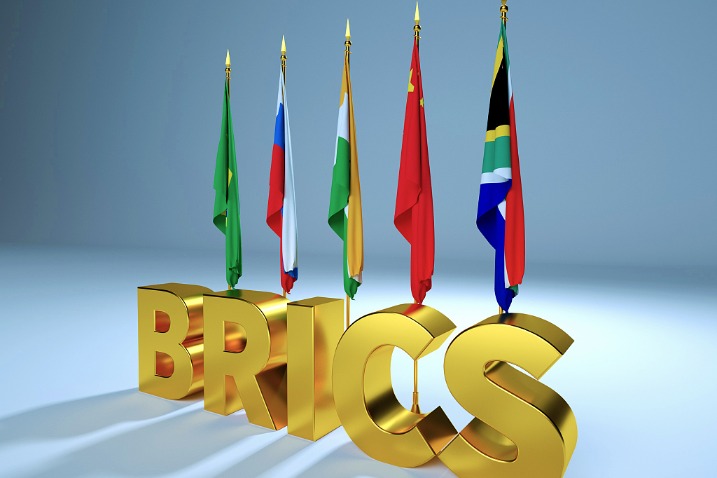
JOHANNESBURG: Leaders of the BRICS emerging economies, which account for about a quarter of the world’s wealth, meet in Johannesburg this week looking to widen the bloc’s influence and push for a shift in global geopolitics.
South Africa’s Cyril Ramaphosa is expected to host China’s President Xi Jinping, India’s Prime Minister Narendra Modi and Brazil’s President Luiz Inacio Lula da Silva for the annual three-day summit, starting on Tuesday. Russia’s President Vladimir Putin also will join remotely.
Putin decided against attending in person as he is the target of an International Criminal Court arrest warrant that South Africa is in theory bound to enforce if he sets foot in the country. Foreign Minister Sergey Lavrov will travel to Johannesburg instead.
“The traditional global governing system has become dysfunctional, deficient and missing in action,” Chen Xiaodong, the Chinese ambassador to Pretoria said at a briefing, adding that BRICS are “increasingly becoming a staunch force in defending international justice”.
There is growing interest in the bloc as at least 40 countries have expressed interest in joining, and 23 of those have formally submitted applications to become BRICS members. Formally launched in 2009, the BRICS now account for 23 per cent of global GDP and 42pc of the world’s population.
Anil Sooklal, South Africa’s ambassador-at-large for Asia and the BRICS, said one of the reasons countries are lining up to join is “the very polarised world we live in, that has been further polarised by the Russia-Ukraine crisis, and where countries are being forced to take sides”.
“Countries in the South don’t want to be told who to support, how to behave and how to conduct their sovereign affairs. They are strong enough now to assert their respective positions,” added Sooklal.
Lebogang Legodi, international politics lecturer at the University of Limpopo, agrees that many states keen on joining the group “are seeing BRICS as an alternative to the current hegemony” in world affairs.
Around 50 other leaders will attend a “friends of BRICS” programme during the summit.
This year’s gathering is themed “BRICS and Africa: Partnership for mutually accelerated growth, sustainable development and inclusive multilateralism”.
It comes at “a critical inflection point,” said Steven Gruzd of the Africa-Russia Africa project at the South African Institute of International Affairs.
A decision on expanding the BRICS membership is expected at the end of the summit, according to Sooklal.
Published in Dawn, August 21st, 2023