0
0

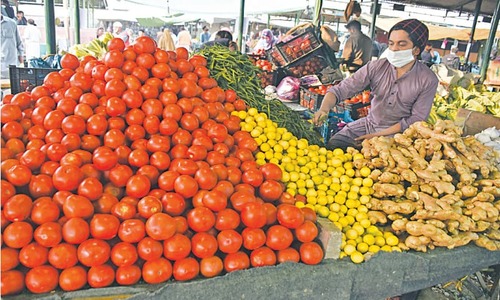
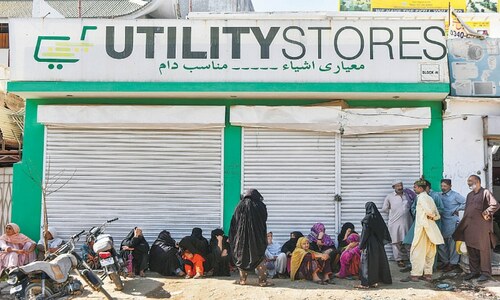
ISLAMABAD: The government expects inflation to remain high in the coming months and it may hit an all-time high of 38 per cent in April, driven by hikes in food and energy prices.
“The inflation is expected to remain in the range of 36-38 per cent for April,” the finance ministry said in its Monthly Economic Update and Outlook released on Saturday.
The short-term inflation measured by the Sensitive Price Indicator (SPI) was 46.8pc last week, just shy of the record 47.2pc witnessed a week ago. Monthly inflation measured by the Consumer Price Index (CPI) was 35.4pc in March — the highest on record.
The ministry said the rupee’s depreciation and rising administered prices had contributed to the increase in overall prices. “Although global commodity prices are showing a downward trend, they are still on the higher side compared to the pre-pandemic level,” it said.
Economy still facing major challenges, led by high inflation, slow economic activity, says finance ministry
It said that a slow recovery from flood-led damages had caused the supply of essential crops to remain short of domestic requirements, consequently intensifying inflation. On the other hand, the central bank was enacting contractionary monetary policy, “but inflationary expectations are not settling down”, it said.
The ministry said that the federal and provincial governments were monitoring the demand-supply gap of essential items and “taking necessary measures to ease inflationary pressures”.
The government has reconstituted a national price monitoring committee under the head of the planning minister to monitor prices with provincial chief secretaries. However, the committee has held only a couple of meetings over the past year.
On the agriculture side, the ministry’s outlook said that the availability of inputs regarding seeds, agriculture credit and fertiliser would remain satisfactory for this year’s Kharif crops. However, weather conditions might not remain favourable as rains are expected to be slightly above average in the next three months — from April to June.
The ministry said Pakistan’s economy was still facing significant challenges, characterised by high inflation and slow economic activity.
“Nonetheless, some positive signals appear as a result of the government’s stabilisation policies. For instance, the current account of the balance of payment turned into a surplus. This might improve the external financing constraint, contribute to more exchange rate stability, and promote confidence in the economy,” it said.
Besides, the completion of the IMF programme would pave the way to attract more capital inflows, further stabilising the exchange rate and alleviating inflationary pressures, it said.
Published in Dawn, April 30th, 2023