ISLAMABAD: Low human capital investments will limit the realisation of Pakistan’s ambition to become an upper-middle-income country by 2047, says a new World Bank report.
Pakistan’s Human Capital Index (HCI) value of 0.41 is low in both absolute and relative terms; lower than the South Asia average of 0.48, with Bangladesh at 0.46 and Nepal at 0.49.
“If Pakistan continues on its current trajectory in human capital development, its GDP per capita would grow overall by a mere 18 per cent through 2047, the 100th anniversary of its founding, according to the Pakistan Human Capital Review.
Human capital makes up 61pc of Pakistan’s wealth, yet its levels of human capital are among the world’s lowest. Before the Covid-19 pandemic and the 2022 floods, an estimated 75pc of Pakistani children were in learning poverty, unable to read and understand a simple age-appropriate story by age 10.
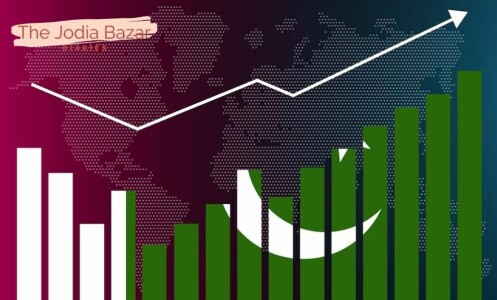
It suggested that if Pakistan can boost human capital investments and its HCI value to the level of its peers, per capita could grow by 32pc. But if Pakistan improves both its human capital and its use of human capital, bringing adults into employment outside farming, GDP per capita could rise by 144pc, eight times more than under business as usual.
Unlikely to become a middle-income country by 2047
The report observed that Pakistan can realise major economic growth and development by investing in its people and their human capital. But the reality is that Pakistan’s human capital is low and has improved only marginally over the past three decades. Inequalities in human capital outcomes have persisted or widened over time between the rich and poor, men and women, and rural and urban areas and among the provinces.
Early childhood development outcomes in Pakistan are low relative to those in middle-income countries. Only 40-59pc of young children, depending on the province, are reported by their parents to be developmentally on track, whereas the average in peer countries is 75pc. Some 40pc of children under 5 are stunted, and 18pc under 5 are wasted. And fewer than one in five children enrolls in early childhood education.
An estimated 20.3m of Pakistan’s school-age children are out of school. In addition, Pakistan’s learning poverty rate — the percentage of children unable to read and understand a short age-appropriate text by age 10 — stood at 75pc before the Covid-19 pandemic and the 2022 floods, more than 19 percentage points above the average for lower-middle-income countries. After the pandemic and the recent floods are accounted for, learning poverty is estimated to have risen to 79pc.
The main determinants of nutrition are food intake, environmental health, and care for children and women, and very few of Pakistan’s children under 2 have adequacy on all three. The proportion of children with multiple adequacies is low in Pakistan: more than 26pc of children lack adequacy on any of the three determinants, and fewer than 2pc of children have adequacy on all three dimensions.
The pandemic has likely erased nearly a decade of progress on human capital for both boys and girls. Simulations accounting for the pandemic show that Pakistan’s HCI value would be reduced from 0.41 to 0.37, lower than its 2012 level. The main culprit is reduction in the quantity of schooling due to dropouts and in quality (due to learning loss), both of which have been confirmed by empirical studies.
Published in Dawn, April 2nd, 2023