India aims to triple defence exports to $5bn, sell fighter jets and choppers


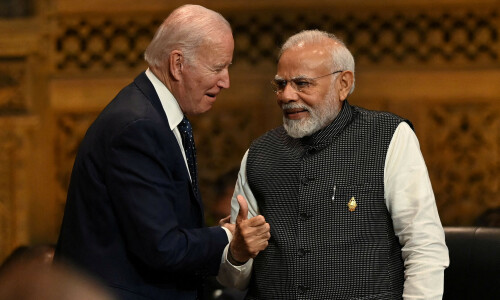
Indian Prime Minister Narendra Modi on Monday set out ambitions to more than triple annual defence exports to $5 billion over the next two years, as arms firms flocked to a major air show for a slice of the nation’s massive import budget.
The country is looking to sign defence deals worth 750 billion rupees ($9bn) at the biennial five-day Aero India event, its biggest ever, as its airlines try to complete jetliner purchases to meet civilian demand and press global aircraft manufacturers to produce more locally, mainly through partnerships.
India has been one of the world’s biggest importers of defence equipment for decades, but it has punched below its weight in the global arms export market.
New Delhi’s export ambitions are a sign of its growing clout as it uses the leverage of huge imports to attract investment in its domestic industry.
“Today, India is not just a market for defence companies, it is also a potential defence partner,” Modi said in a speech at the show. “I call on India’s private sector to invest more and more in the country’s defence sector.”
The air show aims to promote exports of indigenous air platforms such as Tejas, Dhruv, HTT-40 training aircraft, Dornier light utility helicopter and the light combat helicopter.
India also wants smaller domestic companies and start-ups to make parts for large defence products globally as well as to attract foreign investment for joint product development and production.
Defence experts were circumspect about India’s ambition.
“From just a 0.2 per cent share in global arms exports, becoming a major exporter is a long haul,” said Amit Cowshish, a former financial adviser in the defence ministry and a former distinguished fellow at the Manohar Parrikar Institute for Defence Studies and Analyses in New Delhi.
“Some of the biggest importing countries, even if they are willing, will find it difficult to withstand pressures from Europe and the US to consider buying whatever little we have to offer by way of major equipment and platforms,” Cowshish said.
Pressure to diversify
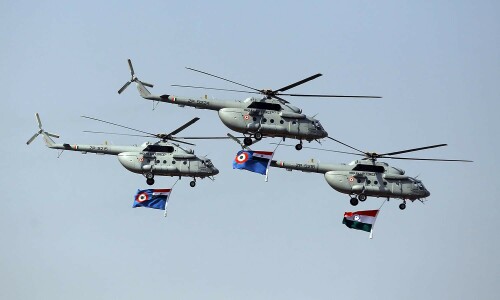
At the Aero India event, held at the Air Force Station of Yelahanka near Bengaluru, officials cheered aerobatic displays by aircraft, including Tejas and Russian-made Sukhoi 30 fighter jets.
Sharing borders with nuclear-armed rivals China and Pakistan, India’s largely Soviet-era air force fleet is in desperate need of modernising.
Russia supplied India with around $13bn of arms in the past five years, Russian state news agencies reported late on Sunday, and suppliers in the European Union and the United States have been lobbying for a bigger share of the market.
Russia’s invasion of Ukraine has made it imperative for India to further diversify its supply base, amid fears of possible Russian supply disruption and Western pressure on New Delhi to limit ties with Moscow.
Exhibitors at the show include Airbus, Boeing, Dassault Aviation, Lockheed Martin, Israel Aerospace Industry, BrahMos, SAAB, Rolls Royce, Larsen & Toubro, HAL and Bharat Electronics Ltd.
India’s airlines are also expanding, with Tata Group’s Air India expected to announce a potentially record deal to buy nearly 500 jets from Airbus and Boeing, worth more than $100bn at list prices.
Although unlikely to be announced at the air show itself, the deal coincides with India’s largest industry gathering where suppliers hope to win spin-off contracts from the country’s defence and civil aviation expansion.