Pakistan’s foreign exchange reserves held by the central bank decreased by 16.1 per cent to $3.09 billion in the week ending Jan 27, the State Bank of Pakistan (SBP) said on Thursday, which analysts said covers less than three weeks of imports.
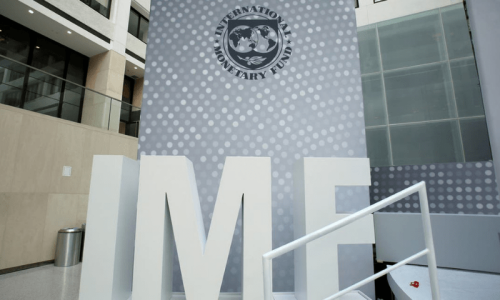
The country is locked in negotiations with the International Monetary Fund (IMF) to release much-needed money under a stalled bailout programme. A successful outcome with the IMF would also help to release money from other platforms that are looking for a greenlight from the lender.
The central bank said in a statement that the drop in reserves (of $592m) was due to external debt repayments.
Reserves held by commercial banks stood at $5.65bn, taking total liquid reserves in the country to $8.74bn, SBP added.
Investment firm Arif Habib Limited (AHL) calculated that the reserves are at their lowest since February 2014 and now only cover 18 days’ worth of imports.
“The country is in dire need of fresh inflows and the resumption of the IMF programme as soon as possible to avoid the crisis,” Tahir Abbas, head of research at AHL said.
Ismail Iqbal Securities head of equity research Fahad Rauf tweeted that the low reserves are “nothing but a result of decades of misgovernance, incompetence, merit system failure, and politically motivated decisions”.
Cash-strapped Pakistan on Tuesday held talks with the IMF in a bid to unlock funds from a $7bn bailout designed to ward off economic meltdown. The talks, to continue through Feb 9, are meant to clear the IMF’s 9th review of its Extended Fund Facility, aimed at helping countries with balance-of-payments crises.
The lender had set several conditions for resuming the bailout, including a market-determined exchange rate for the local currency and an easing of fuel subsidies. The central bank recently removed a cap on exchange rates and the government raised fuel prices by 16pc.
During Thursday trading, the rupee lost 0.93pc in the interbank market, closing at a new historic low of 271.36 rupees against the U.S. dollar, according to SBP data. The rupee also dropped 0.18pc in the open market.
Overall, the rupee is down 24.51 per cent over the fiscal year that began in July.
In the week ending January 20, reserves dropped to $3.7bn.