ISLAMABAD: Pakistan and China’s ties are back on track after Pakistani security forces successfully smashed the terrorist cell and nabbed the mastermind involved in an attack that killed three Chinese teachers at Karachi University, a source told Dawn on Thursday.
The Main Line 1 (ML-1) upgradation project, the largest in China’s Belt and Road Initiative in Pakistan, has been revived after the temporary halt caused by the April 26 suicide attack, the source further said. The project had previously been delayed due to financing related issues.
Pakistan’s railways ministry and China’s National Development and Reform Commission (NDRC) recently held a meeting on the project and the two sides are currently working on the financial modalities.
The ML-1 project, the source said, would be the centre-piece of China-Pakistan Economic Corridor’s (CPEC) second phase.
Mushahid Hussain says Pakistan opposes any ‘new cold war’ between Washington and Beijing
After the Karachi University attack, Beijing had not only linked progress on CPEC to security for their personnel working in Pakistan and the arrest and prosecution of the attackers, but the entire relationship had virtually come to a standstill over this one sticking point.
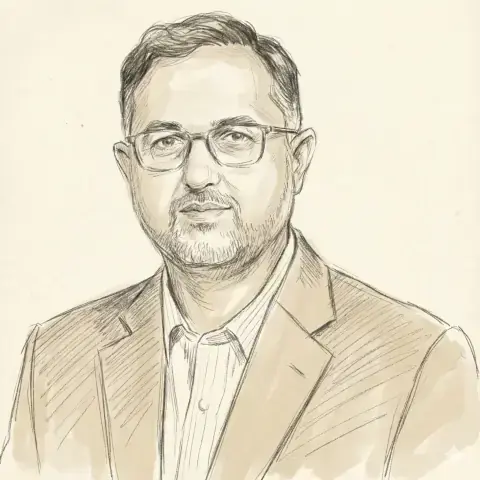
This view was strengthened by Senate Defence Committee Chairman Mushahid Hussain Syed, who told Dawn that success in tracing and capturing the culprits behind the Confucius Institute bombing had “reassured and restored China’s faith” in the Pakistani security apparatus’s ability to protect Chinese personnel and projects in Pakistan.
“Our eastern neighbour, irked by Pakistan-China camaraderie centered now on CPEC, has been working overtime to undermine and sabotage this bond, using both information warfare as well as kinetic warfare through local proxies, Senator Mushahid added.
The Chinese frustration over the slow pace of investigations into the attack is said to be the major reason behind Prime Minister Shehbaz Sharif avoiding a trip to Beijing, even though China has been one of the first foreign destinations that new Pakistani prime ministers head to, owing to the close strategic ties between the two countries.
Progress in the case was made public this week when Pakistani authorities on Tuesday claimed that alleged facilitator and planner of the Karachi attack, which was jointly executed by terrorist groups BLA and BLF, had been arrested. The accused identified as Dad Bux has been presented before an anti-terrorism court in Karachi.
Though law enforcement agencies claimed that the arrest was made a day earlier (on Monday), the source said that he had been in custody for weeks.
Security forces in Balochistan had eliminated six suspected terrorists in the Central Mekran Range around June 19, while two others are said to be on the run.
Chinese counterterrorism officials also worked closely with Pakistani agencies on this case.
“A Chinese team was in Pakistan closely coordinating with their local counterparts on the investigation,” the source said.
Welcoming the progress in the case, Chinese foreign ministry spokesman Lijian Zhao, in Beijing, said: “We appreciate the strong efforts made by the Pakistani side. At the same time, further investigation is still underway.”
“We hope the Pakistani side will… ensure the safety of Chinese projects, personnel and institutions in Pakistan,” he added.
The source said that visit of high ranking Chinese politician Yang Jiechi, seen as personal envoy of President Xi Jinping, was made possible after this breakthrough.
Gen Bajwa had weeks earlier visited Beijing and offered “iron clad security guarantees” on security for Chinese and vowed to track down the perpetrators of Karachi attack.
The source said that Mr Yang had privately reassured Pakistan government that both CPEC and bilateral ties were now back on track.
No to ‘new cold war’
Separately, speaking at a conference on Thursday, Senator Mushahid Hussain Sayed stressed the need to balance ties with the US and China, saying that a new cold war was not acceptable to Islamabad.
“Washington itself needs to balance its role and relations with India and Pakistan,” he told participants of ‘Significance of BRI in Regional Connectivity’, held at the Punjab University in Lahore.
He also rejected Nato’s planned expansion into Asia as ‘unnatural’ as it was beyond its stated mandate.
The senator said the US tilt towards India had led to a credibility gap in American regional policies, as the US condemned Russian annexation of Crimea while it condoned Indian annexation of Kashmir.
Zulqernain Tahir also contributed to this report
Published in Dawn, July 8th, 2022