Saudi women move from behind wheel to under the hood


JEDDAH: An auto repair garage in Saudi Arabia is turning to an untapped source for new car mechanics: Saudi women, who just four years ago weren’t even allowed to drive.
At the Petromin Express garage in Jeddah, on the Red Sea coast, new female recruits check oil and change tyres alongside their male counterparts, part of a nationwide push to bring more women into the workforce.
Yet the women trainees have, perhaps inevitably, encountered a host of barriers as they enter a field that is male-dominated the world over — and even more so in the conservative Muslim kingdom.
Several told AFP their first months on the job have brought flashes of self-doubt, scepticism from relatives and outright hostility from some customers.
One “old man” who came by the garage immediately ordered all the women out, saying he didn’t want them going near his car, recalled recruit Ghada Ahmad.
“At the beginning, it’s normal not to trust us, because I’m a woman and he doesn’t trust my work as a woman,” said Ahmad, wearing grease-streaked white gloves and a long blue overcoat.
“It’s something new for them... After years of only seeing men, now comes a woman.” As she struggled to learn the basics, Ahmad had moments when she wondered if such men might have a point.
“I used to go home with swollen hands, crying and saying: ‘This job is not for me. It looks like their words were correct,’” she recalled.
But as her skills improved, so did her confidence — aided by other customers who were more encouraging.
“One man came and said: ‘I’m very proud of you. You are honouring us. You are a crown on our heads.’”
Helpful husbands
Expanding women’s rights is central to Crown Prince Mohammed bin Salman’s Vision 2030 agenda, intended to diversify the oil-dependent economy while softening Saudi Arabia’s radical image.
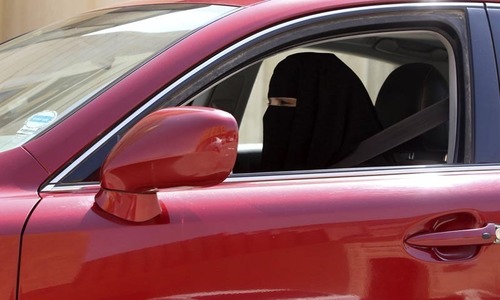
The highest-profile change came in 2018, when Prince Mohammed, the kingdom’s de facto ruler, oversaw the end of a decades-old ban on women driving.
The country has also eased so-called “guardianship” rules that give men arbitrary authority over female relatives.
These moves have burnished Prince Mohammed’s reputation as a women’s rights champion, despite a crackdown on dissent that has ensnared some of the very activists pushing for reform.
Yet women mechanics in Jeddah told AFP they could never have started working without their husbands’ consent.
Ola Flimban, a 44-year-old mother of four, first heard about the jobs from a social media post, and immediately asked her husband, Rafat Flimban, if she could apply.
Rafat agreed and helped his wife prepare for the interview by teaching her the names of spare parts.
Published in Dawn, June 4th, 2022