Mumbai mosques turn volume down on azaan at Hindu leader's demands


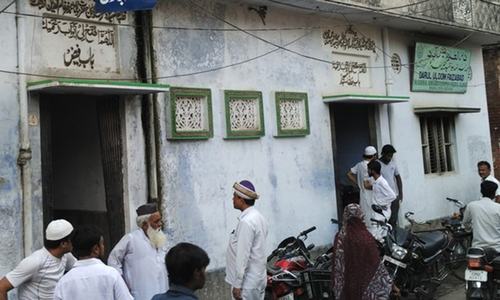
Sitting in an office lined with books overlooking a giant prayer hall, Mohammed Ashfaq Kazi, the main preacher at the largest mosque in Mumbai, checked a decibel meter attached to the loudspeakers before he gave the call to worship.
“The volume of our azaan (call to prayer) has become a political issue, but I don't want it to take a communal turn,” said Kazi, one of the most influential Islamic scholars in the sprawling metropolis on India's western coast.
As he spoke he pointed to loudspeakers attached to the minarets of the ornate, sand-coloured Juma Masjid in Mumbai's old trading quarters.
Kazi and three other senior clerics from Maharashtra where Mumbai is located said more than 900 mosques in the west of the state had agreed to turn the volume down on calls to prayer following complaints from a local Hindu politician.
Raj Thackeray, leader of a regional Hindu party, demanded in April that mosques and others places of worship kept within allowed noise limits. If they did not, he said his followers would chant Hindu prayers outside mosques in protest.
Thackeray, whose party has just one seat in the state's 288-member assembly, said he was merely insisting that court rulings on noise levels be enforced.
“If religion is a private matter then why are Muslims allowed to use loudspeakers all 365 days (of the year)?” Thackeray told reporters in Mumbai, India's financial hub and capital of Maharashtra.
“My dear Hindu brothers, sisters and mothers come together; be one in bringing down these loudspeakers,” he said.
Leaders of India's 200 million Muslims see the move, which coincided with the holy festival of Eid, as another attempt by hardline Hindus to undermine their rights to free worship and religious expression, with the tacit agreement of the ruling Hindu nationalist Bharatiya Janata Party (BJP).
In recent weeks, a senior BJP leader began pushing for swapping marriage and inheritance laws based on religion with a uniform civil code, taking aim at rules that allow Muslim men, for example, to have four wives.
The BJP did not respond to a request for comment on Thackeray's initiative. It denies targeting minorities, and says it wants progressive change that benefits all Indians.
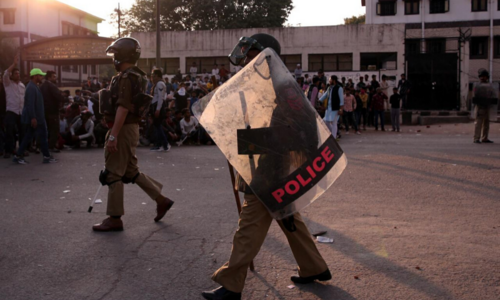
Police step in
At the Juma Masjid, Kazi said he complied with Thackeray's demands in order to reduce the risk of violence between Muslims and Hindus.
Bloody clashes have erupted sporadically across India since independence, most recently in 2020 when dozens of people, mostly Muslims, were killed in Delhi following protests against a citizenship law that Muslims said discriminated against them.
While hardline Hindu leaders were seeking to undermine Islam, Kazi said, “we (Muslims) have to maintain calm and serenity.” The state took Thackeray's initiative seriously.
Senior police officials met religious leaders including Kazi earlier this month to ensure microphones were turned down, as they feared clashes in Maharashtra, home to more than 10 million Muslims and 70 million Hindus.
On Saturday, police filed a criminal case against two men in Mumbai for using loudspeakers to recite the early morning azaan and warned workers of Thackeray's party from gathering around mosques.
“Under no circumstances will we allow anyone to create communal tension in the state and the court's order must be respected,” said V.N. Patil, a senior Mumbai police official.
A senior official for Thackeray's party said the initiative was not designed to single out Muslims but aimed to reduce “noise pollution” created by all places of worship.
“Our party does not appease the minority community,” said Kirtikumar Shinde, adding that police had issued warnings to 20,000 party workers this month.
The issue of calls to prayer extends beyond Maharashtra. BJP politicians in three states asked local police to remove or limit the use of loudspeakers in places of worship.
The deputy chief minister of the country's most populous state, Uttar Pradesh, said over 60,000 unauthorised loudspeakers had been removed from mosques and temples.