0
0

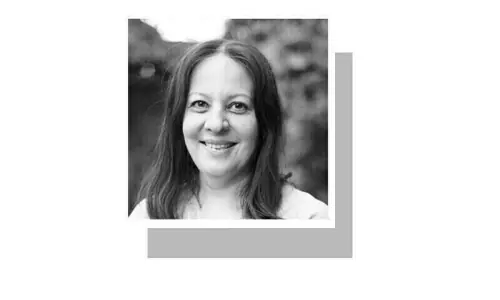
LAHORE: Lawyer, journalist and author Rafia Zakaria says one is a white feminist if one is propagating white-centre discourse and solutions and in the post-colonial Pakistan, it’s that aspect of whiteness which is very important and worth considering.
In a digital talk as a part of the Lahore Literary Festival on Saturday, when she was asked by Nayab Jan about what is white feminism and feminists, she said, “I am not talking about a white person who is feminist. What I am interested in is that whiteness is a particular kind of privilege that can exert dominance over others. In Pakistan, most of us are brown and in the Pakistani context it’s important to note how whiteness as a privilege works to suppress our indigenous narratives and solutions.”
Ms Zakaria said the British created a class of brown people in Pakistan who were doing the dirty work for them.
Divulging more on the question of white feminism, the subject of her latest book, Against White Feminism, she said a white feminist is the person who was interested in continuing to centre whiteness and use its privilege to dominate and subjugate other discourses.
When asked about the manifestation and aspects of white feminism, she said in western societies, one experienced whiteness constantly as whiteness defined itself against those who were not white.
“There is an assumption that a solution that a white person comes up with is a solution for everyone. In the conferences of the international NGOs, they would invite brown people who would just tell the stories of trauma whereas the policymaking, the agenda-setting and development of programmes are all done by the white people.”
Quoting an example from her book Against White Feminism, Rafia Zakaria said there was a ‘clean stove project’ worth hundreds of millions of dollars but the women refused to use the stoves. She said such failed projects were constantly going on.
“A lot of these development projects are not intended to be successful. They provide a kind of power for dominance of whiteness, showing how benevolent white people are. That is a problem. “
Ms Zakaria talked about the haphazard projects developed without consulting the brown women regardless of their needs and choices. The projects that are generally created to make the donors feel good about the savior complex regarding brown women, she argued.
She raised a question about Pakistani, Afghan and Iranian women who were invited to conferences by international NGOs but they were never made a part of planning. She called it tokenism in the international NGO culture.
MUGHAL WOMEN: India writer Ira Mukhoty, the author of Daughters of the Sun: Empresses, Queens and Begums of Mughal Empire, dispelled the general impressions created about Mughal harem and role of the women in it during an online session about her book.
Replying to the questions asked by Aneela Shah, she said women were very much a part of the formation of the Timurid and Mughal kingdoms.
What we know about the women in the Mughal era came mostly from the European writers who had their own myopic view of the darbar, given their background in the crusades and they portrayed women in an opaque way, locked up while the truth was very different from that narrative, Ms Mukhoty said and added that, “All the women who were related to the emperor were significant”.
She described a portrait of Humayun and his brothers at the time of Akbar’s circumcision where all important women were present.
“When Bairam Khan (after Humayun’s death) started exerting too much influence in the darbar, taking advantage of the young age of Akbar, there was a coup by the harem women and all the women persuaded Akbar to test his strength. They isolated Bairam Khan and ensured all the powers rested with Akbar,” Ira Mukhoty said.
In another portrait, Khanzada Begum is seen sitting in front of her brother Babur. Talking about Gulbadan, an aunt of Akbar, who went to Haj in Akbar’s ear, Mukhoty said when Akbar decided to write Akbarnama, he asked her to write her memories of Humayon and Babur.
Talking about income sources of the Mughal harem, Ms Mukhoty all the women had certain roles for which they were paid. “All harem women had income, half of that came from treasury and half from their land,” she said.
“All these women had independent resources of income. Jahangir’s mother Maryam Zamani was a great tradeswoman and her own indigo farm and her own 1,500 tonne ship, the biggest in India and it would take pilgrims to Mecca,” she added.
Published in Dawn, May 1st, 2022