Govt, legal fraternity at odds over criminal law reforms


ISLAMABAD: The reforms proposed by the Pakistan Tehreek-i-Insaf (PTI) government in the criminal justice system became a major bone of contention between the federal government and the legal community, with both sides issuing strongly-worded statements on Thursday.
The law ministry’s amendments to the Code of Criminal Procedure (CrPC), the Qanoon-i-Shahadat (law of evidence), Pakistan Penal Code (PPC) and other relevant laws — approved by the federal cabinet a few days ago — envision a nine-month deadline for the completion of criminal trials; the introduction of plea-bargains and the use of modern tools and technology in the investigation process.
Talking about the long-awaited reforms, Prime Minister Imran Khan said on Thursday that this was an effort to move towards effective dispensation of justice, adding that these reforms would ensure the delivery of speedy justice.
PM Khan said the sweeping amendments would help bring about a “revolution” in the criminal justice system and simplify the procedures for a common man to obtain justice.
SCBA accuses ministry of bypassing consultation process; minister says lawyers did not give any input
However, the Supreme Court Bar Association (SCBA) has rejected the reforms on the basis that the amendments were proposed by the law ministry without consulting all stakeholders.
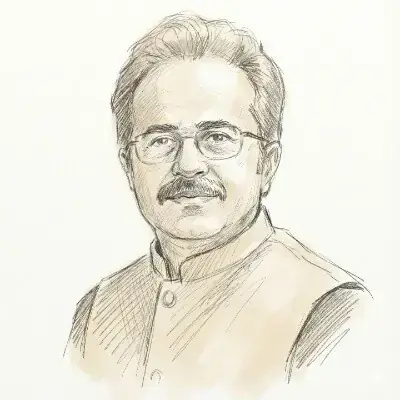
In a statement, SCBA president Mohammad Ahsan Bhoon lambasted Federal Minister for Law and Justice Farogh Naseem, saying that he had once again shown his lack of knowledge towards law and had “effectively demonstrated his inability, as well as the [lack of] capacity in his team”.
He called for broad-based consultations to make the legal reforms more efficient, resourceful and cost effective.
Replying in kind, the federal government “vehemently” rejected the SCBA stance, saying that the complete draft of the criminal reforms legislation was shared with the Pakistan Bar Council, all provincial bar councils, SCBA and all high court bar associations, adding that all these entities were invited to give their input.
In his own statement, the law minister maintained that to date, none of these entities had given any input. It held that as per an elementary principle of law, silence on the matter implies that they have nothing to add and are happy with document.
According to the government, the proposed reforms seek to provide vulnerable people, especially women and children, quick and easy access to justice.
“Those who are opposing these reforms are not sincere with people of Pakistan, in particular the weaker segments of the society. These so-called critics are either inept or not honest with their own country rather they are favouring the forces of status quo by desiring the existing ineffective system of Criminal Justice to continue in its current shape; where they can easily manipulate the litigants and their fates”, the statement issued by the law minister states.
The ministry claims that these proposed reforms will ensure equal access to justice, irrespective of the social or class disparities.
Salient features
Under the proposed draft, the ministry has proposed a nine-month deadline for criminal trials, making it mandatory for the trial court to offer an explanation to the high court in case it is unable to meet the deadline.
It also proposes the levying of a Rs1 million fine for frivolous complaints and introduces the concept of plea bargains to reduce the judicial backlog. However, this option will not apply to offences carrying death, life or a sentence above seven years. It can also not be invoked in crimes relating to women, children and socio-economic issues.
The draft proposes that all testimonies will be recorded in both audio and video form without the interjection of the trial judge, except in matters of inadmissible evidence or noting their demeanor. The recording is also to be transcribed verbatim in the language in which the evidence is uttered, followed by an English translation.
Restructuring the decades-old police system, it seeks to redefine the definition of ‘officer in charge of police station’, who should be at least a sub inspector with a bachelor’s degree. In major police stations where the case load is high, the SHO should at least be of the rank of assistant superintendent.
Under the new proposal, if an accused absconds, his CNIC and any other documents issued by Nadra, passports, bank cards and bank accounts can be blocked. But in case a proclaimed offender appears in court, the court could order his documentation to be unblocked.
Another salient feature of the law is that the time frame in which investigations are to be completed and a challan has been enhanced from 15 to 45 days.
Detailed protocols for evidence to be recorded through video link have also been prescribed and it is proposed that the location of the video conferencing shall be approved by the court.
The option of recording evidence through video link is suggested for both, witnesses in and outside Pakistan. For the latter, a commission to the court or judge will record the statement where Pakistan has reciprocal arrangements and the commission would be issued to the Pakistan embassy or high commission where there is no reciprocity.
Published in Dawn, January 28th, 2022